Representative Thomas Carmichael Hindman
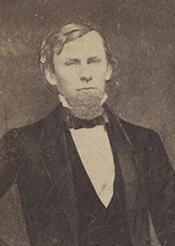
Here you will find contact information for Representative Thomas Carmichael Hindman, including email address, phone number, and mailing address.
| Name | Thomas Carmichael Hindman |
| Position | Representative |
| State | Arkansas |
| District | 1 |
| Party | Democratic |
| Status | Former Representative |
| Term Start | December 5, 1859 |
| Term End | March 3, 1861 |
| Terms Served | 1 |
| Born | January 28, 1828 |
| Gender | Male |
| Bioguide ID | H000628 |
About Representative Thomas Carmichael Hindman
Thomas Carmichael Hindman served as a Representative from Arkansas in the United States Congress from 1859 to 1861. A member of the Democratic Party, Thomas Carmichael Hindman contributed to the legislative process during 1 term in office.
Thomas Carmichael Hindman’s service in Congress occurred during a significant period in American history. As a member of the House of Representatives, Thomas Carmichael Hindman participated in the democratic process and represented the interests of constituents.
Thomas Carmichael Hindman Jr. (January 28, 1828 – September 28, 1868) was an American lawyer, politician, and a senior officer of the Confederate States Army during the American Civil War. Born in Knoxville, Tennessee, he later moved to Mississippi and became involved in politics. He served in the Mexican–American War from 1846 to 1848. Hindman practiced law and in 1853 was elected to the Mississippi House of Representatives. After his term expired in 1854, he moved to Helena, Arkansas where there were more opportunities for his political ambitions. Hindman opposed the Know-Nothing party and Arkansas’s ruling Conway-Johnson dynasty. He was elected to the United States House of Representatives in 1858, and supported slavery (and was a slaveholder himself) and secession. He was assassinated during the Reconstruction era. Once the American Civil War began in 1861 and Arkansas seceded, Hindman joined the Confederate States Army, first commanding the 2nd Arkansas Infantry Regiment, then a brigade, and then an ad-hoc division at the Battle of Shiloh in April 1862; he was wounded during the battle. Following Shiloh, Hindman was promoted to major general and sent to the Trans-Mississippi Department to command Arkansas, Missouri, the Indian Territory, and part of Louisiana. As commander of the region, his policies were sometimes legally questionable and were unpopular, although they were successful in building up the district from a basically indefensible state. Public outcry led to Hindman’s removal from his regional command. He was defeated at the Battle of Prairie Grove in December. Transferred to the Army of Tennessee in 1863, he led a division at the Battle of Chickamauga in September, where he was again wounded. After recovering, he commanded a division during the early stages of the Atlanta campaign although he wished to be transferred elsewhere. During the retreat after the Battle of Kennesaw Mountain in the summer of 1864, Hindman suffered an eye injury. He was placed on leave and traveled to Texas with his family. When the Confederacy collapsed in 1865, he fled to Mexico, but returned to Helena in 1867. Resuming his involvement in politics, he opposed the Reconstruction Era government of Arkansas. Hindman was shot by an unknown assassin at his home late on September 27, 1868, and died the next morning. Before his death, Hindman suggested the shooting was politically motivated.