Representative Thomas Richard Hudd
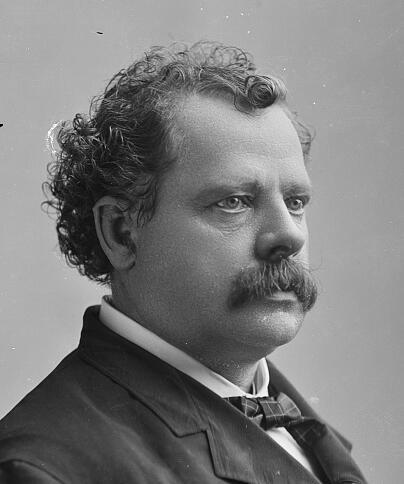
Here you will find contact information for Representative Thomas Richard Hudd, including email address, phone number, and mailing address.
| Name | Thomas Richard Hudd |
| Position | Representative |
| State | Wisconsin |
| District | 5 |
| Party | Democratic |
| Status | Former Representative |
| Term Start | December 7, 1885 |
| Term End | March 3, 1889 |
| Terms Served | 2 |
| Born | October 2, 1835 |
| Gender | Male |
| Bioguide ID | H000902 |
About Representative Thomas Richard Hudd
Thomas Richard Hudd (October 1, 1835 – June 22, 1896) was an American lawyer and Democratic politician from northeast Wisconsin who served as a Representative from Wisconsin in the United States Congress from 1885 to 1889. A member of the Democratic Party, he contributed to the legislative process during two terms in office, representing Wisconsin’s 5th congressional district in the U.S. House of Representatives from 1886 to 1889. His congressional service took place during a significant period in American history, and as a member of the House of Representatives he participated in the democratic process and represented the interests of his constituents.
Hudd was born on October 1, 1835, and came of age in the mid-nineteenth century, a time of rapid territorial expansion and political realignment in the United States. He moved to the Wisconsin area as a young man, joining a growing population drawn by new economic opportunities in the upper Midwest. Details of his early family life and upbringing are sparse in the surviving record, but his subsequent career indicates that he received sufficient preliminary education to prepare him for the study of law and for active participation in public affairs.
Pursuing a legal education, Hudd read law in the traditional manner of the period and was admitted to the bar, establishing himself as an attorney in northeast Wisconsin. His legal practice placed him in close contact with the commercial and civic development of the region, and he became known as a capable practitioner. The skills he developed as a lawyer—particularly in statutory interpretation, advocacy, and negotiation—formed the foundation for his later work as a legislator at both the state and federal levels.
Hudd’s public career began in local and state politics, where he quickly emerged as a prominent Democratic figure. He served in various local offices in northeast Wisconsin, gaining experience in municipal governance and building a base of political support. He was elected to the Wisconsin State Assembly, where he served two years, participating in the formulation of state laws and policies during a period of growth and institutional consolidation in Wisconsin. His performance in the Assembly led to further advancement within state government.
Advancing to the upper chamber of the state legislature, Hudd served a total of ten years in the Wisconsin Senate. In that capacity, he took part in shaping legislation affecting transportation, commerce, and local government, as well as broader questions of state finance and regulation that were central to Wisconsin’s development in the post–Civil War era. His decade of service in the Senate reflected both the confidence of his constituents and his standing within the Democratic Party, and it established him as one of the leading legislators from northeast Wisconsin.
On the strength of his state legislative record, Hudd was elected to the United States House of Representatives as a Democrat from Wisconsin’s 5th congressional district. He entered Congress during the mid-1880s, a time marked by debates over tariffs, interstate commerce regulation, veterans’ pensions, and civil service reform. Serving from 1885 to 1889, and specifically representing the 5th district from 1886 to 1889, he completed two terms in office. In the House he participated in committee work and floor deliberations, contributing to the legislative process and advocating for the interests of his Wisconsin constituents, including issues affecting the region’s agricultural, industrial, and commercial sectors.
After leaving Congress in 1889, Hudd returned to Wisconsin and resumed the practice of law, remaining an influential figure in his community and within state Democratic circles. Drawing on his long experience in public life, he continued to be consulted on legal and political matters and maintained his engagement with civic affairs in northeast Wisconsin. Thomas Richard Hudd died on June 22, 1896, closing a career that had spanned local office, a decade in the Wisconsin Senate, service in the State Assembly, and three years in the U.S. House of Representatives during a transformative period in both Wisconsin and national politics.