Representative Thomas Allen Jenckes
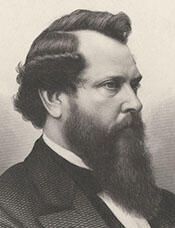
Here you will find contact information for Representative Thomas Allen Jenckes, including email address, phone number, and mailing address.
| Name | Thomas Allen Jenckes |
| Position | Representative |
| State | Rhode Island |
| District | 1 |
| Party | Republican |
| Status | Former Representative |
| Term Start | December 7, 1863 |
| Term End | March 3, 1871 |
| Terms Served | 4 |
| Born | November 2, 1818 |
| Gender | Male |
| Bioguide ID | J000076 |
About Representative Thomas Allen Jenckes
Thomas Allen Jenckes I (November 2, 1818 – November 4, 1875) was a United States Representative from Rhode Island and a prominent Republican reformer best known for introducing the legislation that created the United States Department of Justice. Serving four consecutive terms in the U.S. House of Representatives from 1863 to 1871, he played a notable role in federal legal and administrative reform during and after the Civil War. President Ulysses S. Grant signed Jenckes’s Department of Justice bill into law on June 22, 1870, a measure that significantly reshaped the federal government’s legal structure. Jenckes was also widely recognized as an early and influential advocate of civil service reform.
Jenckes was born in Cumberland, Rhode Island, on November 2, 1818. He was educated in the state and entered Brown University, from which he graduated in 1838. After completing his collegiate studies, he pursued the law and read for the bar in Rhode Island. In 1840 he was admitted to the Rhode Island state bar, beginning a legal career that would underpin his later work in legislative reform and federal administration.
Soon after his admission to the bar, Jenckes entered public service at the state level. From 1840 until 1844 he served as clerk of the Rhode Island state legislature, gaining early experience in legislative procedure and public administration. He later advanced to elective office in state government, serving as a member of the Rhode Island House of Representatives from 1854 until 1857. These roles established his reputation as a capable lawyer and legislator and prepared him for national office.
A member of the Republican Party, Jenckes was elected to the United States House of Representatives in 1863, representing Rhode Island during a critical period in American history marked by the Civil War and Reconstruction. In his first campaign for Congress he defeated Democratic opponent Charles J. Bradley by seventeen percentage points, and he was subsequently re-elected three times by landslide margins, serving continuously from 1863 until 1871. During his four terms in office, he participated in the legislative process on behalf of his Rhode Island constituents and contributed to debates over the structure and professionalization of the federal government. In the 1870 United States House of Representatives elections he was defeated for re-election by fellow Republican Benjamin T. Eames, ending his congressional career.
During his House tenure, Jenckes became most closely associated with the legislation that created the United States Department of Justice. His bill, enacted when President Ulysses S. Grant signed it into law on June 22, 1870, consolidated the federal government’s legal functions and established a centralized department headed by the Attorney General. Although later narratives sometimes linked this measure primarily to Reconstruction policy and the protection of the constitutional rights of Black citizens in the South, Jenckes’s principal objective was to professionalize federal legal practice and rationalize the government’s handling of litigation. Contemporary observers noted that he paid relatively little attention to the broader civil rights dimensions of Reconstruction, focusing instead on administrative and legal reform.
Jenckes was widely regarded as a reformer and became known as “the father of civil service” for his early and persistent advocacy of civil service reform. He introduced legislation to replace the traditional spoils system with a merit-based civil service, seeking to insulate federal employment from partisan patronage. His proposals met fierce resistance, including opposition from Radical Republican John A. Logan of Illinois, who argued that such reforms were probably unconstitutional and feared they would limit the Republican Party’s ability to use patronage to aid Southern Blacks during Reconstruction. Although Jenckes’s civil service measures did not pass in his time, his ideas strongly influenced later reforms, including the Pendleton Civil Service Reform Act, enacted several years after he left office.
In addition to his work on the Department of Justice and civil service reform, Jenckes played a role in other significant legislative and legal matters. He was involved in revising federal bankruptcy law, reflecting his interest in modernizing and systematizing legal frameworks. He also engaged in complex litigation and legislative issues related to emerging technologies and industrial development, including cases involving Goodyear rubber, the Corliss steam engine, and patents pertaining to refrigeration and ventilation. He participated in the prosecution of fraud associated with the Crédit Mobilier scandal, further underscoring his concern with integrity in public and corporate affairs.
After his defeat in 1870, Jenckes left Congress in 1871 and returned to Rhode Island, where he resumed the practice of law in Cumberland. He continued his legal work until his death, remaining identified with the causes of legal and administrative reform that had defined his public career. Thomas Allen Jenckes died in Cumberland, Rhode Island, on November 4, 1875. He was interred at Swan Point Cemetery in Providence, Rhode Island, leaving a legacy as a key figure in the creation of the Department of Justice and as an early champion of professional, merit-based public service.