Senator Thomas Kearns
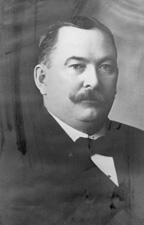
Here you will find contact information for Senator Thomas Kearns, including email address, phone number, and mailing address.
| Name | Thomas Kearns |
| Position | Senator |
| State | Utah |
| Party | Republican |
| Status | Former Representative |
| Term Start | December 2, 1901 |
| Term End | March 3, 1905 |
| Terms Served | 1 |
| Born | April 11, 1862 |
| Gender | Male |
| Bioguide ID | K000034 |
About Senator Thomas Kearns
Thomas Kearns (April 11, 1862 – October 18, 1918) was an American mining, banking, railroad, and newspaper magnate who represented Utah as a Republican in the United States Senate from 1901 to 1905. Serving one term in office, he contributed to the legislative process during a significant period in American history and participated in the democratic governance of a young state still defining its political and economic identity. Unlike the predominantly Mormon constituents of his state, Kearns was a Roman Catholic, a fact that shaped both his personal affiliations and aspects of his public life.
Kearns was born on April 11, 1862, near Woodstock in Canada West (now Ontario), to Thomas Kearns and Margaret (née Maher). He attended public schools in Canada before moving with his parents to O’Neill in Holt County, Nebraska. There he continued his education in the public schools until the age of seventeen, while working on the family farm and engaging in the freighting business. These early experiences in agriculture and transport introduced him to the economic opportunities of the American West and laid the groundwork for his later ventures in mining and commerce.
In 1883 Kearns moved to Salt Lake City, Utah Territory, and soon thereafter to the booming mining camp of Park City. He worked initially as a miner and prospector and gradually advanced to operating several mines. He was employed in the Ontario mine and, in 1889, became part owner of the Mayflower mine. That same year, in partnership with David Keith, he discovered rich ore deposits that led to the development of the famous Silver King Mine in Park City, one of the most productive silver properties in the region. Over time, Kearns and his associates acquired interests in numerous mines across Utah, Nevada, Colorado, and California, establishing him as one of the leading mining entrepreneurs of the Intermountain West. In Park City, Kearns married Jennie J. Judge, daughter of Patrick and Sarah J. Judge, on September 15, 1890, in Salt Lake City. The couple had four children: Margaret Ann (1892–1893), Edmund Judge (1893–1936), Thomas Francis (1897–1967), and Helen Marie (1899–1943).
Kearns’s growing prominence in business led naturally to involvement in public affairs. He served on the Park City City Council in 1895, participating in local governance at a time when Utah was preparing for statehood. That same year he was a member of the Utah constitutional convention, where he advocated for progressive labor measures, including an eight-hour workday. A committed Republican, he was chosen as a delegate to the Republican National Conventions of 1896 and 1900, helping to shape party policy during an era dominated by debates over silver, industrialization, and national expansion.
Kearns’s election to the United States Senate emerged from a complex and contentious political struggle in Utah. The Senate term beginning March 4, 1899, initially remained unfilled because U.S. Senators were still chosen by state legislatures, and Utah’s lawmakers deadlocked over a successor to the incumbent, Republican Frank J. Cannon, whom they had declined to reelect. Alfred W. McCune, a prominent Salt Lake City businessman backed by the Church of Jesus Christ of Latter-day Saints, sought the seat, but after 121 ballots the legislature failed to reach agreement. In February 1900 a state representative accused McCune of attempting to buy his vote; although a seven-member legislative committee voted 7–2 to absolve McCune of the charge and balloting resumed in March, McCune never secured more than 25 votes, and the legislature adjourned without choosing a senator. When a newly elected legislature convened in early 1901, it turned to Kearns, who was elected as a Republican and took his seat on January 23, 1901, to fill the vacancy in the term that had commenced March 4, 1899. He served until March 3, 1905.
During his tenure in the Senate, Kearns represented Utah’s interests at a time of rapid national industrial growth and increasing federal involvement in Western affairs. He developed personal and political friendships with Presidents William McKinley, Theodore Roosevelt, and William Howard Taft, relationships that helped elevate his standing and made him the first Utahn to establish a significant national and international political reputation. Among his notable achievements was his successful effort to have Fort Douglas, near Salt Lake City, designated a regimental post, thereby strengthening the federal military presence and contributing to the region’s strategic importance. Throughout his single term, he participated in the legislative process as a member of the Republican Party, representing the concerns of his constituents in a state still balancing the interests of mining, railroads, agriculture, and a dominant religious community.
After leaving the Senate in 1905, Kearns resumed and expanded his business activities in mining, railroads, newspapers, and banking. He and his longtime partner David Keith had purchased The Salt Lake Tribune in October 1901 through a surrogate, and the paper became a powerful voice in Utah politics. Supporters of Kearns organized the American Party, an anti-LDS Church political movement that, although he was not publicly listed among its founders, benefited from his influence and the Tribune’s endorsement. The American Party enjoyed considerable success in Utah politics from 1904 to 1911, particularly in Salt Lake City municipal affairs. Kearns was also one of the original incorporators of the San Pedro, Los Angeles & Salt Lake Railroad, playing a key role in securing its completion from Salt Lake City through Las Vegas to Los Angeles, thereby linking Utah more directly to Pacific Coast markets and contributing to the economic development of the Great Basin and Southern California.
In addition to his business and political pursuits, Kearns was a prominent Catholic layman and philanthropist in Utah. He and his wife, Jennie Judge Kearns, provided all the necessary funds to build the Kearns-Saint Ann’s Orphanage in Salt Lake City, an institution that later became Kearns-St. Ann’s Catholic elementary school. The Kearns family also constructed a grand chateauesque residence of marble, granite, and sandstone on Brigham Street (now South Temple) in Salt Lake City. In 1937 Mrs. Kearns donated this mansion to the state of Utah to serve as the official Governor’s residence; it continues to function as the Utah Governor’s Mansion. Kearns contributed as well to the construction and support of St. Mary’s Cathedral in Salt Lake City, reinforcing his legacy within the state’s Catholic community.
Kearns resided in Salt Lake City until his death in 1918. He died on October 18, 1918, of a stroke, eight days after being struck by a reckless driver at the corner of Main and South Temple in downtown Salt Lake City. His life spanned the transformation of the American West from frontier territory to an integrated part of the national economy, and his career in mining, transportation, publishing, and public service left a lasting imprint on Utah’s political, economic, and civic institutions.