Representative Thomas Savig Kleppe
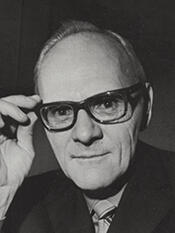
Here you will find contact information for Representative Thomas Savig Kleppe, including email address, phone number, and mailing address.
| Name | Thomas Savig Kleppe |
| Position | Representative |
| State | North Dakota |
| District | 2 |
| Party | Republican |
| Status | Former Representative |
| Term Start | January 10, 1967 |
| Term End | January 3, 1971 |
| Terms Served | 2 |
| Born | July 1, 1919 |
| Gender | Male |
| Bioguide ID | K000264 |
About Representative Thomas Savig Kleppe
Thomas Savig Kleppe (July 1, 1919 – March 2, 2007) was an American politician and businessman who served as a Representative from North Dakota in the United States Congress from 1967 to 1971. A member of the Republican Party, he later became Administrator of the Small Business Administration and U.S. Secretary of the Interior. His public career spanned local, state, and national office during a significant period in American political history, and he contributed to the legislative process during two terms in the House of Representatives.
Kleppe was born on July 1, 1919, in Kintyre, North Dakota, the son of Lars O. Kleppe and Hannah Savig Kleppe. He grew up in North Dakota and was educated in the state’s public schools, graduating from Valley City High School in Valley City, North Dakota, in 1936. He went on to attend Valley City State University, then known as Valley City Teachers College, from which he graduated before embarking on a career that combined business and public service. During World War II, Kleppe served in the United States Army from 1942 to 1946, attaining the rank of warrant officer, an experience that helped shape his later interest in national policy and public administration.
Following his military service, Kleppe entered the private sector and quickly rose to prominence in North Dakota business circles. From 1946 to 1964 he served as president and treasurer of the Gold Seal Company, a successful North Dakota-based enterprise. His leadership in business coincided with increasing involvement in civic affairs, and from 1950 to 1954 he served as mayor of Bismarck, North Dakota. As mayor, he helped guide the capital city through a postwar period of growth and modernization, establishing himself as a leading Republican figure in the state and laying the groundwork for his subsequent bids for higher office.
Kleppe first sought federal office in 1964 as the Republican nominee for the United States Senate from North Dakota. In that campaign he was defeated by the popular incumbent Democrat Quentin N. Burdick, but the race elevated his profile within the state and the national Republican Party. Two years later, in 1966, he successfully ran for the U.S. House of Representatives and was elected to the Ninetieth Congress. He was reelected in 1968 to the Ninety-first Congress, serving from January 3, 1967, to January 3, 1971, as a Representative from North Dakota. During his two terms in Congress, Kleppe participated fully in the democratic process and represented the interests of his constituents at a time of major national debates over civil rights, the Vietnam War, and domestic policy. Notably, he voted in favor of the Civil Rights Act of 1968, aligning himself with legislation aimed at expanding civil rights protections.
As the 1970 census approached, North Dakota’s second congressional district, which Kleppe represented, was expected to be abolished due to reapportionment. Facing the likely loss of his House seat, he chose not to seek reelection to the House and instead pursued a rematch against Senator Quentin N. Burdick in the 1970 United States Senate election. Once again he was unsuccessful, losing by a wide margin. His earlier 1964 and 1970 Senate campaigns, however, underscored his status as a central figure in North Dakota Republican politics during the 1960s and early 1970s.
After leaving Congress, Kleppe continued his career in federal service. He was appointed Administrator of the Small Business Administration, where he oversaw federal efforts to support and promote small businesses across the United States. His performance in that role led to his appointment as U.S. Secretary of the Interior under President Gerald R. Ford. As Secretary of the Interior, he was responsible for the management of public lands, natural resources, and federal wildlife policy. In this capacity, he became the named appellant in the landmark Supreme Court case Kleppe v. New Mexico (1976). In that decision, the Court ruled that Congress has the power to protect wildlife on the public lands, state law notwithstanding, a holding that had significant implications for federal authority over Western lands and figured prominently in the broader context of the Sagebrush Rebellion and debates over cooperative and uncooperative federalism in environmental and land-use policy.
Kleppe’s personal life was rooted in North Dakota even as his public responsibilities took him to Washington, D.C. His first wife, Frieda K. Kleppe, died in 1957. On December 18, 1958, he married his second wife, Glendora Loew Gompf. He had two children from his first marriage and two daughters from his second marriage, and he maintained his residence in Bismarck, North Dakota, during much of his public career. In his later years he suffered from Alzheimer’s disease and died in Bethesda, Maryland, on March 2, 2007. He was buried with honors in Arlington National Cemetery in Arlington, Virginia, reflecting both his military service during World War II and his long tenure in public office.