Senator Thomas Henry Kuchel
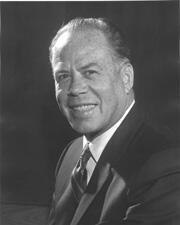
Here you will find contact information for Senator Thomas Henry Kuchel, including email address, phone number, and mailing address.
| Name | Thomas Henry Kuchel |
| Position | Senator |
| State | California |
| Party | Republican |
| Status | Former Representative |
| Term Start | January 3, 1953 |
| Term End | January 3, 1969 |
| Terms Served | 3 |
| Born | August 15, 1910 |
| Gender | Male |
| Bioguide ID | K000335 |
About Senator Thomas Henry Kuchel
Thomas Henry Kuchel (pronounced KEE-kəl; August 15, 1910 – November 21, 1994) was an American politician who served as a United States Senator from California from 1953 to 1969. A member of the Republican Party and a leading moderate within its ranks, he held the post of Senate minority whip and played a central role in the passage of landmark civil rights legislation, serving as co-manager on the Senate floor for the Civil Rights Act of 1964 and the Voting Rights Act of 1965. Over the course of three terms in the Senate, he contributed significantly to the legislative process during a transformative period in American political and social history.
Kuchel was born in Anaheim, Orange County, California, the son of Henry Kuchel, a newspaper editor, and the former Letitia Bailey. He attended local public schools and distinguished himself early in student leadership and public speaking. At Anaheim High School he served as student body president, was a yell leader, and participated on the debate team. In one notable high school debate, he faced and defeated a student from Whittier High School, Richard Nixon, who would later become both his intraparty rival and, indirectly, the source of his elevation to the U.S. Senate. This early exposure to debate and public affairs helped shape Kuchel’s interest in law and politics.
Following his secondary education, Kuchel enrolled at the University of Southern California, from which he graduated in 1932. While at USC he was a member of the Phi Kappa Psi fraternity. He continued his studies at the University of Southern California Law School, earning his law degree before entering public service. Trained as an attorney, he was admitted to the bar and began practicing law in California, but quickly moved into elective office, combining legal expertise with an emerging reputation as a pragmatic and moderate Republican.
Kuchel’s political career in California began in the state legislature. He served in the California State Assembly from 1937 to 1941, and then in the California State Senate from 1941 to 1945. During World War II he served as a lieutenant commander in the U.S. Naval Reserve, balancing military service with his responsibilities in public life. After the war, he was elected California State Controller, holding that statewide office from 1946 to 1953. As controller he gained experience in fiscal management and statewide administration, further enhancing his profile within the California Republican Party.
In 1953, Governor Earl Warren appointed Kuchel to the United States Senate to fill the vacancy created when Republican Senator Richard Nixon was elected Vice President of the United States. Kuchel was subsequently elected in 1954 to serve the remainder of Nixon’s term and won full terms in 1956 and 1962. As a senator, he initially tried to remain above the factional struggles that divided California Republicans in the 1950s, particularly the rivalry among Vice President Nixon, Senate Republican Leader William F. Knowland, a conservative, and Governor Goodwin J. Knight, a liberal. Though known as a moderate, Kuchel ultimately backed Knowland in his 1958 effort to unseat Knight in the Republican gubernatorial primary. Knight withdrew from his re-election bid to run for Knowland’s Senate seat instead, but both men were defeated in the general election, marking a significant setback for the state party.
Kuchel’s own electoral fortunes remained strong through the early 1960s. In his 1962 campaign for a second full Senate term, he conspicuously refused to endorse his ticket-mate Richard Nixon in Nixon’s contentious race for governor against Democratic incumbent Edmund G. “Pat” Brown Sr. The election cycle favored incumbents: Brown defeated Nixon by a comfortable margin, and Kuchel “coasted” to victory, becoming, to date, the last senatorial candidate to carry all 58 California counties in a single election. Within the national party, however, Kuchel increasingly clashed with the ascendant conservative wing. In 1964, when William F. Knowland urged him to endorse Senator Barry Goldwater for the Republican presidential nomination, Kuchel instead supported New York Governor Nelson Rockefeller, who narrowly lost the California presidential primary to Goldwater. During that campaign, Kuchel warned in advertisements that control of the California Republican Party by the right-wing movement would lead to the destruction of the two-party system.
Kuchel’s moderate and often outspoken stance made him a target of conservative activists. While he was campaigning against Goldwater, a “vicious document” was circulated purporting to be an affidavit by a Los Angeles police officer alleging that Kuchel had been arrested in 1949 for drunkenness while engaged in a sex act with a man. The charges were false, and four men were indicted for libel in connection with the smear: Norman H. Krause, a bar owner and former Los Angeles policeman who had in fact arrested two employees from Kuchel’s office for drunkenness in 1950; Jack D. Clemmons, a Los Angeles police sergeant who resigned shortly before his arrest; John F. Fergus, a public relations executive previously charged with possession of a concealed weapon; and Francis A. Capell of Zarephath, New Jersey, publisher of a right-wing newsletter. Kuchel continued to denounce the far-right movement within the GOP. In a May 1963 Senate speech, he described its adherents not as conservatives but as “radicals with a capital R” who defiled conservatism, and in 1966 he condemned what he called “a fanatical neo-fascist political cult of right-wingers in the GOP, driven by a strange mixture of corrosive hatred and sickening fear that is recklessly determined to control our party or destroy it!”
Within the Senate, Kuchel emerged as one of the chamber’s leading moderate Republicans and a key ally of bipartisan civil rights and social legislation. As minority whip, he helped marshal Republican support for major civil rights measures. He voted in favor of the Civil Rights Acts of 1957, 1960, and 1964, and was a floor co-manager for the Civil Rights Act of 1964 and the Voting Rights Act of 1965. He also supported the 24th Amendment to the U.S. Constitution, which abolished the poll tax in federal elections, and voted for the Voting Rights Act of 1965 and for the confirmation of Thurgood Marshall as the first African American justice of the U.S. Supreme Court. Although he did not vote on the Civil Rights Act of 1968, his overall record placed him firmly in the pro–civil rights camp. Kuchel was one of thirteen Republican senators to vote in favor of the creation of Medicare, reflecting his broader commitment to what he later termed “progressive Republican” principles—governing, as he described it in 1981, for the many rather than the few.
The growing strength of the conservative movement in California ultimately undermined Kuchel’s political base. During the 1966 California gubernatorial primary, moderates urged him to run against conservative actor Ronald Reagan, but Kuchel declined, citing the hostility of the right-wing faction and choosing instead to criticize them from within the Senate. In 1968 he sought renomination for a fourth term but was narrowly defeated in the Republican primary by Max Rafferty, the conservative state Superintendent of Public Instruction. Rafferty went on to lose the general election to Democrat Alan Cranston, who, like Kuchel, had previously served as California State Controller. After leaving the Senate in January 1969, Kuchel returned to California and settled in Beverly Hills, where he practiced law until his retirement in 1981. During his post-Senate legal career, he was appointed by the Supreme Court to represent the appellee in the case of United States v. 12 200-ft. Reels of Film, further demonstrating his continued engagement with significant legal issues.
Kuchel’s influence extended to a younger generation of public officials. Future Secretary of Defense, White House Chief of Staff, and Director of Central Intelligence Leon Panetta began his political career as a legislative assistant to Kuchel and later cited him as “a tremendous role model.” Kuchel remained a respected figure in California public life long after his retirement. He died of lung cancer on November 21, 1994, in Beverly Hills, California. On August 17, 2010, the Beverly Hills City Council paid tribute to him on the 100th anniversary of his birth. His widow, Betty Kuchel, and daughter, Karen Kuchel, accepted a proclamation in his honor from Councilman William Warren Brien—grandson of Governor Earl Warren, who had first appointed Kuchel to the Senate—at a city council meeting recognizing his long record of public service.