Representative Thomas Graves Lawson
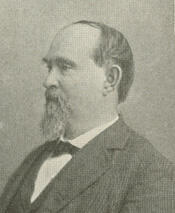
Here you will find contact information for Representative Thomas Graves Lawson, including email address, phone number, and mailing address.
| Name | Thomas Graves Lawson |
| Position | Representative |
| State | Georgia |
| District | 8 |
| Party | Democratic |
| Status | Former Representative |
| Term Start | December 7, 1891 |
| Term End | March 3, 1897 |
| Terms Served | 3 |
| Born | May 2, 1835 |
| Gender | Male |
| Bioguide ID | L000146 |
About Representative Thomas Graves Lawson
Thomas Graves Lawson (May 2, 1835 – April 16, 1912) was a Democratic Congressional Representative from Georgia who served three terms in the United States House of Representatives from 1891 to 1897. Over the course of his public career, he represented the interests of his constituents during a significant period in American history and contributed to the legislative process as a member of the House of Representatives.
Lawson was born on May 2, 1835, in Eatonton, Putnam County, Georgia. He grew up in the antebellum South, in a region dominated by agriculture and plantation life, an environment that shaped both his early experiences and his later professional pursuits. His family background and early surroundings in rural Georgia provided the foundation for his lifelong connection to the state and its political and economic life.
Lawson pursued a formal education in Georgia before entering the legal profession. After completing his preparatory studies, he read law and was admitted to the bar, beginning the practice of law in his native state. His legal training and early practice established his reputation in the community and prepared him for subsequent roles in public service. In addition to his legal work, he became involved in agricultural pursuits, reflecting the central role of farming and landholding in the economy and society of nineteenth-century Georgia.
Before his election to Congress, Lawson built a career that combined law, agriculture, and public life. As a lawyer, he represented local interests and became a figure of some prominence in his region. His engagement with agricultural affairs and his understanding of the concerns of rural constituents helped position him as a credible advocate for Georgia’s farming communities. This combination of legal expertise and practical experience in agriculture made him a natural candidate for higher office at a time when the South was grappling with the economic and social transformations that followed the Civil War and Reconstruction.
Lawson was elected as a Democrat to the United States House of Representatives and served three consecutive terms from 1891 to 1897. His tenure in Congress spanned the Fifty-second, Fifty-third, and Fifty-fourth Congresses, a period marked by debates over monetary policy, tariffs, and the evolving role of the federal government in economic affairs. As a member of the House of Representatives, Thomas Graves Lawson participated in the democratic process and represented the interests of his Georgia constituents, contributing to the legislative process during a time of significant political and economic change in the United States. He aligned with the Democratic Party’s positions of the era, which in Georgia generally emphasized states’ rights, low tariffs, and policies favorable to agrarian interests.
After leaving Congress in 1897, Lawson returned to private life in Georgia. He resumed the practice of law and continued his involvement in agricultural pursuits, maintaining his ties to the community and the way of life that had shaped his career. In his later years, he remained a respected figure in his region, known for his service in the national legislature as well as his longstanding professional and civic engagement within the state.
Thomas Graves Lawson died on April 16, 1912, in Eatonton, Putnam County, Georgia, the community where he had been born and where he had spent much of his life. His career reflected the trajectory of a nineteenth-century Southern lawyer and landholder who rose to national office, served multiple terms in Congress, and then returned to his home state, leaving a record of service during a formative era in both Georgia and United States history.