Representative Thomas Lowndes
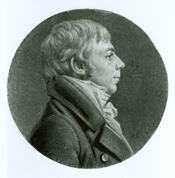
Here you will find contact information for Representative Thomas Lowndes, including email address, phone number, and mailing address.
| Name | Thomas Lowndes |
| Position | Representative |
| State | South Carolina |
| District | 1 |
| Party | Federalist |
| Status | Former Representative |
| Term Start | December 7, 1801 |
| Term End | March 3, 1805 |
| Terms Served | 2 |
| Born | January 22, 1766 |
| Gender | Male |
| Bioguide ID | L000482 |
About Representative Thomas Lowndes
Thomas Lowndes was a United States Representative from South Carolina who served in the early years of the federal republic. A member of the Federalist Party, he represented his state in the United States Congress from 1801 to 1805, serving two terms in the House of Representatives. He is distinct from an earlier namesake, Thomas Lowndes (1692–1748), a British astronomer; Thomas Lowndes the congressman was born in 1766 and died in 1843, and is specifically noted in historical records as a U.S. congressman from South Carolina.
Born in 1766, Thomas Lowndes came of age in the decades immediately following the American Revolution, during a period when South Carolina’s political and economic structures were being reshaped under the new federal Constitution. Although detailed records of his early life and formal education are sparse, his later career in public office suggests that he was well acquainted with the legal, commercial, and political issues of his time. Growing up in a state dominated by plantation agriculture and maritime trade, he would have been exposed early to the debates over federal power, commercial policy, and the balance between state and national interests that defined South Carolina’s political culture in the late eighteenth century.
By the turn of the nineteenth century, Lowndes had established himself sufficiently in public and civic life to be elected to the United States House of Representatives. As a Federalist, he aligned with the party that generally favored a strong national government, a robust commercial economy, and closer ties with Great Britain, positions that often placed Federalists in South Carolina in a political minority as Jeffersonian Republican influence grew. Nonetheless, his election demonstrated that there remained a constituency in his district that supported Federalist principles and looked to him to articulate their views in the national legislature.
Thomas Lowndes served in Congress from 1801 to 1805, a period that encompassed the early years of Thomas Jefferson’s presidency and significant developments in the young republic’s political life. During his two terms in the House of Representatives, he participated in the legislative process at a time when issues such as the scope of federal authority, the direction of American foreign policy, and the nation’s commercial and maritime interests were vigorously contested. As a member of the House, he took part in debates and votes that shaped the trajectory of the United States in the first decade of the nineteenth century, representing the interests and concerns of his South Carolina constituents within a rapidly evolving party system.
Lowndes’s congressional service occurred during a significant period in American history, when the peaceful transfer of power from Federalists to Democratic-Republicans in 1801 tested and confirmed the durability of the new constitutional order. In this environment, Federalist representatives like Lowndes played a role in defining the loyal opposition, scrutinizing the policies of the Jefferson administration, and contributing to the institutional development of Congress. His tenure coincided with the broader decline of the Federalist Party nationally, as Republican strength expanded in the South and West, making his service emblematic of the last phase of Federalist influence in many Southern districts.
After leaving Congress in 1805, Thomas Lowndes returned to private life in South Carolina. While detailed records of his later activities are limited, his continued presence in the state through the first half of the nineteenth century placed him as a witness to the profound changes that followed his congressional career, including the intensification of sectional debates and the transformation of the state’s political alignments. He lived until 1843, his lifespan bridging the era from the founding generation into the age of Jacksonian democracy. Thomas Lowndes died in 1843, remembered in the historical record as a Federalist U.S. congressman from South Carolina who served two terms in the House of Representatives during a formative period in the nation’s political development.