Representative Thomas Lynch
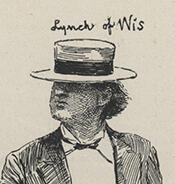
Here you will find contact information for Representative Thomas Lynch, including email address, phone number, and mailing address.
| Name | Thomas Lynch |
| Position | Representative |
| State | Wisconsin |
| District | 9 |
| Party | Democratic |
| Status | Former Representative |
| Term Start | December 7, 1891 |
| Term End | March 3, 1895 |
| Terms Served | 2 |
| Born | November 21, 1844 |
| Gender | Male |
| Bioguide ID | L000534 |
About Representative Thomas Lynch
Thomas Lynch Jr. (August 5, 1749 – December 17, 1779) was a Founding Father of the United States, a signer of the Declaration of Independence as a representative of South Carolina, and a member of the Continental Congress. He was part of a politically prominent family; his father, Thomas Lynch, was a member of the Continental Congress and had signed the 1774 Continental Association. When the elder Lynch was forced to step down from his congressional duties because of illness, Thomas Lynch Jr. was selected to fill his post, making them the only father and son to serve successively in the Continental Congress. In a separate era, another Thomas Lynch served as a Representative from Wisconsin in the United States Congress from 1891 to 1895. A member of the Democratic Party, this later Thomas Lynch contributed to the legislative process during two terms in office, participating in the democratic process and representing the interests of his constituents during a significant period in American history.
Lynch Jr. was born at Hopsewee Plantation in Prince George Parish, Winyah, in what is now Georgetown, South Carolina. He was the third child and first son of Thomas Lynch and Elizabeth (née Allston) Lynch. He had two older sisters, Sabina and Esther, born in 1747 and 1748, respectively. His mother was the daughter of William Allston and his wife, Esther LaBrosse de Marboeuf. According to family tradition, Thomas Lynch Sr. was introduced to Elizabeth Allston at a ball held at Magnolia Plantation and Gardens in Charleston, South Carolina, the childhood home of John Drayton Sr., where they mingled with prominent Lowcountry families such as the Middletons, Randolphs, and Rutledges. Lynch’s paternal ancestry traced to Jonas Lynch of County Galway, Ireland; the Lynch family had been expelled from Ireland following their defeat in the Irish wars of William of Orange. Lynch Sr. later emigrated from Kent, England, to South Carolina, where he became a prominent political figure and planter, a status that afforded his son access to wealth, social standing, and advanced education.
Lynch Jr. received his early education at the Indigo Society School in Georgetown, South Carolina, an institution established by local planters. His parents then sent him to England for higher studies, reflecting his father’s admiration for British education and constitutional principles. He attended Eton College, where he distinguished himself, and then Gonville and Caius College, Cambridge, receiving honors at both institutions. He went on to study law and political philosophy at the Middle Temple in London, preparing for a legal career in the British imperial system. Although his father hoped he would remain in Great Britain to pursue law and deepen his understanding of the British constitution, Lynch Jr. returned to South Carolina in 1772 after approximately eight years abroad and chose to abandon the formal pursuit of a legal profession.
Shortly after his return, on May 14, 1772, Lynch Jr. married Elizabeth Shubrick, a member of another influential South Carolina family. The couple resided at Peach Tree (often rendered Peachtree) Plantation near his family’s Hopsewee estate on the South Santee River. There Lynch Jr. managed the cultivation of rice and other crops on plantations that depended on the labor of numerous enslaved African Americans, reflecting the economic and social foundations of the Lowcountry planter elite. Even as he focused on plantation management, he remained active in local political affairs. Within his extended family, his widowed mother later married William Moultrie, who would become governor of South Carolina, further intertwining the Lynches with leading political figures. His sister Sabina Hope Lynch married James Hamilton, a member of the planter class; one of their sons, James Hamilton Jr., was elected governor of South Carolina in 1830, continuing the family’s political legacy.
Lynch Jr.’s formal political career began amid the growing colonial resistance to British rule. On February 11, 1775, he was elected a member of the South Carolina Provincial Congress, a revolutionary body formed to prepare a plan of government and represent the people of the colony. In this assembly he served alongside notable figures such as Charles Cotesworth Pinckney, John Rutledge, Charles Pinckney, Henry Laurens, Christopher Gadsden, Rawlins Lowndes, Arthur Middleton, Henry Middleton, Thomas Bee, and Thomas Heyward Jr. The Provincial Congress drafted a constitution for South Carolina, which, though controversial and objected to by some in the colony as well as by the Continental Congress, functioned as a temporary framework of government at a time when many still hoped for reconciliation with Great Britain. In addition to his legislative work, Lynch became a company commander in the First South Carolina Regiment on June 12, 1775, commissioned by the Provincial Congress. He raised a company and led a march into Charlestown (Charleston), but during this service he was stricken with a severe bilious fever that left him in poor health and unable to continue his military duties.
While recovering from his illness, Lynch Jr. learned of his father’s declining health in Philadelphia, where the elder Lynch was serving in the Continental Congress. Lynch Jr. requested permission from his commanding officer, Colonel Christopher Gadsden, to travel north to attend his father, a request initially denied due to military needs. However, on March 23, 1776, the General Assembly of South Carolina named him as the sixth delegate from the colony to the Continental Congress. This election changed his status, and he was allowed to travel to Philadelphia. Despite his fragile health, he undertook the journey and joined the Continental Congress, where he and his father briefly served together before the elder Lynch’s condition forced his withdrawal. Lynch Jr., then the second youngest delegate in the Congress—only three months older than fellow South Carolinian Edward Rutledge, the youngest signer—assumed his father’s responsibilities and, in July 1776, signed the Declaration of Independence on behalf of South Carolina.
Lynch Jr.’s tenure in the Continental Congress was brief but notable. Less than a month after signing the Declaration, he forcefully articulated the concerns of the South Carolina planter class regarding slavery and property rights. He warned that if Congress debated “whether their Slaves are their Property, there is an End of the Confederation,” a statement reflecting both the centrality of enslaved labor to his constituents’ wealth and the early sectional tensions within the nascent union. His health, however, continued to deteriorate. After signing the Declaration, he set out for home with his ailing father. During their return journey, his father suffered a second stroke and died in Annapolis, Maryland, in December 1776. Lynch Jr. himself retired from public life in early 1777, unable to continue in Congress or military service because of chronic illness.
During the final years of his life, Lynch Jr. lived quietly with his wife at Peachtree Plantation on the South Santee River, suffering from lingering effects of his earlier illness. Friends and physicians recommended a change of climate, and in late 1779 he decided to travel to Europe in search of improved health. On December 17, 1779, he and his wife embarked on the brigantine Polly, bound for St. Eustatius in the West Indies as the first leg of their journey. The ship disappeared at sea and was never heard from again. Both were presumed lost, and Lynch Jr. thus became the youngest signer of the Declaration of Independence to die, perishing at the age of 30. At the time of his death, he owned three plantations and more than 250 enslaved African Americans, who were treated as personal property and formed a substantial part of his estate.
Lynch Jr.’s will contained unusual provisions designed to preserve the Lynch name and estate. He required that the heirs of his female relatives adopt the Lynch surname in order to inherit a share of the family property. His sister Sabina complied, changing her name and that of her descendants to Lynch to secure the inheritance. She and her husband managed Peachtree Plantation until their son, John Bowman Lynch, reached adulthood. John Bowman Lynch and his wife had three sons: Henry C. Lynch (1828–1843), who died before adulthood; Thomas B. Lynch (1821–1864), who was killed during the American Civil War; and James (N.M.) Lynch (1822–1887), who lived the longest. After Sabina’s death, the family estate passed to her youngest sister, Aimée Constance Dé’Illiard Drayton, in accordance with Lynch Jr.’s stipulation that the estate remain within the family.
The physical and symbolic legacy of Thomas Lynch Jr. has endured beyond his short life. His birthplace, Hopsewee Plantation, was listed on the National Register of Historic Places and designated a National Historic Landmark in 1971, recognized for its association with a signer of the Declaration of Independence and as an example of an 18th-century rice plantation. In his 1856 work “Lives of the Signers to the Declaration of Independence,” the Reverend Charles A. Goodrich praised Lynch “as a man of exalted views and exalted moral worth,” asserting that “in all the relations of life, whether as a husband, a friend, a patriot, or the master of the slave, he appeared conscious of his obligations, and found his pleasure in discharging them,” a judgment that reflects the values of his era and the contradictions of a slaveholding republic. Because his service in Congress lasted less than a year and he spent much of that time in poor health, Lynch left behind very few documents. Only a single letter and a handful of signatures on official papers are known to survive. As a result, his autograph is among the rarest of all the signers of the Declaration of Independence and has commanded prices as high as $250,000. His life and disappearance at sea have placed him among those who vanished mysteriously in maritime history, and he has been portrayed in popular culture, including by Richard Bond in the 1938 film “Declaration of Independence.”