Senator Thomas Staples Martin
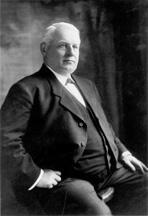
Here you will find contact information for Senator Thomas Staples Martin, including email address, phone number, and mailing address.
| Name | Thomas Staples Martin |
| Position | Senator |
| State | Virginia |
| Party | Democratic |
| Status | Former Representative |
| Term Start | December 2, 1895 |
| Term End | November 12, 1919 |
| Terms Served | 5 |
| Born | July 29, 1847 |
| Gender | Male |
| Bioguide ID | M000200 |
About Senator Thomas Staples Martin
Thomas Staples Martin (July 29, 1847 – November 12, 1919) was an American lawyer and Democratic Party politician from Albemarle County, Virginia, who became one of the most influential political figures in his state at the turn of the twentieth century. Born in Albemarle County, he came of age in the aftermath of the Civil War, in a region and state undergoing profound political and economic transformation. Over the course of his life, Martin built a durable political organization that would dominate Virginia politics for decades and laid the groundwork for what later became known as the Byrd Organization, a powerful Democratic machine that shaped state and national policy well into the mid‑twentieth century.
Martin’s early years were spent in rural Virginia, where he was educated before turning to the study of law. He qualified for the bar and established himself as a practicing attorney, gaining experience that would later inform his legislative work and his understanding of the legal and constitutional issues facing the post‑Reconstruction South. His legal practice, combined with his growing involvement in Democratic Party affairs, helped him cultivate relationships with local leaders and voters, positioning him as a rising figure in Virginia’s political life. Through careful organization and attention to patronage and party discipline, he gradually assembled a network of supporters that would become the core of his statewide political machine.
As a lawyer and party strategist, Martin emerged as a central figure in Virginia’s Democratic Party during the late nineteenth century. He was instrumental in constructing a tightly organized political structure that controlled nominations, patronage, and legislative priorities, ensuring Democratic dominance in a period marked by the decline of Reconstruction-era Republican influence and the entrenchment of segregationist policies across the South. This organization, which he founded and guided, maintained its hold on Virginia politics long after his death and was later identified with Senator Harry F. Byrd Sr., under whose leadership it became widely known as the Byrd Organization. Martin’s role in creating this system made him a key architect of Virginia’s one‑party rule and its conservative fiscal and social policies.
In 1894, after years as a bachelor, Martin married Lucy Chambliss Day (1875–1915), a prominent society figure from Southside Virginia. She was the daughter of Col. C. Fenton Day (1846–1915), a former mayor of Smithfield and an important businessman in the Isle of Wight area, who owned one of the region’s four peanut factories and was part owner of a cement factory. The Day family had been prominent in Virginia public life before the Civil War; Lucy’s grandfather, William Henry Day (1802–1867), had served in the Virginia Senate immediately before the conflict. Lucy Day Martin was widely admired as a belle of Southside Virginia and at the various watering places where her family spent summers. Possessing notable literary talent, she published poems and prose pieces that were praised for their beauty of thought and expression, and she was also known as an accomplished swimmer and equestrian. She and her sister, Grace Radcliffe Day—who married businessman Henry Gould Ralston in 1910—were recognized society belles in Washington, D.C. Thomas and Lucy Martin had two children, a son, Thomas Martin Jr., and a daughter, Lucy Day Martin (1897–1927). Their daughter survived both parents but, like her mother, died of tuberculosis.
Martin’s formal congressional career began when he was elected as a Democrat to the United States Senate from Virginia, taking office on March 4, 1895. He served continuously in the Senate from 1895 until his death in 1919, a span of nearly a quarter century that encompassed five terms in office. During this period, he represented Virginia through the closing years of the Gilded Age, the Progressive Era, and World War I, participating in the legislative process at a time of major national change. As a senator, he was a loyal member of the Democratic Party and used his organizational skills and command of patronage to consolidate his influence both in Virginia and within the Senate itself. His tenure coincided with debates over tariffs, banking reform, railroad regulation, and America’s emerging role on the world stage, and he consistently worked to represent the interests of his Virginia constituents, including agricultural, business, and railroad interests that were central to the state’s economy.
Within the Senate, Martin rose to positions of substantial authority. Over the course of his long service, he became the Democratic leader in the chamber, serving as majority leader when his party controlled the Senate and later as minority leader when it did not. In these roles, he was responsible for coordinating party strategy, managing the legislative calendar, and negotiating with the executive branch and the opposition. His leadership coincided with the Democratic resurgence under President Woodrow Wilson, and he played a part in advancing key elements of the Wilson administration’s agenda, including aspects of the New Freedom reforms and wartime legislation during World War I. His ability to maintain party discipline and to translate his organizational strength in Virginia into influence in Washington made him one of the central Democratic figures in Congress during his era.
Thomas Staples Martin remained in office until his death, continuing to serve as a senator from Virginia and as a party leader up to the final months of his life. His wife, Lucy Chambliss Day Martin, predeceased him in 1915, succumbing to tuberculosis. Martin himself died in office on November 12, 1919. Their daughter, Lucy Day Martin, lived until 1927 but also died of tuberculosis, underscoring the personal losses that marked the later years of his life. Following his death, his career and contributions were commemorated in official proceedings of Congress, including memorial addresses delivered in the House of Representatives and the Senate, later published with a frontispiece in 1922 under the title “Thomas S. Martin, late a representative from Virginia.” Through his long Senate service, his leadership roles in Congress, and his creation of a political organization that shaped Virginia for decades, Martin left a lasting imprint on both his state and the national Democratic Party.