Representative Thomas Chipman McRae
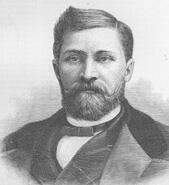
Here you will find contact information for Representative Thomas Chipman McRae, including email address, phone number, and mailing address.
| Name | Thomas Chipman McRae |
| Position | Representative |
| State | Arkansas |
| District | 3 |
| Party | Democratic |
| Status | Former Representative |
| Term Start | December 7, 1885 |
| Term End | March 3, 1903 |
| Terms Served | 9 |
| Born | December 21, 1851 |
| Gender | Male |
| Bioguide ID | M000597 |
About Representative Thomas Chipman McRae
Thomas Chipman McRae (December 21, 1851 – June 2, 1929) was an American attorney and Democratic politician from Arkansas who served nine consecutive terms in the United States House of Representatives from 1885 to 1903 and later became the twenty-sixth governor of Arkansas, serving from 1921 to 1925. Often described as a “Woodrow Wilson progressive,” he was identified with reform-oriented elements of the Democratic Party and played a significant role in Arkansas and national politics during a period of substantial economic and social change.
McRae was born on December 21, 1851, in Mount Holly, Union County, Arkansas, into a family rooted in the antebellum South. He came of age during the Civil War and Reconstruction, experiences that shaped his understanding of law, governance, and the challenges facing the postwar South. His early life in rural Arkansas exposed him to the agricultural and economic concerns of small farmers and local communities, interests that would later inform his legislative priorities and his approach to public service.
Pursuing higher education at a time when formal schooling in the region was still developing, McRae studied law and prepared for the bar, entering a profession that was a common pathway into politics in the late nineteenth century. After completing his legal training, he was admitted to the bar and began practicing as an attorney in Arkansas. His legal career provided him with a detailed knowledge of state and federal law and brought him into contact with a broad range of clients, from landowners and merchants to ordinary citizens, thereby deepening his familiarity with the legal and economic issues confronting his state.
McRae’s professional success and growing reputation as a capable lawyer led naturally into public life. As a Democrat in a period when the Democratic Party dominated Arkansas politics, he became active in party affairs and local governance. His legal expertise and political engagement positioned him as a credible candidate for national office, and he was elected to the United States House of Representatives as a Democrat from Arkansas in 1884, taking his seat in March 1885. His election marked the beginning of an extended congressional career that would span nine terms, reflecting the confidence of his constituents in his representation.
From 1885 to 1903, McRae served continuously in the House of Representatives, participating in the legislative process during a significant period in American history that encompassed the Gilded Age and the dawn of the Progressive Era. As a member of the House, he represented the interests of his Arkansas constituents in matters such as agriculture, transportation, and economic development, while also engaging with broader national questions of tariff policy, monetary issues, and federal regulation. His long tenure in Congress allowed him to accumulate seniority and influence, and he became known as a steady, workmanlike legislator who contributed to committee work and floor debates in support of Democratic policies and regional priorities.
After leaving Congress in 1903, McRae returned to Arkansas and resumed the practice of law, remaining an influential figure in state Democratic politics. Over the following years he was associated with the reform-minded wing of the party, and his outlook aligned with the progressive currents that would later be identified with President Woodrow Wilson. This reputation as a “Woodrow Wilson progressive” reflected his support for measures aimed at modernizing government, improving public administration, and addressing economic inequities, while still operating firmly within the framework of Southern Democratic politics of his era.
McRae’s continued prominence in Arkansas public life culminated in his election as the twenty-sixth governor of Arkansas, a post he held from 1921 to 1925. As governor, he brought to the executive office the legislative experience he had gained in Congress and the reform sensibilities associated with the Progressive Era. His administration oversaw efforts to improve state governance and address fiscal and administrative issues, and he remained attentive to the needs of rural communities and the agricultural sector that formed the backbone of Arkansas’s economy. His gubernatorial service extended his public career into the early twentieth century, bridging the period between post-Reconstruction politics and the modernizing impulses of the 1920s.
In his later years, following the conclusion of his gubernatorial term in 1925, McRae withdrew from active elective politics but continued to be regarded as an elder statesman within Arkansas. He returned to private life, drawing on his long experience as an attorney and public official, and remained a respected figure in legal and political circles. Thomas Chipman McRae died on June 2, 1929, closing a public career that had spanned more than four decades and had included service as a nine-term United States Representative and as governor of Arkansas during a transformative era in the state’s and the nation’s history.