Representative Thomas Ezekiel Miller
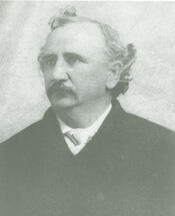
Here you will find contact information for Representative Thomas Ezekiel Miller, including email address, phone number, and mailing address.
| Name | Thomas Ezekiel Miller |
| Position | Representative |
| State | South Carolina |
| District | 7 |
| Party | Republican |
| Status | Former Representative |
| Term Start | December 2, 1889 |
| Term End | March 3, 1891 |
| Terms Served | 1 |
| Born | June 17, 1849 |
| Gender | Male |
| Bioguide ID | M000757 |
About Representative Thomas Ezekiel Miller
Thomas Ezekiel Miller (June 17, 1849 – April 8, 1938) was an American educator, lawyer, and Republican politician who served as a Representative from South Carolina in the United States Congress from 1889 to 1891. One of only five African Americans elected to Congress from the South in the Jim Crow era of the last decade of the nineteenth century, he was a prominent leader in the struggle for civil rights in the American South during and after Reconstruction. Over the course of his public life he served as a school commissioner, state legislator, U.S. Representative, and the first president of South Carolina State University, a historically black college established as a land-grant institution.
Miller was born in Ferrebeeville, South Carolina, a community named for his adoptive mother’s likely enslaver. His parentage was long a subject of speculation because of his European appearance and high proportion of European ancestry. Historians Eric Foner and Stephen Middleton have concluded that his mother was a fair‑skinned mulatto daughter of Judge Thomas Heyward Jr., a signer of the Declaration of Independence, and that his father was a wealthy young white man whose family rejected their relationship and forced him to give up his son for adoption. The boy was adopted by Richard and Mary Ferrebee Miller, former slaves who had been freed by 1850. In 1851 the family moved to Charleston, where Miller attended a school for free colored children. At the end of the Civil War he moved north to Hudson, New York. Although his appearance would have allowed him to pass as white in the North, he chose to identify as Black and ultimately returned to the South to work on behalf of the newly freed African-American population.
With the aid of a scholarship, Miller attended Lincoln University, a historically black college in Pennsylvania, and graduated in 1872. That same year he returned to South Carolina and was appointed school commissioner of Beaufort County, beginning a long career in education and public service. He studied law at South Carolina College (now the University of South Carolina) in Columbia, which, under the Reconstruction-era Republican state legislature, admitted Black students for the first time. Miller completed his legal studies and graduated in 1875, and he was admitted to the bar that same year. After Democrats regained control of the state legislature in 1876–1877, they forced Black students out of the state’s flagship college, but by then Miller had already established himself as a lawyer and public official.
Miller entered elective politics as a Republican and was elected to the South Carolina House of Representatives in 1874, serving three terms until 1880. He was then elected to the South Carolina Senate in 1880, serving one term until 1882, and at one point was nominated for lieutenant governor, though he did not enter that race. In 1884 he was elected chairman of the state Republican Party. Throughout his political career he struggled for acceptance in both Black and white communities. Some African-American political rivals disparaged him as a white impostor seeking to exploit the post–Civil War Black electorate, while many white colleagues ostracized him because he embraced the Black heritage and community in which he had been raised by his adoptive parents.
In 1888 Miller ran as a Republican for the U.S. House of Representatives from South Carolina’s 7th Congressional District, a “shoestring” district that had been gerrymandered by the state legislature to include a large Black population, while other districts were drawn to be overwhelmingly white. The Democratic candidate, William Elliott, was declared the winner by an official vote of 8,358 to 7,003. Miller contested the result, charging that many properly registered Black voters had been prevented from casting effective ballots by the state’s “eight‑box ballot” system, adopted in 1882, which required voters to place separate ballots for each office in correctly labeled boxes. White voters often received instruction in the system, while Black voters did not, leading to widespread disqualification of their ballots and a sharp decline in Black turnout. The House Committee on Elections ultimately ruled in Miller’s favor, and he was seated in the Fifty‑First Congress in 1890. He served one term in the House of Representatives, from 1889 to 1891, participating in the legislative process and representing the interests of his South Carolina constituents during a critical period in American history. In the fall 1890 election for the term beginning in 1891, he was again opposed by William Elliott and was defeated.
As African-American candidates increasingly competed in majority-Black districts in the 1890s, questions of ancestry and color became central to intraparty struggles. Tensions arose between lighter‑skinned politicians such as Miller and Robert Smalls and darker‑skinned leaders such as George W. Murray. Miller, Smalls, and Murray all sought the Republican nomination in the 7th District during the 1890s; Murray secured the nomination and the seat in 1892. Miller returned to state politics and was re‑elected to the South Carolina House of Representatives in 1894. He also served as a delegate to the 1895 South Carolina constitutional convention called by Governor Benjamin Tillman, a leading advocate of white supremacy. Tillman and other Democratic leaders sought to go beyond statutory changes and embed Black disfranchisement in the state constitution. The resulting document imposed longer residency requirements, literacy tests administered by white officials, poll taxes, and a $300 property qualification, measures that effectively disfranchised most African-American citizens for more than half a century and also excluded them from jury service and local office. Miller, Murray, and four other Black delegates opposed the constitution and refused to ratify it, publicizing their objections in the New York World and drawing national attention to the systematic suppression of Black voting rights.
Despite their profound political differences, Miller secured Tillman’s support for the creation of a land‑grant college for African Americans within South Carolina’s segregated system of higher education. In 1896 the Colored Normal, Industrial, Agricultural, and Mechanical College of South Carolina was established at Orangeburg; it later developed into South Carolina State University. Appointed by the governor as the college’s first president, Miller resigned his seat in the state House to assume the post. He led the institution through its formative years, shaping its mission as a historically black college dedicated to teacher training, industrial education, and agricultural and mechanical instruction. He remained active in state politics and, in 1910, publicly opposed the gubernatorial candidacy of Coleman Blease. After Blease’s election, the new governor forced Miller’s resignation from the college presidency in retaliation for his opposition.
Following his departure from the Orangeburg institution, Miller returned to Charleston, where he continued to work on community causes and remained engaged in public affairs. During World War I he supported United States participation in the conflict and helped recruit approximately 30,000 Black men for service in the Armed Forces. From 1923 to 1934 he lived in Philadelphia, Pennsylvania, before returning once more to Charleston. In his personal life, Miller married Anna Hume, with whom he had nine children. His family included several notable descendants, among them his son‑in‑law William Wilson Cooke, a prominent architect who married Miller’s daughter Anne Miller; their children included Anne Cooke Reid and Lloyd Miller Cooke.
Miller spent his final years in Charleston, where he remained a respected elder statesman within the African-American community. He died there on April 8, 1938. Reflecting his lifelong decision to identify with and work for the advancement of African Americans despite his ability to pass as white, he requested that his gravestone bear the inscription: “Not having loved the white less, but having felt the Negro needed me more.” His career as a school commissioner, state legislator, U.S. Representative, and college president marked him as a central figure in Black political and educational leadership in South Carolina during the era spanning Reconstruction, Redemption, and the entrenchment of Jim Crow.