Representative Thomas E. Morgan
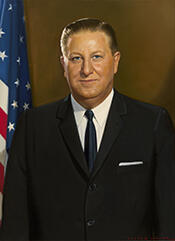
Here you will find contact information for Representative Thomas E. Morgan, including email address, phone number, and mailing address.
| Name | Thomas E. Morgan |
| Position | Representative |
| State | Pennsylvania |
| District | 22 |
| Party | Democratic |
| Status | Former Representative |
| Term Start | January 3, 1945 |
| Term End | January 3, 1977 |
| Terms Served | 14 |
| Born | October 13, 1906 |
| Gender | Male |
| Bioguide ID | M000958 |
About Representative Thomas E. Morgan
Thomas Ellsworth Morgan (October 13, 1906 – July 31, 1995) was a Democratic member of the U.S. House of Representatives from Pennsylvania who served sixteen consecutive terms in Congress from 1945 to 1977. Over more than three decades in the House of Representatives, he contributed to the legislative process during a significant period in American history, representing his constituents through World War II’s aftermath, the Cold War, the civil rights era, and the Vietnam War. A physician by training, he became one of the chamber’s leading voices on foreign affairs and international relations.
Morgan was born in Ellsworth, Washington County, Pennsylvania, where he spent his early years in a coal-mining region of the state. His mother was an immigrant from England and his father was from Wales, giving him a family background rooted in the British Isles and in the working-class communities that characterized the area. Growing up in this environment helped shape his understanding of labor, immigration, and community life in western Pennsylvania, experiences that later informed his public service and representation in Congress.
Morgan pursued higher education with a focus on the liberal arts and medicine. He graduated from Waynesburg College in Waynesburg, Pennsylvania, in 1930. He then attended the Detroit College of Medicine and Surgery, receiving his medical degree in 1933, and continued his studies at Wayne University in Detroit, Michigan, completing additional work there in 1934. This combination of undergraduate and medical training prepared him for a professional career in health care at a time when access to medical services was a growing concern in many rural and industrial communities.
After completing his education, Morgan returned to Pennsylvania to practice medicine. In 1935 he began the practice of medicine and surgery in Fredericktown, Pennsylvania, a small community along the Monongahela River not far from his birthplace. As a practicing physician and surgeon, he served the medical needs of local residents, gaining firsthand experience with the health, economic, and social challenges facing his patients. His work as a doctor enhanced his standing in the community and provided a practical grounding in public health and social welfare issues that would later influence his legislative interests.
Morgan entered national politics during World War II’s closing phase. He was elected as a Democrat to the Seventy-ninth Congress and to the fifteen succeeding Congresses, serving from January 3, 1945, to January 3, 1977. As a member of the House of Representatives from Pennsylvania, he participated in the democratic process over a period marked by postwar reconstruction, the onset and deepening of the Cold War, the Korean and Vietnam conflicts, and major domestic developments including the Great Society and the civil rights movement. Throughout his sixteen terms, he represented the interests of his constituents while also engaging in broader national and international policy debates.
Within the House, Morgan became particularly prominent in the field of foreign policy. He served as Chairman of the United States House Committee on Foreign Affairs from the Eighty-sixth through the Ninety-third Congresses, a tenure that extended from 1959 into the mid-1970s. In this role he oversaw and helped shape legislative consideration of foreign aid, alliances, international organizations, and U.S. responses to crises around the world, including issues arising from the Cold War, decolonization, and the Vietnam War. When the committee was reorganized and renamed, he continued his leadership as Chairman of the United States House Committee on International Relations during the Ninety-fourth Congress. His chairmanship placed him at the center of congressional oversight of American diplomacy and international engagement during a critical era.
After more than thirty years in Congress, Morgan chose not to seek reelection. He was not a candidate for reelection in 1976, concluding his House service on January 3, 1977, at the end of the Ninety-fourth Congress. His departure marked the close of a long congressional career that had begun in the immediate post–World War II period and extended through multiple presidential administrations and major shifts in U.S. domestic and foreign policy. Thomas Ellsworth Morgan died on July 31, 1995, leaving a legacy as a long-serving Pennsylvania representative and influential committee chairman in the field of foreign affairs.