Representative Thomas David Nicholls
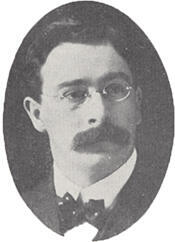
Here you will find contact information for Representative Thomas David Nicholls, including email address, phone number, and mailing address.
| Name | Thomas David Nicholls |
| Position | Representative |
| State | Pennsylvania |
| District | 10 |
| Party | Democratic |
| Status | Former Representative |
| Term Start | December 2, 1907 |
| Term End | March 3, 1911 |
| Terms Served | 2 |
| Born | September 16, 1870 |
| Gender | Male |
| Bioguide ID | N000089 |
About Representative Thomas David Nicholls
Thomas David Nicholls (September 16, 1870 – January 19, 1931) was an Independent Democratic member of the U.S. House of Representatives from Pennsylvania who served from 1907 to 1911. A member of the Democratic Party, he was elected as an Independent Democrat and contributed to the legislative process during two terms in office, representing the interests of his constituents during a significant period in American political and industrial history.
Nicholls was born in Wilkes-Barre, Pennsylvania, on September 16, 1870. During his childhood, he moved with his parents to Nanticoke, Pennsylvania, a community in the anthracite coal region. There he entered the mines as a boy, gaining firsthand experience of the difficult and often dangerous conditions faced by coal miners. While working, he pursued studies in mining by correspondence, demonstrating both ambition and technical aptitude. In 1897 he passed a state examination in mining and was awarded a mine foreman’s certificate of competency, a credential that marked his professional advancement within the industry.
Following his certification, Nicholls was appointed superintendent of mines, a position that placed him in a leadership role within the coal operations of the region. His growing prominence among miners and his understanding of their working conditions led him into the labor movement. He became district president of District No. 1 of the United Mine Workers of America, one of the most important districts in the anthracite fields. Nicholls served in that capacity from 1899 until 1909, a decade that encompassed major labor struggles and negotiations in the coal industry. He resigned from this post in 1909 for health reasons, after a long period of active involvement in labor organization and advocacy.
Nicholls’s prominence as a labor leader and his identification with the concerns of working people helped propel him into national politics. He was elected as an Independent Democrat to the Sixtieth and Sixty-first Congresses, serving in the U.S. House of Representatives from Pennsylvania from 1907 to 1911. During his tenure in Congress, he sat as a member of the House of Representatives during a time of significant national debate over industrial regulation, labor rights, and economic reform. As a member of the Democratic Party who had been elected as an Independent Democrat, he participated in the democratic process while maintaining a political identity closely associated with labor interests and reform-minded constituencies. He was not a candidate for renomination in 1910, thereby concluding his congressional service after two terms.
After completing his legislative tenure, Nicholls withdrew from active political life and turned to agriculture. In 1911 he settled on a farm in Somerset County, Maryland, near Princess Anne. There he engaged in the raising of poultry, marking a distinct shift from his earlier career in mining and public office to a quieter life in rural enterprise. His later years were spent in this community, where he continued to reside until his death.
Thomas David Nicholls died in Princess Anne, Maryland, on January 19, 1931. He was interred in the Antioch Methodist Episcopal Cemetery, leaving behind a legacy that linked the coal mines of Pennsylvania, the labor movement, and early twentieth-century congressional service with a final chapter rooted in the agricultural life of Maryland’s Eastern Shore.