Representative Thomas Manson Norwood
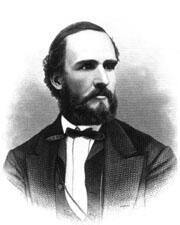
Here you will find contact information for Representative Thomas Manson Norwood, including email address, phone number, and mailing address.
| Name | Thomas Manson Norwood |
| Position | Representative |
| State | Georgia |
| District | 1 |
| Party | Democratic |
| Status | Former Representative |
| Term Start | March 4, 1871 |
| Term End | March 3, 1889 |
| Terms Served | 3 |
| Born | April 26, 1830 |
| Gender | Male |
| Bioguide ID | N000160 |
About Representative Thomas Manson Norwood
Thomas Manson Norwood (April 26, 1830 – June 19, 1913) was a United States Senator and Representative from Georgia and a long-serving Democratic officeholder during and after the Reconstruction era. Over the course of his public career, he served in both houses of Congress, in the Georgia state legislature, and as a judge of the city court of Savannah, and he was known as an outspoken defender of Southern Democratic positions on race and federal power.
Norwood was born in Talbot County, Georgia, on April 26, 1830. He pursued an academic course in his youth and attended Emory College, then located in Oxford, Georgia, from which he graduated in 1850. After completing his college education, he read law under the supervision of James Milton Smith, who would later serve as governor of Georgia. Norwood was admitted to the bar in 1852 and commenced the practice of law in Savannah, Chatham County, Georgia, where he established himself professionally in the years leading up to the Civil War.
During the secession crisis and the Civil War, Norwood entered state politics. He served as a member of the Georgia House of Representatives from 1861 to 1862, participating in the legislative affairs of the state during the early years of the Confederacy. After the war, as Georgia and other Southern states underwent Reconstruction, Norwood remained active in Democratic Party politics. He served as a presidential elector on the Democratic ticket in 1868, reflecting his growing prominence within the party as it sought to regain political influence in the postwar South.
Norwood’s national career began in the United States Senate. Elected as a Democrat from Georgia, he took his seat on November 14, 1871, and served until March 3, 1877. His election and seating were historically significant, as he was the first Democrat from the South to be seated in the U.S. Senate after the Civil War, marking a key moment in the political restoration of former Confederate states. During his Senate tenure, Norwood was an ardent critic of federal civil rights legislation, notably opposing the Civil Rights Act of 1875, and he consistently aligned with the Democratic opposition to Reconstruction-era policies. After leaving the Senate at the conclusion of his term in 1877, he resumed the practice of law in Savannah.
Norwood later returned to national office in the United States House of Representatives. A member of the Democratic Party, he was elected as a Representative from Georgia to the Forty-ninth and Fiftieth Congresses, serving from March 4, 1885, to March 3, 1889. In this capacity he served three terms in Congress overall—one in the Senate and two in the House—and contributed to the legislative process during a significant period in American history, representing the interests of his Georgia constituents in debates over economic policy, federal authority, and the post-Reconstruction social order. His service in the House of Representatives extended his influence in national politics well into the late nineteenth century.
After his House service ended in 1889, Norwood again returned to private legal practice in Savannah. In 1896 he was appointed judge of the city court of Savannah, a position he held for twelve years. As a jurist, he continued to articulate the racial and political views that had characterized his legislative career. In his final address before retirement on December 31, 1907, he delivered a speech in which he called for the execution of Black men who had consensual sexual relationships with White women, accusing them of being violent and abusive, and advocated life imprisonment for White women involved in such relationships, as well as the subjection of Black people to chattel slavery. These remarks reflected his staunch white supremacist ideology and the broader climate of racial repression in the Jim Crow South.
In his later years, Norwood retired from public life to his country home, Harrock Hall, near Savannah. He continued to write, and his posthumously published book, A True Vindication of the South, in a Review of American Political History, issued in Savannah by Braid and Hutton in 1917, argued that the South had been justified in its fight against the North during the Civil War and defended Southern political positions in the decades that followed. He also authored Mother Goose Carved by a Commentator, published in Savannah by the Morning News in 1900. Thomas Manson Norwood died at Harrock Hall near Savannah on June 19, 1913. He was interred in Laurel Grove Cemetery in Savannah, closing a long and controversial career in Georgia and national politics.