Senator Thomas Ward Osborn
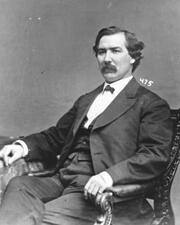
Here you will find contact information for Senator Thomas Ward Osborn, including email address, phone number, and mailing address.
| Name | Thomas Ward Osborn |
| Position | Senator |
| State | Florida |
| Party | Republican |
| Status | Former Representative |
| Term Start | January 1, 1868 |
| Term End | March 3, 1873 |
| Terms Served | 1 |
| Born | March 9, 1833 |
| Gender | Male |
| Bioguide ID | O000109 |
About Senator Thomas Ward Osborn
Thomas Ward Osborn (March 9, 1833 – December 18, 1898) was a Union Army officer, Freedmen’s Bureau official, delegate to the 1868 Florida Constitutional Convention, state senator, and United States Senator representing Florida. A member of the Republican Party, he served one term in the United States Senate from Florida during the Reconstruction era, holding office from 1868 to 1873 and contributing to the legislative process at a critical moment in American history.
Osborn was born in Scotch Plains, New Jersey, the son of John and Amelia Osborn. In 1842 his family moved to North Wilna, New York, where he worked on the family farm until 1854. Seeking further education, he pursued college preparatory studies and subsequently enrolled at Madison University (now Colgate University) in Hamilton, New York. He graduated from Madison University in 1860, marking the transition from farm work to a professional career.
After completing his studies, Osborn read law in a Watertown, New York, law office and was admitted to the New York bar in 1861. His entry into legal practice, however, coincided with the outbreak of the American Civil War, and he did not practice law for long before turning to military service. From his home in Jefferson County, New York, he raised a company for light artillery service, which became known as Company (or Battery) D, First Regiment, New York Light Artillery.
Following the First Battle of Bull Run in 1861, Osborn entered the Union Army as a lieutenant. His battery served with the Army of the Potomac and earned a strong reputation, and he advanced through the ranks to captain, major, and colonel. As a major, he served under Major General Oliver O. Howard in the XI Corps, commanding the corps’ artillery brigade. He took part in major engagements, including the Battles of Chancellorsville and Gettysburg, where, despite the XI Corps’ rout in both battles, his leadership was noted as exemplary. At Gettysburg he played a significant role in the defense of Cemetery Hill on July 2, 1863, when the position was attacked by troops under Major General Jubal Early. Later in the war, Osborn transferred with Howard to the Western Theater and served as inspector general when Howard assumed command of the Army of the Tennessee. He left a detailed written account of Major General William T. Sherman’s March to the Sea, later published and studied as a firsthand narrative of the campaign.
With the end of his military service, Osborn entered Reconstruction-era public service in the South. In 1865 and 1866 he was appointed assistant commissioner for the Bureau of Refugees, Freedmen and Abandoned Lands in Florida, commonly known as the Freedmen’s Bureau. In that capacity he helped administer federal policies toward formerly enslaved people and war refugees during the early years of Reconstruction. While residing in Tallahassee, he also resumed the practice of law. Osborn became a member of the state constitutional convention that framed the 1868 Florida Constitution, playing a role in the political reorganization of the state after the Civil War.
Following the convention, Osborn moved to Pensacola, Florida, where he entered state politics and was elected to the Florida Senate. As Florida was readmitted to representation in the United States Congress during Reconstruction, Osborn, still in his mid-thirties, was elected as a Republican to the United States Senate. He served as a Senator from Florida from 1868 to 1873, a single term that spanned the heart of the Reconstruction period. In the Senate he participated in the democratic process on behalf of his Florida constituents and is credited with being instrumental in passing legislation to complete construction of the Washington Monument, a project that had been stalled since before the Civil War.
Osborn chose not to run for reelection in 1872, concluding his formal congressional service after one term. He remained active in public affairs and in 1876 served as the United States commissioner at the Centennial Exposition in Philadelphia, Pennsylvania, the first official world’s fair held in the United States. This role placed him at the center of a major national commemoration of American independence and industrial progress.
In his later years, Osborn returned to New York and settled in New York City, where he engaged in the practice of law and pursued literary work, including the publication of his Civil War recollections. He died in New York City on December 18, 1898. Thomas Ward Osborn was interred at Hillside Cemetery in North Adams, Massachusetts, closing a life that spanned from antebellum America through the Civil War and Reconstruction into the closing years of the nineteenth century.