Representative Thomas Pelly
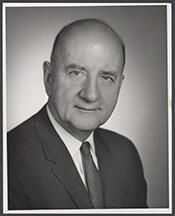
Here you will find contact information for Representative Thomas Pelly, including email address, phone number, and mailing address.
| Name | Thomas Pelly |
| Position | Representative |
| State | Washington |
| District | 1 |
| Party | Republican |
| Status | Former Representative |
| Term Start | January 3, 1953 |
| Term End | January 3, 1973 |
| Terms Served | 10 |
| Born | August 22, 1902 |
| Gender | Male |
| Bioguide ID | P000196 |
About Representative Thomas Pelly
Thomas Minor Pelly (August 22, 1902 – November 21, 1973) was an American politician who served as a U.S. Representative from the state of Washington between 1953 and 1973. A member of the Republican Party, he represented Washington’s 1st Congressional District for ten consecutive terms, contributing to the legislative process during a significant period in American history and participating actively in the democratic governance of his region and the nation.
Pelly was born on August 22, 1902, in Seattle, Washington. He was the son of Bernard Pelly, the British consul to Seattle, and Elizabeth Montgomery Minor Pelly, daughter of Thomas T. Minor, a former mayor of Seattle. He attended Summit School and the University School in Victoria, British Columbia, and later took classes at the Hoosac School in Hoosick, New York. Born a British subject through his father, Pelly formally renounced his British citizenship at the age of 21, affirming his allegiance to the United States.
After completing his schooling, Pelly entered the business world in Seattle. He first worked for the West and Wheeler Real Estate Company and then joined the Seattle National Bank, a forerunner of Seafirst Bank, beginning as a foot messenger and rising to the position of trust officer in the late 1920s. In 1927, he married Mary Virginia Taylor, whom he had met on Bainbridge Island, where his family maintained a house; the couple had two children, Marion Elizabeth and Tom Minor Jr. In 1930, Pelly moved to the Lowman & Hanford Stationery Company, where he advanced rapidly and became president of the firm five years later. During this period he also pursued literary interests, writing and publishing several works, including “Judgement, and Other Poems,” “North-Westward, The Story of Restoration Point and Country Club,” and “Dr. Minor: A Sketch of the Background and Life of Thos. T. Minor, M.D.,” a biographical study of his grandfather.
Pelly’s first direct foray into politics came in 1932, when he ran for a seat in the Washington House of Representatives. His Democratic opponent challenged his eligibility by attempting to have him classed legally as a British citizen; although Pelly prevailed in the lawsuit and established his status as an American citizen, he lost the election. Undeterred, he remained deeply engaged in civic and community affairs. He served as vice chair of the Seattle Community Chest and as a director of numerous cultural, educational, and financial institutions, including the Seattle Symphony, the Seattle Art Museum, the Seattle Trust and Savings Bank, the Olympia State Bank and Trust Company, the Shaw and Borden Company, Johnson’s Inc. of Spokane, the Lakeside School, and the Helen Bush School. During World War II, he joined the council of the Seattle United Service Organization (USO), helping to organize recreational activities and support services for military personnel.
In the postwar years, Pelly emerged as a leading figure in Seattle’s business and civic leadership. He was elected president of the Seattle Chamber of Commerce in 1949 and devoted substantial energy to that role. As chamber president, he worked to negotiate a purchase agreement between the city and Puget Sound Power and Light and organized a committee to arrange the purchase of a ferryboat system between the Black Ball Line and Governor Arthur B. Langlie, helping to shape the region’s transportation infrastructure. He traveled extensively throughout Washington State to promote Seattle’s economic interests and attended most sessions of the state legislature to advocate for the city’s concerns. In recognition of his civic leadership, he was honored as First Citizen of the Year by the Seattle–King County Association of Realtors on January 24, 1951.
Pelly was first elected to the United States House of Representatives on November 4, 1952, in the Eisenhower sweep, winning 51.37 percent of the vote as a Republican candidate for Washington’s 1st Congressional District. His district, the largest by population in the state, included major military and industrial installations such as Sand Point Naval Air Station, Fort Lawton, the Puget Sound Naval Shipyard, Boeing, the Keyport Torpedo Station, and the Bangor Ammunition Depot. He took office in January 1953 and ultimately served ten terms, remaining in Congress until January 1973. During his two decades in the House of Representatives, Thomas Minor Pelly represented the interests of his constituents through a period marked by the Cold War, the civil rights movement, and significant economic and environmental change. In 1966, he was re-elected with 80.27 percent of the vote and became the first congressional Republican candidate to be endorsed by the King County Central Labor Council, reflecting his broad appeal across traditional political and labor lines.
In Congress, Pelly developed a reputation for his work on fisheries, maritime affairs, environmental protection, and science policy. He served on the House Merchant Marine and Fisheries Committee, where he consistently sought to improve working conditions for merchant mariners and to protect American fishing interests. Working closely with Senator Warren Magnuson, he supported sanctions against South American countries that impounded American fishing vessels accused of violating their claimed territorial waters. He introduced legislation to make the U.S. Maritime Administration an independent agency and supported the establishment, in July 1965, of the Joint Oceanographic Research Group in Seattle, advancing the Pacific Northwest as a center for marine and oceanographic research. As the only member from the Pacific Northwest on the House Science and Astronautics Committee, he also played a role in shaping federal policy on scientific research and the emerging space program.
Pelly was an early and consistent supporter of environmental conservation measures. He voted against H.R. 4671, a proposal to build two dams near the Grand Canyon, reflecting his concern for the preservation of nationally significant landscapes. In 1972, he introduced H.R. 17202, legislation that led to the establishment of North Cascades National Park, following a petition campaign that gathered 30,000 signatures from organizations such as The Mountaineers, the Sierra Club, and the North Cascades Conservation Council. His efforts helped secure permanent protection for one of Washington State’s most distinctive mountain wilderness areas.
On domestic social and economic policy, Pelly supported a range of measures aimed at expanding social protections and civil rights. He introduced H.R. 16551 to amend the Social Security Act so that benefits would be adjusted in line with inflation, seeking to protect retirees and beneficiaries from the erosion of purchasing power. He backed tax relief for college students and their parents to ease the financial burden of higher education. Pelly voted in favor of the Civil Rights Acts of 1957, 1960, 1964, and 1968, the 24th Amendment to the U.S. Constitution abolishing the poll tax in federal elections, and the Voting Rights Act of 1965, aligning himself with major federal efforts to dismantle legal segregation and protect voting rights. He also voted in favor of Medicare and Medicaid, supporting the creation of federal health insurance programs for the elderly and low-income Americans. In labor policy, he was one of only 20 House Republicans to vote for the repeal of section 14(b) of the Taft–Hartley Act, which would have ended state right-to-work laws, a stance that distinguished him from many in his party.
Pelly also took a critical interest in federal fiscal policy and foreign aid. In 1961, he served as spokesperson for a group of congressmen who opposed President John F. Kennedy’s proposed foreign aid plan, which called for borrowing $7.3 billion from the U.S. Treasury over five years and spending $4.8 billion in 1961 alone. Pelly’s stated objective was not to end foreign aid but to scrutinize the borrowing practices involved and to ensure that the House Appropriations Committee retained clear authority to authorize and oversee the expenditure of such funds. Over the course of his congressional career, he reportedly considered seeking higher office; he was mentioned as a potential candidate for governor in the 1964 election and, in 1966, was regarded by many Washington State Republicans as their preferred vice-presidential choice for Richard Nixon. Nonetheless, he never ran for any other office and remained focused on his work in the House of Representatives. In 1972, after twenty years in Congress, he chose not to seek re-election and was succeeded by Republican Joel Pritchard.
Thomas Minor Pelly died on November 21, 1973, in Ojai, California, while on holiday. He was 71 years old.