Senator Thomas Collier Platt
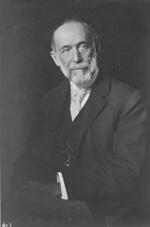
Here you will find contact information for Senator Thomas Collier Platt, including email address, phone number, and mailing address.
| Name | Thomas Collier Platt |
| Position | Senator |
| State | New York |
| Party | Republican |
| Status | Former Representative |
| Term Start | December 1, 1873 |
| Term End | March 3, 1909 |
| Terms Served | 5 |
| Born | July 15, 1833 |
| Gender | Male |
| Bioguide ID | P000383 |
About Senator Thomas Collier Platt
Thomas Collier Platt (July 15, 1833 – March 6, 1910), also known as Tom Platt and “Easy Boss,” was an American politician, businessman, and Republican Party leader who served two terms in the U.S. House of Representatives from 1873 to 1877 and three terms in the U.S. Senate from New York in 1881 and from 1897 to 1909. A dominant figure in New York Republican politics in the late nineteenth and early twentieth centuries, he was widely regarded as the “political boss” of the party in the state. Upon his death, The New York Times observed that “no man ever exercised less influence in the Senate or the House of Representatives than he,” but “no man ever exercised more power as a political leader.” He considered himself the “political godfather” of many Republican governors of New York, including Theodore Roosevelt, and played a key role in the creation of the City of Greater New York, which consolidated the boroughs of Manhattan, Brooklyn, Queens, Staten Island, and the Bronx.
Platt was born in Owego, Tioga County, New York, on July 15, 1833, to William Platt, a lawyer and successful attorney, and Lesbia Hinchman. His family background was steeped in law and public service; his uncle, Nehemiah Platt (1797–1851), served as a New York State senator. Raised in a strict Presbyterian household, he was encouraged by his father to enter the ministry. He was prepared for college at Owego Academy and then attended Yale College from 1850 to 1852, where he studied theology. Ill health forced him to withdraw before earning a degree, an early setback that redirected his ambitions away from the pulpit and toward business and politics.
After leaving Yale in 1852, Platt embarked on a varied business career. He began as a druggist, a line of work in which he remained for roughly two decades. He briefly edited a small newspaper, gaining early experience in shaping public opinion. Over time he expanded his interests, serving as president of the Tioga National Bank and engaging in the lumber business in Michigan. He also became president of the Southern Central and other railways, reflecting his growing prominence in regional finance and transportation. In 1852 he married his cousin Ellen Lucy Barstow; the couple had three sons, Edward T. Platt, Frank H. Platt, and Henry B. Platt. During the American Civil War, chronic illness prevented him from serving in the Union military, but he actively supported the Lincoln administration, raised funds for troops, and urged public backing for the Union cause.
Platt’s formal political involvement began with the birth of the Republican Party. He first appeared on the political scene in the 1856 campaign of John C. Frémont, the party’s first presidential nominee. Running as a Republican, he was elected clerk of Tioga County, serving from 1859 to 1861. His statewide and national profile grew when he was elected as a Republican to the Forty-third and Forty-fourth Congresses, serving in the U.S. House of Representatives from March 4, 1873, to March 3, 1877. He declined to seek re-election in 1876. That same year he attended his first Republican National Convention and joined the “Conkling for President” movement, supporting Senator Roscoe Conkling’s presidential ambitions. Conkling, in turn, rewarded him by making him chairman of the New York Republican State Committee, marking the beginning of Platt’s ascent as a key party strategist and organizer.
After leaving the House, Platt deepened his involvement in both business and party affairs. In 1879 he became secretary and a director of the United States Express Company and was elected its president in 1880, a position that enhanced his financial and organizational clout. He served as president of the Board of Quarantine Commissioners of New York from 1880 to 1888 and was for several years president of the Tennessee Coal & Iron Company, further entrenching his ties to major commercial interests. Within the Republican Party, his influence on statewide politics expanded after 1877, when he aligned himself with the “Stalwart” faction led by Conkling against the “Half-Breed” supporters of President Rutherford B. Hayes. By the mid-1880s he was a regular delegate to state and national Republican conventions and an important member of both the New York Republican State Committee and the Republican National Committee.
In January 1881 Platt was elected by the New York legislature to the United States Senate with the backing of the Stalwart faction. His election was secured through an intraparty compromise with Chauncey M. Depew, a Half-Breed candidate who also sought the seat. Depew agreed to support Platt on the understanding that Platt, as senator, would support President James A. Garfield, to which Platt assented, reportedly declaring that he had done his best to elect a Republican president and would support him as senator. Platt took his seat in the Forty-seventh Congress on March 4, 1881, and became chairman of the Committee on Enrolled Bills. His first Senate term, however, was brief. On May 16, 1881, he and Conkling resigned in protest over Garfield’s appointment of William H. Robertson, a leader of the anti-Conkling forces, as Collector of the Port of New York. Platt later described the resignations as a “desperate remedy” to avoid being forced to vote on Robertson’s confirmation, which would have compelled him either to break faith with Depew or defy Conkling. The strategy backfired. Platt and Conkling sought re-election in the special elections to fill the vacancies they had created, but maneuvering by Half-Breed legislators and shifting public sentiment thwarted their return. Platt eventually withdrew his name after weeks of balloting, and Warner Miller and Elbridge G. Lapham were chosen instead. The episode ended his close friendship with Conkling and marked the collapse of the Stalwart faction, especially after Garfield’s assassination by Charles J. Guiteau, a self-proclaimed Stalwart who claimed acquaintance with both men.
Following this setback, Platt eschewed elective office for more than a decade and concentrated on rebuilding his political machine. He worked assiduously within party structures, serving as a delegate to numerous state and national conventions and consolidating his control over Republican patronage and nominations in New York. By 1887 he had emerged as the de facto leader of the state’s Republicans and acquired the sobriquet “Easy Boss” for his relatively smooth, behind-the-scenes style of leadership. During the 1884 presidential election, despite his Stalwart background and the faction’s historic hostility to the Half-Breed nominee James G. Blaine, Platt supported Blaine’s candidacy in the general election against Democrat Grover Cleveland, even as the Mugwump reformers bolted the party. He also became one of the original members of the Board of Trustees of New York Law School, founded in 1891 by Theodore William Dwight and others who opposed Columbia Law School’s adoption of the casebook method, reflecting Platt’s interest in legal education and institutional development.
Sixteen years after his first, abortive Senate term, Platt returned to the upper chamber. In January 1897 he was again elected U.S. Senator from New York and was re-elected in January 1903, serving continuously from March 4, 1897, to March 3, 1909. During this period he held several important committee assignments. He served as chairman of the Committee on Transportation Routes to the Seaboard in the Fifty-fifth Congress, and later sat on the Committee on Printing from the Fifty-sixth through the Sixtieth Congresses. He was also a member of the Committee on Cuban Relations and the Committee on Interoceanic Canals in the Fifty-ninth Congress, participating in deliberations on issues ranging from U.S.–Cuban relations to canal policy in the era of the Panama Canal project. His photograph, published in the New York Tribune on January 21, 1897, was noted by later historians as the first halftone reproduction to appear in a mass-circulation daily newspaper. Throughout his Senate service, he remained active in the Republican National Committee and continued to exercise considerable influence over federal appointments and party strategy in New York, even as contemporaries remarked that his legislative record was less notable than his organizational power.
Platt’s most enduring policy achievement as a political boss was his role in the consolidation of New York City. To enhance his influence and reshape the political landscape, he steered passage of the Greater New York bill in 1898, which incorporated Brooklyn, Queens, and Staten Island with Manhattan and the Bronx into a single municipality, creating the modern City of New York. His relationship with Theodore Roosevelt, whom he had helped advance, illustrated both the reach and the limits of his power. Platt reluctantly supported Roosevelt’s candidacy for governor in 1898 after Roosevelt’s fame as leader of the Rough Riders in the Spanish–American War made him a formidable figure. Once in office, Governor Roosevelt pursued an independent course, crusading against corruption and refusing to reappoint Platt ally Louis F. Payn as state insurance superintendent. Seeking to remove Roosevelt from Albany, Platt joined with Pennsylvania boss Matthew Quay in promoting Roosevelt for the vice presidency in 1900 after the death of Vice President Garret A. Hobart. Despite the misgivings of party financier Mark Hanna, Roosevelt was nominated by acclamation, helped secure President William McKinley’s re-election, and became president in September 1901 after McKinley’s assassination. Platt’s own control over the New York Republican organization waned soon thereafter. By 1902 Governor Benjamin Barker Odell Jr., Roosevelt’s successor, had asserted his independence and insisted on assuming leadership of the state party. Platt’s failed attempt to block Odell’s renomination and Odell’s subsequent re-election effectively ended the era of a separate, unelected “boss” directing New York Republican affairs. Platt was also a member of the New York Society of Colonial Wars, reflecting his interest in American history and lineage organizations.
Platt’s personal life in his later years was marked by both change and controversy. His first wife, Ellen Lucy Barstow, died in 1901. Two years later he married Lillian Janeway, whom contemporary accounts, including The New York Times, described as appearing young enough to be his daughter. Their marriage soon deteriorated. In 1906 their legal separation was announced, with Platt agreeing to pay her $75,000 in exchange for her dropping all financial claims against him and dismissing a previously filed divorce suit. Despite the separation, they remained legally married at the time of his death. In his final years Platt suffered from a palsy of the legs that confined him largely to a wheelchair. He retired from the Senate in 1909. On May 28, 1909, he was stricken with what was diagnosed as an acute attack of Bright’s disease, a severe kidney ailment, and his physician publicly predicted his imminent death. He recovered sufficiently to convalesce and by late January 1910 was considered well enough to return to his Manhattan apartment.
On March 6, 1910, apparently restored to reasonable health, Platt was suddenly seized by a second attack of kidney disease at about 1 p.m. His personal physician was summoned, but it was quickly evident that he would not recover. Thomas Collier Platt died in his bed at approximately 4 p.m. that afternoon in New York City. The following day, March 7, Republican Governor Charles Evans Hughes ordered flags on state buildings flown at half-staff in his honor, establishing a precedent in New York for commemorating the death of a former United States senator in that manner. Platt was interred in Evergreen Cemetery in his hometown of Owego, New York. Although he remained legally married to Lillian Janeway at his death, she received nothing under his will. His political legacy endured in studies of machine politics and in his own published reminiscences, and his name was carried forward by his great-grandson, the lawyer and judge Thomas Collier Platt Jr.