Senator Thomas Charles Power
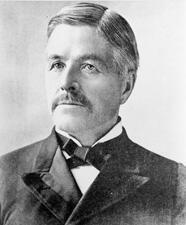
Here you will find contact information for Senator Thomas Charles Power, including email address, phone number, and mailing address.
| Name | Thomas Charles Power |
| Position | Senator |
| State | Montana |
| Party | Republican |
| Status | Former Representative |
| Term Start | January 1, 1890 |
| Term End | March 3, 1895 |
| Terms Served | 1 |
| Born | May 22, 1839 |
| Gender | Male |
| Bioguide ID | P000486 |
About Senator Thomas Charles Power
Thomas Charles Power (May 22, 1839 – February 16, 1923) was a Republican senator from Montana, an American businessman, and a prominent figure in the early political and commercial development of the state. He served as a Senator from Montana in the United States Congress from 1889 to 1895, completing one term in office during a significant period in American history, and contributed to the legislative process as a member of the Republican Party.
Power was born near Dubuque, Iowa, on May 22, 1839. He attended public schools in the region and pursued higher education at Sinsinawa College, where he graduated with a degree in engineering. His technical training prepared him for early work in surveying and infrastructure at a time when the American frontier was rapidly expanding and federal land policies were reshaping the Upper Midwest and the Great Plains.
After completing his education, Power worked as a surveyor in Dakota until 1860, when he entered the employ of an engineering company. In that capacity, he participated in government land surveys covering much of Iowa and what was then the Dakota Territory, gaining detailed knowledge of the geography and economic potential of the region. Between 1861 and 1867, he was primarily engaged in trade along the Mississippi River, where he advanced in the river transportation business and eventually became president of a steamer line. This experience in commerce and transportation laid the foundation for his later success as a merchant and entrepreneur in the Northwest.
Power first came to Montana in 1864, during the territorial era, and began to establish business interests there, often in partnership with his brother, J. W. Power. Recognizing the commercial opportunities presented by mining camps and emerging settlements, he expanded his operations over the following decade. After settling permanently in Helena, Montana, in 1876, he founded the mercantile firm T. C. Power and Bro., which grew into a major commercial enterprise serving customers throughout the northwestern United States and western Canada. Through this firm, Power became one of the leading merchants in the region, supplying goods to remote communities and contributing to the economic development of Montana and neighboring territories.
Power’s prominence in business and territorial affairs led naturally to political involvement. In 1889, as Montana moved toward statehood, he ran for Governor of Montana and secured the Republican Party’s nomination on the first ballot. In the general election, however, he was defeated by Democratic candidate Joseph Toole, who became the only Democrat on the statewide ticket that year to be elected. Following statehood, a conflict arose over the respective roles of the new governor and the state legislature in appointing Montana’s first two United States senators. Amid this dispute, the Republican-controlled legislature elected Power on January 2, 1890, to one of the state’s initial Senate seats.
As a member of the United States Senate, Power represented Montana from 1889 to 1895, serving until March 3, 1895. His tenure coincided with a formative period in the state’s and the nation’s history, marked by debates over economic policy, western development, and the role of new states in federal affairs. In the Senate, he participated in the democratic process and represented the interests of his constituents, drawing on his extensive experience in business, transportation, and regional development to inform his legislative work. Although he served only one term, his service helped establish Montana’s early presence and influence in the federal legislature.
After leaving the Senate in 1895, Power returned to his business interests and remained a respected figure in Helena and throughout Montana. He continued to be associated with the commercial enterprises he had built and with the broader economic life of the region he had helped to develop. Power died at his home in Helena, Montana, on February 16, 1923. He was interred in Resurrection Cemetery in Helena. In recognition of his role in the state’s history, the town of Power in Montana was named in his honor.