Representative Thomas Vincent Quinn
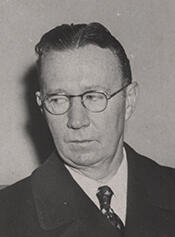
Here you will find contact information for Representative Thomas Vincent Quinn, including email address, phone number, and mailing address.
| Name | Thomas Vincent Quinn |
| Position | Representative |
| State | New York |
| District | 5 |
| Party | Democratic |
| Status | Former Representative |
| Term Start | January 3, 1949 |
| Term End | January 3, 1953 |
| Terms Served | 2 |
| Born | March 16, 1903 |
| Gender | Male |
| Bioguide ID | Q000021 |
About Representative Thomas Vincent Quinn
Thomas Vincent Quinn (March 16, 1903 – March 1, 1982) was an American jurist and Democratic politician from New York who served as a Representative from New York in the United States Congress from 1949 to 1953. Over the course of a varied public career, he held positions as an assistant district attorney, Assistant United States Attorney, Assistant United States Attorney General, member of the House of Representatives, Queens County District Attorney, and, later, a judge of the New York City Criminal Court.
Quinn was born in Long Island City, Queens County, New York, on March 16, 1903. He attended local schools in Queens and graduated from William Cullen Bryant High School. Pursuing a legal education, he enrolled at Fordham University School of Law, where he received his LL.B. degree in 1924. Following his admission to the bar, he commenced the practice of law in New York City, establishing the professional foundation that would support his subsequent career in public service and politics.
Active in the Democratic Party from an early stage in his career, Quinn entered public office as Assistant District Attorney of Queens County, serving from September 1931 to August 1934. In this capacity he participated in the prosecution of criminal matters in one of New York City’s growing boroughs during the early 1930s. In 1934 he joined the staff of the United States Attorney for the Eastern District of New York as an Assistant United States Attorney, a post he held until 1947. During this thirteen-year tenure he twice served as Acting United States Attorney for the district, assuming responsibility for the office’s federal criminal and civil caseload when required.
In July 1947 President Harry S. Truman appointed Quinn an Assistant United States Attorney General for the Criminal Division of the Department of Justice, and he was confirmed in that position in September of the same year. While serving in Washington, he worked on significant post–World War II prosecutions, including the cases of American citizens Iva Toguri D’Aquino, widely known as “Tokyo Rose,” and Robert Henry Best, both charged with treason for propaganda activities on behalf of Axis powers during the war. After approximately thirteen months in the Justice Department, Quinn resigned in August 1948 to return to New York and seek elective office in Congress.
Quinn was elected as a Democrat to the United States House of Representatives from New York’s 5th congressional district in the 1948 election, defeating freshman Republican incumbent Robert Tripp Ross. He took his seat in the Eighty-first Congress on January 3, 1949. He was reelected in 1950, again defeating Ross in a rematch, and served in the Eighty-second Congress as well. Thus, Thomas Vincent Quinn contributed to the legislative process during two terms in office, representing the interests of his Queens constituents during a significant period in American history marked by the early Cold War, postwar economic adjustment, and the beginning of the Korean War. A member of the Democratic Party, he participated in the democratic process as part of the House majority that supported many of President Truman’s domestic and foreign policy initiatives.
In 1951 Quinn successfully ran for the office of Queens County District Attorney. Having won that election, he resigned from Congress in December 1951 to assume his new duties as the county’s chief prosecutor. His congressional service, therefore, extended from January 3, 1949, until his resignation in December 1951, encompassing portions of two full terms, although he is often noted as serving from 1949 to 1953 in the context of that congressional era. As district attorney, he oversaw the prosecution of criminal cases in Queens County during a period of rapid population growth and urban development in New York City.
Quinn’s tenure as district attorney was overshadowed by legal difficulties that emerged in the early 1950s. In 1953 he and former law partners were indicted on federal corruption charges alleging that he had accepted legal fees for advising clients with business before the federal government while serving in Congress, and that steps had been taken to conceal this activity. Despite the indictment and the refusal of the Queens Democratic organization to endorse him, Quinn sought reelection as district attorney in 1955. He was challenged in the Democratic primary by former state senator Frank D. O’Connor. After a closely contested race and recount, O’Connor prevailed by 1,452 votes, ending Quinn’s tenure as district attorney. In 1956 Quinn and his associates were acquitted on some of the federal charges when the trial judge ruled that prosecutors had presented no evidence that Quinn knew the fees in question related to matters arising during his time in Congress. In 1957 the remaining charges were dismissed, concluding the federal case against him without a conviction.
Following the resolution of his legal troubles, Quinn returned to judicial service. In 1957 he was appointed to the New York City Magistrates’ Court, where he served until 1962. That year, as part of a reorganization of the city’s lower courts, the Magistrates’ Court was merged into the newly created New York City Criminal Court. Quinn became a judge of the Criminal Court and continued in that capacity until his retirement in September 1972. His later judicial career marked a return to public life in a non-elective role and extended his involvement in the administration of criminal justice in New York City over several decades.
In retirement Quinn resided in Venice, Florida. He lived there until his death on March 1, 1982. His career, spanning local, federal, legislative, prosecutorial, and judicial service, reflected both the opportunities and controversies of mid-twentieth-century American public life.