Representative Thomas F. Railsback
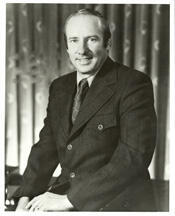
Here you will find contact information for Representative Thomas F. Railsback, including email address, phone number, and mailing address.
| Name | Thomas F. Railsback |
| Position | Representative |
| State | Illinois |
| District | 19 |
| Party | Republican |
| Status | Former Representative |
| Term Start | January 10, 1967 |
| Term End | January 3, 1983 |
| Terms Served | 8 |
| Born | January 22, 1932 |
| Gender | Male |
| Bioguide ID | R000012 |
About Representative Thomas F. Railsback
Thomas Fisher Railsback (January 22, 1932 – January 20, 2020) was an American politician and lawyer who served as a Republican Representative from Illinois in the United States Congress from 1967 to 1983. Over eight terms in the U.S. House of Representatives, he represented Illinois’s 19th congressional district, later renumbered as the 17th District, and became particularly known for his work on the House Judiciary Committee during the impeachment proceedings against President Richard Nixon.
Railsback was born on January 22, 1932, in Moline, Illinois, to municipal lawyer Fred Railsback and Elizabeth (Johnson) Railsback. He attended public schools in Moline before enrolling at Grinnell College in Iowa, where he received a Bachelor of Arts degree in 1954. He then studied law at Northwestern University School of Law in Chicago, earning his Juris Doctor in 1957. Shortly after completing his legal education, Railsback served in the United States Army from 1957 to 1959, after which he returned to Illinois to begin his legal and political career.
Inspired to enter politics in part by the conservative presidential campaign of Barry Goldwater, Railsback nonetheless developed a reputation as a moderate Republican. He first held elective office in the Illinois House of Representatives, winning election as a Republican in November 1962. His service in the state legislature helped establish his political base in western Illinois and prepared him for national office.
In the 1966 election, Railsback was elected to the U.S. House of Representatives, defeating Democratic incumbent Gale Schisler. Taking office in January 1967, he served continuously until January 1983. His congressional service occurred during a significant period in American history marked by the Vietnam War, the civil rights movement, the Watergate scandal, and shifting partisan alignments. Over eight terms in office, he participated fully in the legislative process, representing a district that combined rural Republican counties with the industrial and labor centers of Moline and Rock Island. The Washington Post later observed that he took what might have been a marginal district and built a secure political base by combining a generally Republican voting record with support for civil rights and selected labor positions.
Railsback became a longtime member of the House Committee on the Judiciary, where he played a central role in the 1973–1974 impeachment inquiry into President Richard Nixon. In 1974, the committee voted to refer articles of impeachment against Nixon to the full House. Working closely with Democratic colleague Walter Flowers of Alabama, Railsback helped lead what he described as a “fragile bipartisan coalition” that crafted two key articles of impeachment. These charged the president with obstruction of justice in attempting to impede the investigation of the Watergate break-in and abuse of power through misuse of presidential authority dating back to 1969. Railsback was one of six Republicans on the 17-member Republican contingent of the committee who joined all 21 Democrats in voting to advance these articles to the House floor. In an emotional speech on July 24, 1974, he stated that his obligation to uphold the Constitution outweighed his personal loyalty to Nixon, whom he acknowledged as a friend with significant achievements. Support for impeachment among Republicans such as Railsback was a critical factor in Nixon’s decision to resign the presidency the following month. Despite criticism from pro-Nixon commentators and some constituents, Railsback was reelected four more times after the Watergate episode.
During his congressional career, Railsback contributed to a range of legislative initiatives. He played a key role in the passage of the Juvenile Justice and Delinquency Prevention Act of 1974, which sought to reform the treatment of young offenders and improve juvenile justice systems nationwide. In 1979, he joined Democratic Representative David Obey of Wisconsin in sponsoring legislation aimed at reducing the influence of political action committees in federal election spending, reflecting his concern about the growing role of money in politics. Railsback also opposed President Ronald Reagan’s efforts to abolish and eliminate funding for the Legal Services Corporation, arguing for the importance of providing legal aid to low-income Americans. Throughout his tenure, he served as a mentor to younger political figures, most notably Raymond H. LaHood, who worked for Railsback from 1977 to 1982 and later became a U.S. Representative from Illinois and U.S. Secretary of Transportation in the Obama administration.
Railsback’s political fortunes were affected by demographic and structural changes following the 1980 census. Illinois lost two congressional districts in reapportionment, and his district was renumbered as the 17th District and redrawn to be significantly more conservative. In this altered political landscape, Railsback faced a difficult renomination battle in 1982. Running against State Senator Kenneth G. McMillan, a more conservative Republican, he was defeated in the Republican primary. McMillan went on to lose the general election to Democrat Lane Evans in November. Railsback’s departure from Congress in January 1983 ended a 16-year tenure in the House of Representatives.
After leaving Congress, Railsback remained active in public affairs through work in the private sector and in advocacy roles. He became a lobbyist and served as executive vice president of the Motion Picture Association of America, representing the interests of the film industry in Washington. He also worked for the Federal Judges Association as its Washington coordinator, serving as a liaison and advocate for the federal judiciary on legislative and policy matters. His post-congressional career reflected his continued engagement with the legal and governmental processes he had known as a legislator.
Railsback’s personal life included two marriages and a large family. He married Patricia Sloan in 1955, and the couple had four daughters before their marriage ended in divorce. He later married Joyelyn “Joye” (Silver) Railsback. Over the course of his life he became the grandfather of 19 grandchildren. In retirement, he and Joye moved to Idaho, living in the communities of McCall and Meridian. In his later years he experienced declining health and eventually relocated to Arizona. Thomas Fisher Railsback died on January 20, 2020, in Mesa, Arizona, two days before his 88th birthday, closing a life marked by military service, state and national legislative work, and a notable role in one of the most consequential constitutional crises in modern American history.