Senator Thomas Buck Reed
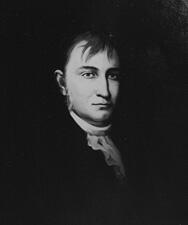
Here you will find contact information for Senator Thomas Buck Reed, including email address, phone number, and mailing address.
| Name | Thomas Buck Reed |
| Position | Senator |
| State | Mississippi |
| Party | Unknown |
| Status | Former Representative |
| Term Start | January 1, 1826 |
| Term End | December 31, 1829 |
| Terms Served | 2 |
| Born | May 7, 1787 |
| Gender | Male |
| Bioguide ID | R000129 |
About Senator Thomas Buck Reed
Thomas Buck Reed (May 7, 1787 – November 26, 1829) was a United States senator from Mississippi who served in the U.S. Senate during the mid-1820s and again at the end of the decade. A Jacksonian by party affiliation, he represented Mississippi in Congress during a significant period in American history, contributing to the legislative process over two separate terms in office.
Reed was born on May 7, 1787, near Lexington, Fayette County, Kentucky. He attended local public schools and later enrolled at the College of New Jersey, now known as Princeton University. After completing his studies there, he read law and was admitted to the bar, preparing for a professional career in the legal field.
Reed commenced the practice of law in Lexington in 1808. The following year, in 1809, he moved to Natchez, in the Mississippi Territory, where he quickly became involved in local civic affairs. In 1811 he served as city clerk of Natchez, an early indication of his interest in public service and governance. He sought national office as an unsuccessful candidate for Delegate to Congress from the Mississippi Territory in 1813, demonstrating his early ambition to participate in the broader political life of the developing region.
In the years after Mississippi achieved statehood, Reed emerged as a leading legal and political figure. He served as attorney general of Mississippi from 1821 to 1826, a position in which he was responsible for representing the state in legal matters and helping to shape its early legal framework. In 1825 he was elected to the Mississippi House of Representatives, but he declined to take his seat in that body, as his political trajectory was soon directed toward national office.
Reed’s congressional service began when he was elected to the United States Senate to fill the vacancy caused by the resignation of Senator David Holmes. He entered the Senate on January 28, 1826, and served until March 3, 1827. During this first term, he sat as a Jacksonian, participating in the democratic process and representing the interests of Mississippi’s constituents at a time of growing sectional and partisan realignment in the United States. Although he was an unsuccessful candidate for reelection in 1827, his political support in Mississippi remained substantial.
In 1828 Reed was again elected to the U.S. Senate, this time for a full term, and he returned to the chamber as a Jacksonian senator. His second period of service began on March 4, 1829. Once more he took part in the legislative work of the Senate, representing Mississippi during the early months of Andrew Jackson’s presidency. Over the course of his two terms—first from January 28, 1826, to March 3, 1827, and then beginning March 4, 1829—he contributed to the deliberations of Congress at a formative moment in the nation’s political development.
In his personal life, Reed married Margaret Allison Ross, the daughter of Isaac Ross, a prominent Mississippi plantation owner. This marriage connected him to one of the region’s influential planter families and further anchored his position within the social and economic structure of the state. Reed’s career was cut short when he died in office on November 26, 1829, in Lexington, Kentucky, the area of his birth. His death brought an abrupt end to his second Senate term and placed him among the members of the United States Congress who died while serving in office during the nineteenth century.