Representative Thomas M. Reynolds
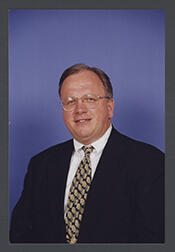
Here you will find contact information for Representative Thomas M. Reynolds, including email address, phone number, and mailing address.
| Name | Thomas M. Reynolds |
| Position | Representative |
| State | New York |
| District | 26 |
| Party | Republican |
| Status | Former Representative |
| Term Start | January 6, 1999 |
| Term End | January 3, 2009 |
| Terms Served | 5 |
| Born | September 3, 1950 |
| Gender | Male |
| Bioguide ID | R000569 |
About Representative Thomas M. Reynolds
Thomas M. Reynolds (born September 3, 1950) is an American politician from the state of New York who served as a Republican member of the United States House of Representatives from 1999 to 2009, representing New York’s 27th and later 26th Congressional Districts. Over five terms in Congress, he participated in the legislative process during a significant period in American history, representing the interests of his constituents and playing a prominent role in national party politics as chairman of the National Republican Congressional Committee (NRCC) during the 2006 election cycle.
Reynolds was born in Bellefonte, Pennsylvania, and later moved to western New York, where he graduated from the Springville-Griffith Institute in Springville, New York. He served in the New York Air National Guard from 1970 to 1976, an experience that preceded and paralleled his early involvement in public service and Republican Party politics at the local level.
Reynolds entered politics as a Republican in Erie County, New York. In 1974 he was elected to the town board in Concord, New York, marking his first elective office. He continued to build his political career in local government and, in 1982, was elected to the Erie County Legislature. His work in county government helped establish his reputation as a Republican organizer and strategist in western New York, and he became closely associated with other rising GOP figures in the region.
In 1989, Reynolds was elected to the New York State Assembly from the 147th District. He served in the Assembly through 1998, sitting in the 188th, 189th, 190th, 191st, and 192nd New York State Legislatures. During his tenure, he rose in the Republican ranks and, in June 1995, became Minority Leader of the Assembly, a position he held until March 1998. As Minority Leader, he was responsible for leading the Republican caucus in a chamber controlled by Democrats, shaping legislative strategy, and serving as a key spokesman for his party in state government.
Reynolds ran for the U.S. House of Representatives in 1998 after Representative Bill Paxon, whose campaigns Reynolds had previously helped manage, left the House Republican leadership following an internal effort to unseat Speaker Newt Gingrich. Paxon endorsed Reynolds as his successor. The race drew attention because Reynolds did not at that time live in Paxon’s district; his home in Springville lay in the neighboring district represented by Republican Jack Quinn, who was seeking reelection. Reynolds nonetheless ran in Paxon’s district and won, later moving into the district eight months after the election when he purchased a home in Clarence, near Amherst, one of the larger towns in the seven-county district. He took office in January 1999 and would go on to serve five consecutive terms, through the end of the 110th Congress in January 2009.
In Congress, Reynolds developed a reputation as a conservative Republican. He served on the powerful House Committee on Ways and Means, including its Subcommittee on Select Revenue Measures and Subcommittee on Trade, giving him influence over tax and trade policy. His voting record earned him an 83 percent rating from the American Conservative Union, which, as of the 110th Congress, tied him with Representative Peter T. King as the third-most conservative member of New York’s then 29-member House delegation, behind Representatives Randy Kuhl (92 percent) and Vito Fossella (84 percent). Reynolds is also on record as a member of the American Legislative Exchange Council (ALEC). During the 2000 round of congressional redistricting, a special master initially proposed a plan that would have made his district somewhat more Democratic and potentially more competitive in a Republican primary. According to political accounts, Reynolds and his allies in Washington sought a district that would allow him to vote “like a Southern conservative.” With the assistance of Vice President Dick Cheney, he successfully pressed for a gerrymandered configuration that closely resembled his prior territory. He was handily reelected from this reconfigured district in 2002.
Reynolds’s electoral fortunes became more competitive in the mid-2000s. In 2004, he faced millionaire industrialist Jack Davis and won by 12 percentage points, a notably narrower margin than his 72 percent share of the vote in 2002. In 2006, amid national discontent with the Republican Party and the Mark Foley congressional page scandal, Reynolds again defeated Davis, this time by only 4 percentage points. During this period, he also held a major national party role as chairman of the National Republican Congressional Committee from 2003 to 2006. Under his leadership, House Republicans gained three seats in the 2004 elections, increasing their majority to 232 seats. However, in the 2006 midterm elections, Republicans lost 30 seats and their House majority to the Democrats, a setback that contributed to the political pressures surrounding his later decision not to seek reelection.
Reynolds’s chairmanship of the NRCC and his position in the House Republican leadership placed him at the center of the controversy surrounding Representative Mark Foley’s inappropriate communications with House pages. Representative Rodney Alexander of Louisiana, sponsor of a House page who had received e-mails from Foley, stated that he learned of the messages from the page’s family in November 2005 and, at their request, did not press for a broad investigation. Alexander said he informed then-Majority Leader John Boehner and later Reynolds, in his capacity as NRCC chairman. According to NRCC spokesman Carl Forti, Alexander told Reynolds that the family did not want a large-scale inquiry. Reynolds subsequently stated that he had informed House Speaker Dennis Hastert about the matter early in 2006. While Hastert did not explicitly recall the conversation, he did not dispute Reynolds’s account. On October 2, 2006, Reynolds held a press conference at Daemen College near Buffalo, surrounded by supporters’ children, stating that he had taken the Foley matter to his “supervisor” as soon as he learned of it and that he had no knowledge of sexually explicit communications until they became public. He later ran a televised campaign advertisement reiterating that he had been unaware of the extent of Foley’s misconduct. In December 2006, the House Committee on Standards of Official Conduct, then under Republican control, largely exonerated Reynolds and his former chief of staff Kirk Fordham, concluding that Reynolds had told the truth about informing Hastert. The committee’s report also noted that communications directors for both the House Democratic Caucus and the Democratic Congressional Campaign Committee had copies of the e-mails in fall 2005, months before Reynolds learned of them, a finding Republicans cited in arguing that Democrats had prior knowledge of Foley’s behavior, an allegation Democratic leaders, including DCCC Chairman Rahm Emanuel, denied.
On March 20, 2008, Reynolds announced that he would not run for a sixth term in Congress, stating that “it was time to take up new challenges.” His decision came amid the lingering political fallout from the Foley scandal and separate revelations that a former NRCC treasurer had embezzled hundreds of thousands of dollars from the committee’s treasury during Reynolds’s tenure as chairman. Reporting at the time, including by New York Daily News political reporter Elizabeth Benjamin, noted that the NRCC had not been independently audited during Reynolds’s three-year chairmanship. Reynolds was the 29th Republican incumbent to declare he would not seek reelection in 2008. Although his district had been redrawn in a way widely perceived as favorable to him, it remained only modestly Republican, with a Cook Partisan Voting Index of R+3. He retired at the end of the 110th Congress in January 2009, and Republican Chris Lee was elected to succeed him.
After leaving Congress, Reynolds remained active in public affairs and the private sector. In 2017, he joined the Washington, D.C., law and lobbying firm Holland & Knight as a senior policy advisor, drawing on his experience in Congress, his service on the Ways and Means Committee, and his years in Republican leadership and campaign politics.