Representative Thomas Lewis Rubey
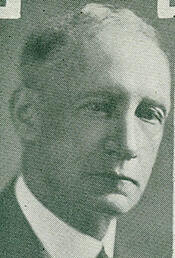
Here you will find contact information for Representative Thomas Lewis Rubey, including email address, phone number, and mailing address.
| Name | Thomas Lewis Rubey |
| Position | Representative |
| State | Missouri |
| District | 16 |
| Party | Democratic |
| Status | Former Representative |
| Term Start | April 4, 1911 |
| Term End | March 3, 1929 |
| Terms Served | 8 |
| Born | September 27, 1862 |
| Gender | Male |
| Bioguide ID | R000491 |
About Representative Thomas Lewis Rubey
Thomas Lewis Rubey (September 27, 1862 – November 2, 1928) was an American educator, banker, and Democratic politician who served as a U.S. Representative from Missouri for eight terms, two of them non-consecutive, between 1911 and 1928. Over the course of his long public career, he held offices at multiple levels of government, including service in both houses of the Missouri legislature and as the twenty-fifth Lieutenant Governor of Missouri, before representing his constituents in the United States Congress during a significant period in American history.
Rubey was born on September 27, 1862, in Lebanon, Laclede County, Missouri. He attended the common schools of his hometown, receiving the basic education typical of rural Missouri in the post–Civil War era. Demonstrating an early aptitude for scholarship, he pursued higher education at the University of Missouri in Columbia, Missouri, from which he graduated in 1885. His academic training prepared him for a career in education and laid the foundation for his later work in public service and banking.
Following his graduation, Rubey embarked on a career as an educator. He returned to his native Lebanon and served as superintendent of schools there from 1886 to 1891, overseeing the administration and development of the local public school system. In 1891 he joined the faculty of the Missouri School of Mines (now part of the Missouri University of Science and Technology) at Rolla, where he taught from 1891 to 1898. His work as a teacher and educational administrator reflected his early commitment to public instruction and community development.
Rubey’s entry into elective office began while he was still active in education. He was elected as a member of the Missouri House of Representatives, serving in the state legislature in 1891 and 1892. In 1898 he moved to La Plata, Missouri, where he organized a bank, marking the start of his parallel career in finance. His growing prominence in both business and politics led to his election to the Missouri State Senate, where he served from 1901 to 1903. In 1903 he was chosen president of the State Senate, a position that placed him in the line of succession for statewide executive office.
Upon the resignation of Lieutenant Governor John A. Lee in 1903, Rubey, as president of the Missouri Senate, became the twenty-fifth Lieutenant Governor of Missouri. He served in that capacity under Governor Alexander Monroe Dockery from 1903 until 1905, presiding over the Senate and performing the constitutional duties of the office during a period of Democratic control in state government. When his term as lieutenant governor concluded in 1905, Rubey returned to Lebanon, where he resumed and expanded his banking interests. He became president of the State Bank in Lebanon in 1914 and held that position until his death, maintaining a significant role in the financial life of his community even as he pursued national office.
Rubey’s national political career began with his election as a Democrat to the United States House of Representatives. He was first elected to the Sixty-second Congress and subsequently reelected to the Sixty-third, Sixty-fourth, Sixty-fifth, and Sixty-sixth Congresses, serving continuously from March 4, 1911, to March 3, 1921. During these eight years, which encompassed the Progressive Era and World War I, he participated in the legislative process and represented the interests of his Missouri constituents in the House of Representatives. A member of the Democratic Party, Rubey contributed to debates and legislation during a transformative period in American political and economic life. He was an unsuccessful candidate for reelection in 1920 to the Sixty-seventh Congress, temporarily interrupting his congressional service.
After a two-year absence from national office, Rubey returned to Congress when he was elected to the Sixty-eighth Congress and subsequently reelected to the Sixty-ninth and Seventieth Congresses. His second period of service extended from March 4, 1923, until his death on November 2, 1928. Over the course of his eight terms in the House—two non-consecutive stretches from 1911 to 1921 and from 1923 to 1928—he continued to participate in the democratic process, advocate for his district, and contribute to the legislative work of the nation during the postwar and early pre-Depression years.
Thomas Lewis Rubey died in office in Lebanon, Missouri, on November 2, 1928, while still serving as a member of the Seventieth Congress. His death placed him among the members of the United States Congress who died in office in the first half of the twentieth century. He was interred in Lebanon Cemetery in his hometown. At the time of his death, he remained president of the State Bank of Lebanon, a position he had held since 1914, symbolizing his enduring connection to the civic and economic life of the community he had served at the local, state, and national levels.