Senator Thomas Jefferson Rusk
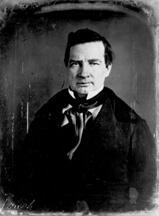
Here you will find contact information for Senator Thomas Jefferson Rusk, including email address, phone number, and mailing address.
| Name | Thomas Jefferson Rusk |
| Position | Senator |
| State | Texas |
| Party | Democratic |
| Status | Former Representative |
| Term Start | January 1, 1846 |
| Term End | March 3, 1857 |
| Terms Served | 2 |
| Born | December 5, 1803 |
| Gender | Male |
| Bioguide ID | R000518 |
About Senator Thomas Jefferson Rusk
Thomas Jefferson Rusk (December 5, 1803 – July 29, 1857) was an early political and military leader of the Republic of Texas and later a United States senator from Texas. A member of the Democratic Party, he served in the U.S. Senate from 1845 to 1857, contributing to the legislative process during two terms in office and rising to the position of president pro tempore of the United States Senate in 1857. His public career spanned the formative years of the Republic of Texas, its annexation to the United States, and the turbulent sectional politics of the 1840s and 1850s.
Rusk was born on December 5, 1803, and trained in the law before moving west. He eventually settled in Nacogdoches, in what was then Mexican Texas, where he established himself as a lawyer and community leader. In the 1830s he became deeply involved in the movement for Texas independence. His legal training and organizational abilities, combined with his willingness to take on military responsibilities, quickly brought him into the front rank of the emerging Texan leadership.
During the Texas Revolution, Rusk became one of the key military figures of the independence struggle. He served as a general at the Battle of San Jacinto on April 21, 1836, the decisive engagement in which Texan forces defeated the Mexican army and secured the independence of the Republic of Texas. In the first regularly elected administration of the new republic, President Sam Houston appointed him the first secretary of war. Although he resigned after a few weeks to attend to pressing domestic and personal affairs, his reputation as a capable military leader and public servant was firmly established.
At the insistence of friends and political allies, Rusk soon returned to public life. He represented Nacogdoches in the Second Congress of the Republic of Texas from 1837 to 1838, where he chaired the House Military Committee. In 1837 he joined Milam Lodge No. 40 (later Milam Lodge No. 2) of the Masons in Nacogdoches and became a founding member of the Grand Lodge of Texas, organized in Houston on December 20, 1837. As chairman of the House Military Committee, he sponsored a militia bill that passed over President Houston’s veto, and Congress elected him major general of the militia. In the summer of 1838 he commanded the Nacogdoches militia in suppressing the Córdova Rebellion. Later that year he led forces against Mexican agents discovered among the Kickapoo Indians, defeating them and their allies, and in November 1838 he captured marauding Caddo Indians, even crossing into United States territory to return them to the Indian agent in Shreveport, Louisiana, an action that risked an international incident.
On December 12, 1838, the Congress of the Republic of Texas elected Rusk chief justice of the republic’s Supreme Court. He served in that capacity until June 30, 1840, when he resigned to resume his law practice. In the early 1840s he headed the bar of the Republic of Texas and, in 1841, formed a law partnership with J. Pinckney Henderson, who would later become the first governor of the State of Texas. Early in 1843, concern over frontier security led Congress, in a joint ballot on January 16, 1843, to elect Rusk major general of the militia of the Republic of Texas once again. He resigned that post in June 1843 when President Houston obstructed his plans for more aggressive military operations against Mexico. Turning his attention to education and civic development, Rusk helped establish Nacogdoches University, which operated from 1845 to 1895. He served as vice president of the institution when its charter was granted in 1845 and became its president in 1846.
Rusk strongly supported Sam Houston and the growing movement to annex Texas to the United States. He served as president of the Convention of 1845, which accepted the terms of annexation offered by the United States and framed the state constitution. After Texas entered the Union, the first state legislature elected Rusk and Houston to the United States Senate in February 1846. Rusk received the larger number of votes and thus the longer term of office. His service in Congress, beginning in 1845 and continuing until his death in 1857, occurred during a significant period in American history marked by territorial expansion, the Mexican-American War, and intensifying sectional conflict. As a senator, he participated actively in the democratic process and represented the interests of his Texas constituents.
In the Senate, Rusk and Houston set aside earlier political differences to work together on issues critical to Texas. They labored to secure recognition of the Rio Grande as the southwestern boundary of Texas and to defend Texas’s claims in the region. Rusk supported President James K. Polk’s position on the necessity of the Mexican War and the acquisition of California. During the debates over the Compromise of 1850, he refused to endorse secession, which some Southern congressmen advocated, but he vigorously defended Texas’s claims to the lands that were used to create the New Mexico Territory, arguing that Texas should receive financial compensation for relinquishing those claims. An early and outspoken advocate of a transcontinental railroad through Texas, he delivered speeches in the Senate and throughout the state in favor of a southern route, and he supported the Gadsden Purchase as a means of facilitating that project. He also favored the Kansas–Nebraska Act, aligning himself with Democratic policies on territorial organization and slavery in the territories.
Rusk’s prominence in national politics was recognized by the executive branch. In 1857 President James Buchanan offered him the position of United States postmaster general, a cabinet post he declined; Buchanan subsequently appointed Aaron V. Brown to the office. During a special session of Congress in March 1857, Rusk was elected president pro tempore of the United States Senate, placing him in the line of succession to the presidency in the absence of a vice president and underscoring his stature among his colleagues. Throughout his Senate career, he remained a central figure in debates over expansion, infrastructure, and the complex sectional issues that were beginning to divide the nation.
Rusk’s later years were marked by personal tragedy. While he was attending to his duties in Washington, D.C., his wife died of tuberculosis on April 23, 1856; five of their seven children were still living at the time. Deeply affected by her death and suffering from his own declining health, Rusk took his own life on July 29, 1857, while still serving in the United States Senate. His death brought to a close the career of a leader who had played a central role in the military defense, judicial development, political organization, and national representation of Texas from the era of the republic through its first decade as a state.