Representative Thomas Edward Scanlon
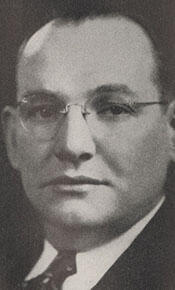
Here you will find contact information for Representative Thomas Edward Scanlon, including email address, phone number, and mailing address.
| Name | Thomas Edward Scanlon |
| Position | Representative |
| State | Pennsylvania |
| District | 16 |
| Party | Democratic |
| Status | Former Representative |
| Term Start | January 3, 1941 |
| Term End | January 3, 1945 |
| Terms Served | 2 |
| Born | September 18, 1896 |
| Gender | Male |
| Bioguide ID | S000105 |
About Representative Thomas Edward Scanlon
Thomas Edward Scanlon (September 18, 1896 – August 9, 1955) was an American World War I veteran, newspaper pressman, labor leader, and Democratic politician who represented Pennsylvania in the United States House of Representatives during the early 1940s. Born in Pittsburgh, Pennsylvania, he was raised in that city and attended the local public schools, including Forbes School. He later pursued higher education at Duquesne University in Pittsburgh, grounding himself in the academic and civic life of the community in which he would spend his entire career.
As a young man, Scanlon learned the pressman’s trade and entered the newspaper industry, a field that connected him closely with both organized labor and public affairs. From 1914 to 1936 he was employed as a pressman on Pittsburgh newspapers, gaining more than two decades of experience in the printing trades. This work not only provided him with a livelihood but also positioned him within the broader labor movement that was particularly active in industrial western Pennsylvania during the early twentieth century.
During the First World War, Scanlon served in the United States Army, reflecting the era’s strong sense of national service. He entered military service on September 6, 1918, and served as a private, first class, until May 14, 1919. His wartime experience as an enlisted soldier contributed to his identity as a veteran and later informed his public service, as he belonged to the generation of political leaders shaped by the First World War and its aftermath.
Following his return to civilian life, Scanlon became deeply involved in organized labor and local public affairs. From 1920 to 1940 he served as a delegate to the Pittsburgh Central Labor Union, representing workers’ interests in one of the region’s principal labor bodies. His prominence in labor circles led to his appointment as a member of the Allegheny County Board for the Assessment and Revision of Taxes, on which he served from 1936 to 1941. In that role he participated in the oversight and adjustment of local tax assessments, gaining administrative and governmental experience that would later support his transition to national office.
Scanlon’s political career advanced as he entered federal office during a critical period in American history marked by the end of the Great Depression and the onset of World War II. A member of the Democratic Party, he was elected to the U.S. House of Representatives from Pennsylvania as a Democrat to the Seventy-seventh and Seventy-eighth Congresses. His service in Congress has been variously described, with existing accounts noting that he served as a Representative from 1941 to 1945 and also specifically identifying his term as running from 1943 to 1945; in any case, he held office during the early 1940s and served two terms in Congress according to some records, while other records characterize his tenure as one term in office from 1943 to 1945. During this time he contributed to the legislative process in the House of Representatives, participating in the democratic governance of the nation and representing the interests of his Pennsylvania constituents at a time when Congress was addressing wartime mobilization, economic regulation, and postwar planning.
Scanlon’s congressional service coincided with the United States’ full engagement in World War II, and his role as a Representative placed him among those responsible for deliberating on measures related to national defense, wartime production, and support for servicemembers and their families. As a Democratic member of the House during the administration of President Franklin D. Roosevelt, he was part of the congressional majority that oversaw the continuation of New Deal–era policies and the transition to a wartime economy. He sought reelection in 1944 but was an unsuccessful candidate, bringing his period of federal legislative service to a close at the conclusion of his term in the Seventy-eighth Congress.
After leaving Congress, Scanlon returned to public service at the local level in Allegheny County, Pennsylvania. He became a member of the Boards of Viewers of Allegheny County, a body typically charged with responsibilities related to property valuation, public improvements, and related matters affecting landowners and local government. In this capacity he continued to apply his experience in taxation, assessment, and public administration, maintaining his long-standing engagement with the civic life of the Pittsburgh area.
Thomas Edward Scanlon died in Pittsburgh, Pennsylvania, on August 9, 1955. He was interred in North Side Catholic Cemetery in Pittsburgh. His life and career reflected the trajectory of a working-class newspaperman and World War I veteran who rose through the ranks of organized labor and local government to serve in the United States Congress during one of the most consequential periods in twentieth-century American history.