Representative Thomas Joseph Scully
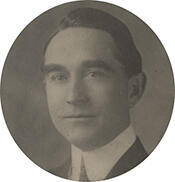
Here you will find contact information for Representative Thomas Joseph Scully, including email address, phone number, and mailing address.
| Name | Thomas Joseph Scully |
| Position | Representative |
| State | New Jersey |
| District | 3 |
| Party | Democratic |
| Status | Former Representative |
| Term Start | April 4, 1911 |
| Term End | March 3, 1921 |
| Terms Served | 5 |
| Born | September 19, 1868 |
| Gender | Male |
| Bioguide ID | S000206 |
About Representative Thomas Joseph Scully
Thomas Joseph Scully (September 19, 1868 – December 14, 1921) was an American Democratic Party politician who represented New Jersey’s 3rd congressional district in the United States House of Representatives for five consecutive terms from 1911 to 1921. Over the course of a decade in Congress, he contributed to the legislative process during a significant period in American history, representing the interests of his New Jersey constituents as a member of the Democratic Party.
Scully was born in South Amboy, Middlesex County, New Jersey, on September 19, 1868. He was educated in the public schools of South Amboy and continued his studies at Seton Hall College in South Orange, New Jersey. His early life in a growing industrial and transportation hub on the Raritan Bay helped shape his later involvement in local business and municipal affairs.
After completing his education, Scully engaged in the marine towing and transportation business, a key industry in the port communities of central New Jersey. His involvement in this sector connected him closely with the economic life of South Amboy and the surrounding region. This business background provided him with practical experience in commerce and transportation issues that would later inform his public service.
Scully began his political career in local government. He served as a member of the South Amboy board of education from 1893 to 1895, participating in the oversight of the community’s public schools during a period of expansion and reform in American education. He later rose to chief municipal office, serving as Mayor of South Amboy in 1909 and 1910. In this role, he was responsible for the administration of city affairs at a time when small cities were grappling with modernization, infrastructure needs, and the demands of a growing population.
Building on his local prominence, Scully was elected as a Democrat to the Sixty-second Congress and to the four succeeding Congresses, serving from March 4, 1911, to March 4, 1921. As a Representative from New Jersey’s 3rd congressional district, he participated in the democratic process at the national level and took part in deliberations during a transformative era that included the Progressive movement, World War I, and the early postwar period. During his ten years in the House of Representatives, he contributed to the legislative work of Congress and represented the concerns and interests of his district’s voters in Washington, D.C.
In addition to his congressional duties, Scully was active in national party affairs. He served as a delegate to the 1912 Democratic National Convention, a pivotal gathering that nominated Woodrow Wilson for the presidency and helped shape the party’s progressive-era platform. His role as a delegate reflected both his standing within the Democratic Party and his engagement with broader national political developments.
After leaving Congress at the conclusion of his fifth term in March 1921, Scully returned to municipal leadership in his hometown. He again served as Mayor of South Amboy beginning in 1921, resuming responsibility for local governance and continuing his long-standing commitment to public service at the community level. He held this office until his death in South Amboy on December 14, 1921. Thomas Joseph Scully was interred in St. Mary’s Cemetery in South Amboy, New Jersey, closing a career that spanned business, local administration, and a decade of service in the United States Congress.