Representative Tom Steed
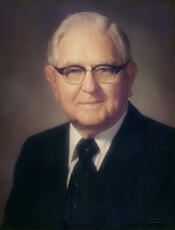
Here you will find contact information for Representative Tom Steed, including email address, phone number, and mailing address.
| Name | Tom Steed |
| Position | Representative |
| State | Oklahoma |
| District | 4 |
| Party | Democratic |
| Status | Former Representative |
| Term Start | January 3, 1949 |
| Term End | January 3, 1981 |
| Terms Served | 16 |
| Born | March 2, 1904 |
| Gender | Male |
| Bioguide ID | S000829 |
About Representative Tom Steed
Thomas Jefferson Steed (March 2, 1904 – June 8, 1983) was an American politician, journalist, and long-serving Democratic Representative from Oklahoma in the United States Congress. Serving from January 3, 1949, to January 3, 1981, he completed sixteen consecutive terms in the House of Representatives, a total of thirty-two years, and at the time of his retirement had served longer in Congress than any other Oklahoman.
Steed was born on a farm in Eastland County, Texas, near Rising Star, on March 2, 1904. During his childhood his family moved to Oklahoma, where he attended school in Konawa, Oklahoma. His formal education was limited; after only one semester of high school he left school to begin working, a decision that led him into journalism and public life. In 1923 he married Hazel Bennett, and the couple had two sons, Roger and Richard. Roger Steed became a Marine second lieutenant and fighter pilot and was killed in China in 1947, a loss that deeply affected Steed and occurred just before the beginning of his congressional career.
Steed’s early career was grounded in journalism. He began work with the Ada Evening News and went on to write and edit for several Oklahoma newspapers, including the Daily Oklahoman. His reporting and editorial experience helped shape his understanding of public affairs and communication. In 1935 he moved into the political arena as an assistant to three Oklahoma members of the U.S. House of Representatives: Percy Lee Gassaway, Robert P. Hill, and Gomer Griffith Smith. This service in Washington, D.C., gave him firsthand experience with the legislative process. In 1938 he returned to Oklahoma and became managing editor of the Shawnee News-Star, a position that further established his prominence in state political and civic circles.
With the outbreak of World War II, Steed entered military service. He enlisted in the United States Army on October 29, 1942, and was assigned to the Anti-aircraft Artillery. He was released from active duty in May 1944 with the rank of second lieutenant. Continuing his contribution to the war effort, he joined the Office of War Information on July 1, 1944, and served in its information division in the India–Burma Theater until December 1945. Steed later remarked that his combined experience in journalism, military service, and congressional work had taught him that “knowledge is power,” a phrase that reflected his belief in the importance of information and public education in a democracy.
In 1948 Steed ran for Congress as a Democrat and was elected to the U.S. House of Representatives, taking office on January 3, 1949. He was re-elected in 1950 and in every subsequent election until he chose not to run again in 1980. His final congressional race in 1978 was successful, though he faced a spirited challenge in the Democratic primary from M. E. “Cuffie” Waid, a popular Lawton optometrist and Chamber of Commerce leader. Over the course of his sixteen terms, Steed represented his Oklahoma constituents during a period of significant national change, including the Cold War, the civil rights movement, and major shifts in federal domestic policy. In 1980, as he prepared to retire, he also received one vote for president at the 1980 Democratic National Convention, a symbolic recognition of his long service.
During his congressional career, Steed served on several key House committees, including the Education and Labor, Public Works, Appropriations, and Small Business Committees. He briefly chaired the House Small Business Committee during the Ninety-fourth Congress. Within the Appropriations framework he chaired the Subcommittee on the Treasury, Postal Service, and General Government, and he also chaired the Subcommittee on Taxation and Oil Imports. His legislative work included conducting hearings on price wars affecting the dairy and retail petroleum industries, reflecting his concern with fair competition and consumer impact. He cosponsored the Upstream Conservation Act, enacted in 1954, and joined with Senator Robert S. Kerr to help realize the Arkansas River Navigation System, a major infrastructure and economic development project for Oklahoma and the region. He also cosponsored the 1956 Library Services Act, which helped establish the bookmobile system, expanding access to library services in rural areas. Steed was instrumental in bringing the Postal Service Institute to Norman, Oklahoma, in 1968, and he helped secure funds for the education center at Rose State College and for the Gordon Cooper Vocational Education School in Shawnee, underscoring his long-standing interest in education and workforce training.
Steed’s record on civil rights and national politics reflected both his regional background and his evolving views. He did not sign the 1956 Southern Manifesto, a document opposing racial integration, and he voted in favor of the Civil Rights Acts of 1957, 1960, and 1964, as well as the Twenty-fourth Amendment to the U.S. Constitution, which abolished the poll tax in federal elections, and the Voting Rights Act of 1965. He did not, however, support the Civil Rights Act of 1968. In the 1976 presidential election, despite his long affiliation with the Democratic Party and his status as an incumbent Democratic member of Congress, Steed publicly supported the Republican ticket headed by President Gerald Ford and Senator Bob Dole and appeared at a Ford campaign event in Lawton, Oklahoma, an unusual cross-party endorsement that drew attention to his independent political judgment.
After leaving Congress on January 3, 1981, Steed returned to Oklahoma and resided in Shawnee. He remained there until his death on June 8, 1983, at the age of seventy-nine. He was interred at Resthaven Cemetery in Shawnee. In recognition of his decades of public service and his impact on Oklahoma’s development, a portion of Interstate 40 near Shawnee was designated the “Tom Steed Memorial Highway,” and Tom Steed Reservoir near Mountain Park was named in his honor, ensuring a lasting public commemoration of his contributions to the state and to the nation.