Senator Thomas Sterling
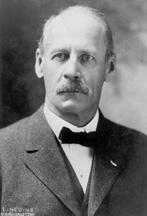
Here you will find contact information for Senator Thomas Sterling, including email address, phone number, and mailing address.
| Name | Thomas Sterling |
| Position | Senator |
| State | South Dakota |
| Party | Republican |
| Status | Former Representative |
| Term Start | April 7, 1913 |
| Term End | March 3, 1925 |
| Terms Served | 2 |
| Born | February 21, 1851 |
| Gender | Male |
| Bioguide ID | S000872 |
About Senator Thomas Sterling
Thomas Sterling (February 21, 1851 – August 26, 1930) was an American lawyer, politician, and academic who served as a United States Senator from South Dakota and as the first dean of the University of South Dakota College of Law. A member of the Republican Party, he represented South Dakota in the Senate from 1913 to 1925, contributing to the legislative process during two terms in office. He later served as dean and law professor at George Washington University Law School. In recognition of his role in legal education, the University of South Dakota School of Law awards “Sterling Honors” to the top 10 percent of its graduating class in honor of its first dean.
Sterling was born near Amanda, Fairfield County, Ohio, on February 21, 1851, to Charles Sterling (1821–1905) and Anna Kessler (1827–1908). In 1854 he moved with his parents to McLean County, Illinois, where he attended the public schools. He pursued higher education at Illinois Wesleyan University in Bloomington, Illinois, and graduated in 1875. His family produced more than one public servant; his brother, John A. Sterling, later became a United States Representative from Illinois.
Following his graduation, Sterling began his professional life in the field of education. He served as superintendent of schools in Bement, Illinois, from 1875 to 1877. He then turned to the study of law, was admitted to the bar in 1878, and commenced practice in Springfield, Illinois. In 1880 he became the city prosecuting attorney of Springfield, a position he held until 1881. Seeking new opportunities on the frontier, Sterling moved in 1882 to the Dakota Territory, settling first in Northville. In 1886 he relocated to Redfield, where he continued the practice of law and became an influential figure in the emerging legal and political life of the region.
Sterling’s public career in Dakota and later South Dakota developed alongside the territory’s transition to statehood. He served as district attorney of Spink County, South Dakota, from 1886 to 1888. In 1889 he was a member of the South Dakota constitutional convention, helping to frame the fundamental law of the new state. The following year, in 1890, he was elected to the South Dakota State Senate. His interest in legal education led to his appointment in 1901 as the first dean of the University of South Dakota College of Law at Vermillion. He served as dean from 1901 to 1911, shaping the curriculum and standards of the fledgling law school and teaching many students who would later enter public service.
In 1912 Sterling was elected as a Republican to the United States Senate from South Dakota and took his seat on March 4, 1913. He was reelected in 1918 and served until March 3, 1925. His tenure in the Senate coincided with a significant period in American history, including World War I and the early postwar years. As a member of the Senate, Sterling participated in the democratic process and represented the interests of his South Dakota constituents. He served on the Overman Committee, which investigated seditious German and Bolshevik activities during and after the war, reflecting congressional concern over internal security and radical movements. During the Sixty-sixth Congress he was chairman of the United States Senate Committee on Civil Service. He continued to serve on the Committee on Civil Service in the Sixty-seventh Congress and was a member of the Committee on Post Office and Post Roads during the Sixty-eighth Congress. While in Congress he served alongside William Williamson and Royal C. Johnson, two of his first graduates from the University of South Dakota College of Law, underscoring his dual legacy as both educator and legislator. He was an unsuccessful candidate for renomination in 1924, losing the Republican primary to William H. McMaster, who subsequently won the general election.
After leaving the Senate, Sterling remained active in the legal and academic communities in Washington, D.C. He practiced law in the nation’s capital and joined the faculty of National University Law School, an institution that later became part of George Washington University Law School, where he served as a dean and law professor. In 1925 President Calvin Coolidge appointed him field secretary of the Commission for the Celebration of the Two Hundredth Anniversary of the Birth of George Washington, a national commemorative effort recognizing the first President’s bicentennial.
Thomas Sterling died in Washington, D.C., on August 26, 1930. He was interred in Cedar Hill Cemetery. His career spanned education, law, and public service, and his influence endured in both the institutions he helped build and the students and colleagues he mentored, particularly through the ongoing recognition of “Sterling Honors” at the University of South Dakota School of Law.