Senator Thomas Sumter
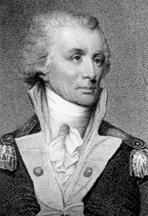
Here you will find contact information for Senator Thomas Sumter, including email address, phone number, and mailing address.
| Name | Thomas Sumter |
| Position | Senator |
| State | South Carolina |
| Party | Republican |
| Status | Former Representative |
| Term Start | March 4, 1789 |
| Term End | December 16, 1810 |
| Terms Served | 7 |
| Born | August 14, 1734 |
| Gender | Male |
| Bioguide ID | S001073 |
About Senator Thomas Sumter
Thomas Sumter (August 14, 1734 – June 1, 1832) was an American military officer, planter, and politician who became one of South Carolina’s most prominent Revolutionary War commanders and later a leading Republican statesman in the early United States Congress. Nicknamed the “Fighting Gamecock” or “Carolina Gamecock” for his fierce and tenacious military tactics, he served as a brigadier general in the Continental Army during the American Revolution, and afterward represented South Carolina in both the United States House of Representatives and the United States Senate. A member of the Republican (Democratic-Republican) Party, he contributed to the legislative process over multiple terms in Congress during a formative period in the nation’s history, including service in the Senate from 1801 to 1810, when he retired from that body.
Sumter was born in Hanover County in the Colony of Virginia. His father, William Sumpter, a miller and former indentured servant born in England, and his mother, Elizabeth, a midwife, were of English and Welsh descent. Most of his early years were spent tending livestock and helping his father at the mill rather than in formal schooling, and he received only a rudimentary frontier education. As a young man he entered the Virginia militia and was present for General Edward Braddock’s defeat during the French and Indian War, an experience that introduced him to large-scale military operations and frontier conflict.
In the early 1760s, Sumter’s military and frontier experience led to his participation in what became known as the Timberlake Expedition at the close of the Anglo-Cherokee War. In 1761 he joined an expedition organized by Colonel Adam Stephen and led by Henry Timberlake to the Overhill Cherokee towns to renew alliances following the war. Partially financing the venture with borrowed money, Sumter traveled with Timberlake, interpreter John McCormack, and a servant. Timberlake’s journal records that at one point Sumter swam nearly a half-mile in icy water to retrieve a drifting canoe. The party reached the Overhill town of Tomotley on December 20, 1761, where they were welcomed by the headman Ostenaco and took part in peace-pipe ceremonies. Over the following weeks they attended peace ceremonies in several Overhill towns, including Chota, Citico, and Chilhowee. The group returned to Williamsburg, Virginia, in early April 1762, accompanied by several Cherokee Beloved Men. When Ostenaco expressed a desire to meet the king of England, Sumter traveled to England with Timberlake and three Cherokee leaders, including Ostenaco, arriving in London in early June 1762, where the Cherokee delegation drew large crowds. Sumter then returned with them to America, landing in South Carolina around August 25, 1762.
Financial difficulties arising from these travels left Sumter stranded in South Carolina. His petition to the Virginia authorities for reimbursement of his expenses was denied, and he was subsequently imprisoned for debt in Virginia. During his confinement in Staunton, his friend and fellow soldier Joseph Martin visited him, spent the night in jail, and gave him ten guineas and a tomahawk. Sumter used the money to secure his release in 1766. When the two men met again some thirty years later, Sumter repaid the debt. After his release, he settled in Stateburg, in the High Hills of Santee in what was then the Claremont District (later Sumter District) of South Carolina. In 1767 he married Mary Jameson. Together they opened several small businesses and, over time, rose into the planter class, acquiring plantations worked by enslaved labor and establishing themselves as prominent landowners in the region.
On the eve of the American Revolution, Sumter organized a local militia in Stateburg and quickly emerged as a leading military figure in South Carolina. In February 1776 he was elected lieutenant colonel of the Second Regiment of the South Carolina Line, and he was later appointed its colonel. In 1780 he was commissioned a brigadier general, a rank he held until the end of the war. He took part in several early campaigns, including efforts to prevent a British invasion of Georgia, and later became best known for his partisan operations against British and Loyalist forces in the Southern theater. His irregular campaigns significantly contributed to British commander Lord Cornwallis’s decision to abandon the Carolinas and move his main army into Virginia. In August 1780 Sumter defeated a combined force of Loyalists and British regulars at Hanging Rock and intercepted and defeated an enemy convoy. Shortly thereafter, his own command was nearly destroyed by Lieutenant Colonel Banastre Tarleton’s forces. Undeterred, he raised a new force, defeated Major James Wemyss in November 1780, and then repulsed another attack by Tarleton, during which Sumter was seriously wounded. He was carried into the Blackstock house, where his surgeon, Dr. Nathaniel Abney, extracted a musket ball from beneath his left shoulder. In 1781, facing recruitment challenges, Sumter instituted a controversial bounty system for Continental Army recruiters in South Carolina, offering Loyalist-owned enslaved people as rewards to those who brought in sufficient volunteers. His aggressive style and refusal to yield led Tarleton to remark that Sumter “fought like a gamecock,” and Cornwallis referred to him as his “greatest plague,” cementing Sumter’s enduring nickname as the “Fighting Gamecock” or “Carolina Gamecock.”
After the Revolutionary War, Sumter transitioned from military to political service. He was elected to the United States House of Representatives from South Carolina, serving in the First and Second Congresses from March 4, 1789, to March 3, 1793, during the initial organization of the federal government under the new Constitution. He returned to the House for additional service in the Fifth and Sixth Congresses, from March 4, 1797, to December 15, 1801. A member of the Republican Party, he represented the interests of his South Carolina constituents and participated in the early national debates over federal power, finance, and foreign policy. His multiple terms in the House placed him at the center of legislative developments in the young republic.
Sumter’s congressional career continued in the United States Senate. Chosen by the South Carolina legislature to fill the vacancy created by the resignation of Senator Charles Pinckney, he entered the Senate in 1801. He served there until his resignation on December 16, 1810. During this period, which encompassed the administrations of Thomas Jefferson and the early years of James Madison, Sumter aligned with the Republican majority and contributed to the legislative process over what contemporary accounts describe as seven terms in office across both chambers. His Senate tenure coincided with significant events such as the Louisiana Purchase, rising tensions with Great Britain, and the run-up to the War of 1812, and he was regarded as a steadfast advocate for South Carolina’s interests and for the Republican vision of limited central government.
Sumter’s family also played notable roles in American public life. His son, Thomas Sumter Jr., served as United States Ambassador to the Portuguese Court during its exile in Rio de Janeiro, Brazil, from 1810 to 1819. Thomas Jr.’s wife, Nathalie de Lage de Volude (Natalie De Lage Sumter), was of French noble birth and had been sent to America for safety during the French Revolution. From 1794 to 1801 she was raised in New York City as the ward of Vice President Aaron Burr, alongside his daughter Theodosia. Sumter’s grandson, Colonel Thomas De Lage Sumter, served in the U.S. Army during the Second Seminole War and later represented South Carolina in the United States House of Representatives. Sumter’s older brother, William Sumter, also served in the Revolutionary War as a captain, underscoring the family’s deep military and political involvement in the early republic.
In his later years, Sumter lived at his plantation, “South Mount,” near Stateburg, South Carolina. He died there on June 1, 1832, at the age of 97, and at the time of his death he was recognized as the last surviving American general of the Revolutionary War. He was buried in what is now the Thomas Sumter Memorial Park in Sumter County, South Carolina. His legacy is reflected in numerous place names and institutions. The city of Sumter, South Carolina, originally incorporated as Sumterville in 1845, was named in his honor and is sometimes called “The Gamecock City” after his wartime nickname. Prior to being renamed Sumter County in 1868, the Sumter District was commonly referred to as the “Old Gamecock District,” a designation that continued afterward as “Old Gamecock County.” Counties in South Carolina, Florida, Alabama, and Georgia bear his name, as do the community of Sumterville, Florida, and Fort Sumter in Charleston Harbor, the latter planned after the War of 1812 and later famed as the site of the opening shots of the American Civil War. Sumter’s “Fighting Gamecock” sobriquet has become a traditional nickname for natives of South Carolina and is reflected in the University of South Carolina’s athletic teams, known since 1903 as the “South Carolina Gamecocks,” whose costumed mascot, “Cocky,” and numerous other schools and teams in the state perpetuate the Gamecock symbol in honor of Thomas Sumter.