Representative Thomas Swann
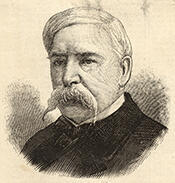
Here you will find contact information for Representative Thomas Swann, including email address, phone number, and mailing address.
| Name | Thomas Swann |
| Position | Representative |
| State | Maryland |
| District | 4 |
| Party | Democratic |
| Status | Former Representative |
| Term Start | March 4, 1869 |
| Term End | March 3, 1879 |
| Terms Served | 5 |
| Born | February 3, 1809 |
| Gender | Male |
| Bioguide ID | S001092 |
About Representative Thomas Swann
Thomas Swann (February 3, 1809 – July 24, 1883) was an American lawyer, railroad executive, and politician who became one of Maryland’s most prominent public figures in the mid-nineteenth century. Initially aligned with the nativist Know-Nothing, or American Party, and later a Democrat, he served as the 19th Mayor of Baltimore from 1856 to 1860, the 33rd Governor of Maryland from 1866 to 1869, and a Representative from Maryland in the United States Congress from 1869 to 1879. In Congress he represented Maryland’s 3rd congressional district and later its 4th congressional district, both centered on the Baltimore area, serving five consecutive terms and contributing to the legislative process during a significant period in American history. Swann also played a major role in the expansion of the Baltimore and Ohio Railroad, serving as its president as it completed its line to Wheeling and gained access to the Ohio River Valley.
Swann was born in Alexandria, then part of the District of Columbia, on February 3, 1809, into a politically connected family; his father, also named Thomas Swann, was a prominent lawyer and public official. He was educated in private schools and read law, gaining admission to the bar and beginning a legal career that soon intersected with the emerging railroad industry. His early professional work as a railroad lawyer brought him into contact with leading figures in finance and politics and laid the groundwork for his later prominence in both corporate and public life.
After his father’s death in 1840, Swann returned to Alexandria but continued his legal and railroad-related work. Between 1837 and 1843 he served as assistant to Louis McLane, a veteran statesman who was then president of the Baltimore and Ohio Railroad (B&O). Swann’s responsibilities expanded steadily, and in 1844 he was appointed Alexandria’s tobacco inspector, an important post in a major port city with rail connections to Richmond and, via a separate station, to Baltimore. In 1846–1847 he acted as the B&O’s lobbyist in Richmond, Virginia, where he worked to secure an extension of the railroad’s franchise, originally granted in 1827 but now fiercely opposed by the politically powerful James River and Kanawha Canal Company. Swann succeeded in obtaining the crucial extension on March 6, 1847, enabling the B&O to begin construction toward Wheeling. By October 1848, his large stockholdings in the company and his services on its behalf led to his election as a director, and upon McLane’s retirement he succeeded him as president of the railroad. By 1850 he was raising funds in Europe to finance the B&O’s extension to the Ohio River, a key step in making Baltimore a major national transportation hub. He continued as president until resigning in 1853, after which he was chosen president of the Northwestern Virginia Railroad.
Swann’s prominence in business and his growing political ambitions led him into municipal politics in Baltimore during a period of intense nativist agitation and urban violence. In 1856 he was first elected Mayor of Baltimore as a member of the Know-Nothing, or American Party, in what contemporaries regarded as one of the bloodiest and most corrupt elections in Maryland history. He supposedly defeated Democratic challenger Robert Clinton Wright by more than a thousand votes, though widespread voter fraud and intimidation were reported. The broader political climate in Baltimore in the mid-1850s was marked by frequent threats to public order. In October 1856, before Swann’s election, the incumbent Know-Nothing mayor, Samuel Hinks, had initially ordered the Maryland State Militia to stand ready to maintain order during the municipal elections, only to rescind the order. Violence ensued on polling day, with shots exchanged by rival mobs; in the 2nd and 8th Wards several citizens were killed and many wounded, and in the 6th Ward artillery was used in a pitched battle on Orleans Street between Know-Nothings and Democrats. The result was a victory for Swann by around 9,000 votes, cementing his position as a leading figure in the American Party in Maryland.
During and after the Civil War era, Swann’s political stance evolved, and he ultimately joined the Democratic Party. As Maryland moved toward the abolition of slavery, many white residents feared that emancipation would trigger a mass migration of African Americans within the state. Returning white soldiers from Southern battlefields often found their slaves gone and their tobacco-based agriculture in southern Maryland undermined by soil exhaustion. In this climate of disaffection, Swann participated in a broader campaign of “Redemption” and the effort to “restore to Maryland a white man’s government,” reflecting the racial and political tensions of the time. As governor, he also signed into law Maryland’s first “Oyster Code,” which, among other provisions, effectively deputized white fishermen as state officers empowered to arrest violators of the law. The statute declared that all owners and masters of licensed canoes, boats, or vessels “being White Men” were officers of the state for purposes of enforcement and could summon a posse comitatus to aid in arrests, thereby encouraging white fishermen to harass Black fishermen and reinforcing racial hierarchies on the Chesapeake Bay.
Maryland, though a slave state, had remained officially in the Union during the Civil War, and the Emancipation Proclamation did not apply there because President Abraham Lincoln feared that a federal move to end slavery in the state at the height of the conflict might drive it into the Confederacy. Abolition in Maryland therefore required state-level action. With the adoption of the third Maryland Constitution in 1864, slavery was abolished without the state seceding, and Lincoln’s fears were not realized, though many men from southern Maryland and the Eastern Shore had fought for the Confederacy. By 1860, even before formal abolition, approximately 49 percent of Black residents in Maryland were already free, giving them a significant social and economic presence in the postwar years. As governor from 1866 to 1869, Swann supported internal improvements to state infrastructure, particularly the enhancement of facilities at the Port of Baltimore and its harbor, and he encouraged immigration and the immediate emancipation of slaves following the war, while simultaneously navigating the complex racial politics of Reconstruction.
In 1867 the General Assembly of Maryland nominated Swann to succeed John A. J. Creswell in the United States Senate. However, Radical Republicans, who had gained control of Congress, refused to seat him, in part because he had switched from the American Party to the Democratic Party and was viewed with suspicion in the charged Reconstruction climate. Maryland Democrats feared that if Swann vacated the governorship, the lieutenant governor, a Radical Republican, might place Maryland under a military Reconstruction government and temporarily disfranchise many white men who had served the Confederacy, as well as undo reforms in voting rights that Swann had supported. Rather than engage in a protracted struggle with Radical Republicans in Congress over the Senate seat, Swann was persuaded by fellow Democrats to decline the appointment and remain as governor until the end of his term.
After leaving the governorship, Swann entered national politics as a Democrat in the U.S. House of Representatives. He was elected to represent Maryland’s 3rd congressional district beginning in 1869 and later represented the 4th congressional district, serving continuously until 1879. His decade in Congress coincided with the later years of Reconstruction and the beginning of the Gilded Age, a period marked by debates over civil rights, federal-state relations, economic development, and the regulation of railroads and commerce. As a member of the House of Representatives, Swann participated in the democratic process and represented the interests of his Baltimore-area constituents, drawing on his long experience in state government and in the railroad industry. Over five terms in office, he contributed to legislative deliberations on issues central to Maryland’s economic and political life, including infrastructure, trade, and the evolving balance of power between federal and state authorities.
Thomas Swann spent his later years in Baltimore, where he remained a figure of note due to his long record in business and public service. He died on July 24, 1883, leaving a complex legacy as a railroad executive who helped secure Baltimore’s access to the Ohio River Valley, a municipal and state leader during some of Maryland’s most turbulent political years, and a congressman who served during a transformative decade in American national politics.