Representative Thomas Joseph Tauke
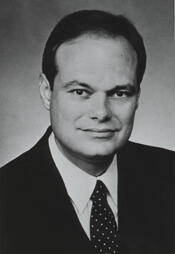
Here you will find contact information for Representative Thomas Joseph Tauke, including email address, phone number, and mailing address.
| Name | Thomas Joseph Tauke |
| Position | Representative |
| State | Iowa |
| District | 2 |
| Party | Republican |
| Status | Former Representative |
| Term Start | January 15, 1979 |
| Term End | January 3, 1991 |
| Terms Served | 6 |
| Born | October 11, 1950 |
| Gender | Male |
| Bioguide ID | T000053 |
About Representative Thomas Joseph Tauke
Thomas Joseph Tauke (born October 11, 1950) is an American politician, lawyer, and corporate executive from Iowa who served as a Representative in the United States Congress from 1979 to 1991. A member of the Republican Party, he represented his Iowa constituency for six consecutive terms in the U.S. House of Representatives, contributing to the legislative process during a significant period in American political history.
Born and raised in Iowa, Tauke came of age during a time of social and political change in the United States, experiences that helped shape his interest in public service and law. His early life in the state provided him with a close familiarity with the concerns of Midwestern communities, including agriculture, small business, and local governance, which later informed his political priorities and legislative focus.
Tauke pursued higher education in preparation for a career in law and public affairs, undertaking formal legal training that led to his qualification as an attorney. His legal education equipped him with a detailed understanding of statutory interpretation, regulatory frameworks, and constitutional principles, skills that would prove central to his later work as both a legislator and a corporate executive. After completing his studies, he entered the legal profession, gaining practical experience that deepened his knowledge of the issues facing individuals, businesses, and local institutions in Iowa.
Before and alongside his congressional career, Tauke established himself as a lawyer and became active in Republican politics in Iowa. His professional background and engagement with civic and party activities helped build his reputation as a capable advocate for his community. This combination of legal expertise and political involvement positioned him as a strong candidate for federal office and laid the groundwork for his successful run for the U.S. House of Representatives.
Tauke was first elected to the United States House of Representatives in 1978 and took office in January 1979, beginning a congressional career that would span six terms, ending in 1991. Serving during a period marked by economic challenges, the Cold War’s final decade, and significant domestic policy debates, he participated in the democratic process as a Republican member of the House. Throughout his tenure, he represented the interests of his Iowa constituents, working on legislation and policy matters that reflected both national priorities and the specific needs of his district. His service in Congress occurred during a transformative era in American politics, and he took part in deliberations on issues ranging from economic policy and federal regulation to agriculture and rural development.
As a member of the House of Representatives, Tauke contributed to the legislative process through committee work, floor debates, and constituent advocacy. He engaged with colleagues across the aisle and within his party to shape federal policy, reflecting the concerns of Iowans in national discussions. His role required balancing local interests with broader national considerations, and he became known for bringing a lawyer’s analytical approach to complex policy questions. Over the course of his six terms, he gained experience in federal governance and developed a detailed understanding of how legislation affected both his home state and the country as a whole.
After leaving Congress in 1991, Tauke transitioned from elected office to a career in the private sector, drawing on his combined experience as a lawyer and former legislator. He became a corporate executive, applying his knowledge of law, regulation, and public policy to the business environment. In this capacity, he worked at the intersection of government and industry, focusing on issues such as telecommunications, regulatory compliance, and corporate strategy. His post-congressional career underscored the continuity between his public service and private-sector leadership, as he continued to engage with national policy debates and the evolving relationship between government and business.