Representative Thomas Clarke Theaker
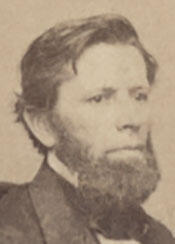
Here you will find contact information for Representative Thomas Clarke Theaker, including email address, phone number, and mailing address.
| Name | Thomas Clarke Theaker |
| Position | Representative |
| State | Ohio |
| District | 17 |
| Party | Republican |
| Status | Former Representative |
| Term Start | December 5, 1859 |
| Term End | March 3, 1861 |
| Terms Served | 1 |
| Born | February 1, 1812 |
| Gender | Male |
| Bioguide ID | T000151 |
About Representative Thomas Clarke Theaker
Thomas Clarke Theaker (February 4, 1812 – July 16, 1883) was an American politician and public official who served one term as a U.S. Representative from Ohio from 1859 to 1861 and later as commissioner of the United States Patent Office from 1865 to 1868. A member of the Republican Party, he participated in the national legislative process during a critical period in the years immediately preceding the American Civil War and represented the interests of his Ohio constituents in the House of Representatives.
Theaker was born on February 4, 1812, in York, York County, Pennsylvania. Little is recorded about his early childhood, but he came of age in a period of rapid industrial and mechanical development in the United States. In 1830, as a young man, he moved west to Bridgeport, Belmont County, Ohio. There he established himself in skilled trades as a wheelwright and machinist, occupations that placed him at the intersection of emerging technologies, transportation, and manufacturing in the antebellum era.
Theaker’s professional background in mechanics and manufacturing helped shape his public career and likely informed his later work on patent matters. As he became a respected figure in his community in Bridgeport, he entered public life aligned with the emerging Republican Party, which was gaining strength in Ohio and across the North in the 1850s. His technical experience and familiarity with industrial concerns made him a natural advocate for issues related to innovation, infrastructure, and economic development.
Elected as a Republican, Theaker represented Ohio’s Seventeenth Congressional District in the Thirty-sixth Congress, serving in the U.S. House of Representatives from March 4, 1859, to March 3, 1861. His single term in Congress coincided with a significant and turbulent period in American history, marked by intensifying sectional conflict over slavery and the Union. During this time he contributed to the legislative process as a member of the House, participating in debates and votes that reflected the growing national crisis. Although he sought to continue his service, he failed to win re-election in 1860 and left Congress at the close of his term.
Following his congressional service, Theaker remained involved in federal affairs, particularly in the field of intellectual property, where his mechanical background proved valuable. He was appointed to a seat on the United States Patent Office’s Board of Appeals, where he helped adjudicate disputes and interpret patent law at a time when American industry and invention were rapidly expanding. His work on the Board of Appeals positioned him as a key figure in the administration of the nation’s patent system.
On August 15, 1865, Theaker was appointed commissioner of the United States Patent Office, the highest administrative post in that agency. He served as commissioner from 1865 until his resignation in January 1868. In this role, he oversaw the examination and issuance of patents, the management of patent records, and the broader administration of the patent system during the immediate post–Civil War years, when technological innovation and industrial reconstruction were of growing national importance. His tenure contributed to the federal government’s efforts to regulate and encourage invention in an era of rapid change.
After resigning as commissioner of the Patent Office in January 1868, Theaker withdrew from national public office. He spent his later years away from the center of federal politics, and while details of his private activities during this period are sparse, he remained associated in public memory with his service as a congressman from Ohio and as a federal administrator in the field of patents. Thomas Clarke Theaker died on July 16, 1883. His career reflected the close connection between emerging American industry, the development of the patent system, and the political life of the mid-nineteenth century.