Senator Thomas Weston Thompson
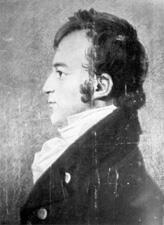
Here you will find contact information for Senator Thomas Weston Thompson, including email address, phone number, and mailing address.
| Name | Thomas Weston Thompson |
| Position | Senator |
| State | New Hampshire |
| Party | Federalist |
| Status | Former Representative |
| Term Start | December 2, 1805 |
| Term End | March 3, 1817 |
| Terms Served | 2 |
| Born | March 15, 1766 |
| Gender | Male |
| Bioguide ID | T000220 |
About Senator Thomas Weston Thompson
Thomas Weston Thompson (March 15, 1766 – October 1, 1821) was an American attorney and Federalist politician from New Hampshire who served as both a United States Representative and a United States Senator in the early nineteenth century. Over the course of his public career, he held a variety of state and federal offices and participated in the legislative process during a significant period in American history, representing the interests of his New Hampshire constituents in the United States Congress.
Thompson was born in Boston in the Province of Massachusetts Bay on March 15, 1766, the son of Thomas and Isabella Thompson. When he was young, his family moved to Newburyport, Massachusetts, where he spent much of his early life. He attended Dummer Academy in Byfield, Massachusetts, and as a young man served as an aide to General Benjamin Lincoln during Shays’ Rebellion in the mid-1780s, gaining early exposure to public affairs and military organization in the unsettled years following the American Revolution.
Pursuing higher education, Thompson enrolled at Harvard University and graduated in 1786. After graduation he initially studied for the ministry and remained at Harvard as a tutor from 1789 to 1791. During this period he shifted his focus to the law, reading law in preparation for admission to the bar. In 1791 he was admitted to the bar and soon thereafter moved to Salisbury, in the State of New Hampshire, where he began the practice of law that would form the foundation of his professional and political life.
From 1791 to 1810 Thompson practiced law in Salisbury, New Hampshire, building a substantial legal practice and reputation. Among the younger men he mentored was Daniel Webster, who began his legal training under Thompson around 1801 and later became one of the most prominent statesmen in American history. Thompson was appointed postmaster of Salisbury, serving from 1798 to 1803, and he also became closely associated with Dartmouth College, serving as a trustee of the institution for two decades, from 1801 until his death in 1821. These roles reflected his growing influence in legal, educational, and civic affairs in New Hampshire.
Thompson’s political career developed alongside his legal work. A member of the Federalist Party, he was elected to the New Hampshire House of Representatives and served there from 1807 to 1808. He was appointed treasurer of New Hampshire in 1810, and he was again chosen to serve in the New Hampshire House from 1813 to 1814, during which time he was elected Speaker of the House. In 1810 he moved from Salisbury to Concord, New Hampshire, where he continued to practice law while increasingly devoting himself to public service at both the state and national levels.
On the federal stage, Thompson was elected as a Federalist to the Ninth United States Congress, serving as a United States Representative from March 4, 1805, to March 3, 1807. His service in the House of Representatives marked his first tenure in the national legislature and placed him in Congress during a formative era of the early republic. He later returned to statewide office when he was appointed state treasurer of New Hampshire from 1809 to 1811, further solidifying his role in the financial and administrative affairs of the state.
Thompson subsequently entered the United States Senate, again as a member of the Federalist Party. He was elected to the Senate to fill the vacancy caused by the death of Senator Nicholas Gilman and served as a Senator from New Hampshire from June 24, 1814, to March 3, 1817. His Senate service, encompassing the final phase of the War of 1812 and the early postwar years, extended his participation in the national legislative process over two terms in Congress—first in the House and then in the Senate—during a significant period in American history.
In his personal life, Thompson married Elizabeth C. Porter on December 25, 1796. The couple had two sons, William Coombs Thompson and Charles Edward Thompson. Thomas Weston Thompson died in Concord, New Hampshire, on October 1, 1821. He was interred in the Old North Cemetery in Concord. His career as an attorney, educator, state official, and Federalist member of both houses of Congress reflected the intertwined legal and political culture of New England in the early United States.