Representative Thomas H. Tongue
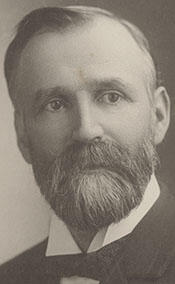
Here you will find contact information for Representative Thomas H. Tongue, including email address, phone number, and mailing address.
| Name | Thomas H. Tongue |
| Position | Representative |
| State | Oregon |
| District | -1 |
| Party | Republican |
| Status | Former Representative |
| Term Start | March 15, 1897 |
| Term End | March 3, 1905 |
| Terms Served | 4 |
| Born | June 23, 1844 |
| Gender | Male |
| Bioguide ID | T000309 |
About Representative Thomas H. Tongue
Thomas H. Tongue (June 23, 1844 – January 11, 1903) was an American politician and attorney from Oregon who served as a Republican Representative from Oregon in the United States Congress from 1897 until his death in 1903. Over the course of four elected terms, he represented Oregon’s 1st congressional district and contributed to the legislative process during a significant period in American history, participating actively in the democratic process and representing the interests of his constituents. He was also a prominent figure in Oregon state and local politics, serving in the Oregon State Senate, as mayor of Hillsboro, and as a leader in the state Republican Party.
Tongue was born in Lincolnshire, England, on June 23, 1844, to Anthony and Rebecca Tongue. He attended public schools in England before immigrating to the United States with his parents. The family arrived in Oregon on November 23, 1859, settling in Washington County in the Tualatin Valley, where his parents established a home west of what is now North Plains. Growing up in this rural community, Tongue experienced frontier life in the Pacific Northwest during the closing years of the Oregon Territory era and the early years of statehood.
In Oregon, Tongue pursued his education at Tualatin Academy, a preparatory school in Forest Grove, and then enrolled at Pacific University, an institution affiliated with the academy. He graduated from Pacific University in June 1868. After completing his degree, he moved to Hillsboro, the county seat of Washington County, where he studied law. On December 25, 1869, he married Emily Margaret Eagleton, daughter of George Eagleton. Tongue was admitted to the Oregon State Bar in 1870 and began a private legal practice in Hillsboro. Alongside his legal work, he engaged in farming and livestock raising. He was active in fraternal organizations, including the Knights of Pythias and the Independent Order of Odd Fellows, and was also a member of the Masonic Order, in which he rose to serve as a grand master.
Tongue’s public career began at the local level in Hillsboro. He was elected the town’s seventh mayor in 1882 and served two nonconsecutive one-year terms, first from December 13, 1882, to December 10, 1883, and again from December 13, 1886, to December 9, 1887. In 1884 he purchased approximately 50 acres of the former Washington County Fairgrounds, located south of First Avenue and Baseline in what is now downtown Hillsboro, and used the land as a hobby farm. His growing prominence in local affairs led to higher office. In 1888 he was elected to a four-year term in the Oregon State Senate, representing District 27 and Washington County. He served in the 1889 and 1891 legislative sessions and was chosen as chair of the Senate judiciary committee. In both his mayoral and legislative roles he succeeded William D. Hare, reflecting his emergence as a leading Republican in the county.
Within the Republican Party, Tongue became an influential organizer and strategist. He served on the party’s state central committee from 1886 to 1896, was elected chairman of the Republican state convention in 1890, and served as president of the state party from 1892 to 1894. When Oregon received a second congressional district in 1892, he became chairman of the Republican organization for that district, a position he held until 1896. Also in 1892 he was a delegate to the Republican National Convention in Minneapolis, Minnesota, and in 1894 he served as vice president of the Oregon delegation to the national convention. His party leadership at the state and national levels helped position him for election to Congress.
Tongue was elected in 1896 as a Republican to the 55th Congress from Oregon’s 1st congressional district, succeeding Binger Hermann. In that initial race he prevailed by a narrow margin of 63 votes over his opponents. He was re-elected three times, serving in the 56th and 57th United States Congresses and winning re-election in 1902 to the 58th Congress. In the 1898 campaign he defeated three opponents led by Fusion Party candidate Robert M. Veatch, winning by 2,037 votes over Veatch. He increased his margin in subsequent elections, winning by 3,100 votes in 1900 and by 7,318 votes in 1902. His formal service in the House began on March 4, 1897, and continued until his death in office on January 11, 1903, in Washington, D.C., just before the start of what would have been his fourth term. During his tenure he served alongside William R. Ellis and Malcolm Adelbert Moody as Oregon’s House delegates. In Congress, he was chairman of the Committee on Irrigation of Arid Lands during both the 56th and 57th Congresses, reflecting his engagement with issues central to the development of the American West.
One of Tongue’s most notable legislative achievements was his advocacy for the creation of a national park at Crater Lake in southern Oregon. He introduced bills to establish Crater Lake National Park in 1898 and 1899, and again in 1901. The 1901 bill ultimately passed Congress, and in May 1902 President Theodore Roosevelt signed it into law, making Crater Lake the fifth national park in the United States. Tongue’s efforts on behalf of the park underscored his interest in conservation and the promotion of Oregon’s natural resources. His broader congressional career unfolded during a transformative era in American history, marked by industrial expansion, western development, and the early stirrings of the Progressive Era, and he was regarded in Washington as an able and effective legislator; Thomas Brackett Reed, Speaker of the House during Tongue’s first two terms, considered him “one of the seven ablest men in the House.”
Tongue’s death in 1903 was unexpected and was reported as resulting from heart failure. Following his death, Binger Hermann, whom Tongue had originally succeeded, was elected to complete the term to which Tongue had been re-elected. Tongue was interred in Hillsboro, Oregon, at the family’s private burial plot adjacent to the Masonic Cemetery, now known as Pioneer Cemetery. His family remained prominent in Oregon public life. Thomas and Emily Tongue had eight children: Edmund Burke Tongue, Edwin Tongue, Mary G. Lombard, Thomas H. Tongue Jr., Elizabeth Fey, Florence Munger, Bertha Rebecca Tongue, and Edith. Edith married Alfred E. Reames, who later served in the United States Senate. Edmund and Thomas Jr. both became attorneys, with Edmund forming a legal partnership with his father in 1897. Tongue’s legacy extended into the judiciary through his grandson, Thomas H. Tongue III (1912–1994), who served as an associate justice of the Oregon Supreme Court.