Senator Thomas Edward Watson
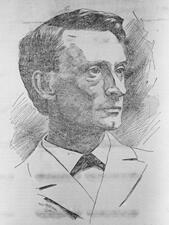
Here you will find contact information for Senator Thomas Edward Watson, including email address, phone number, and mailing address.
| Name | Thomas Edward Watson |
| Position | Senator |
| State | Georgia |
| Party | Democratic |
| Status | Former Representative |
| Term Start | December 7, 1891 |
| Term End | March 3, 1923 |
| Terms Served | 2 |
| Born | September 5, 1856 |
| Gender | Male |
| Bioguide ID | W000205 |
About Senator Thomas Edward Watson
Thomas Edward Watson (September 5, 1856 – September 26, 1922) was an American politician, attorney, newspaper editor, and writer from Georgia who served in both houses of the United States Congress. A prominent agrarian reformer in the 1890s, he became one of the leading figures of the Populist Party, championing poor farmers and articulating an agrarian political viewpoint while attacking business interests, bankers, railroads, Democratic President Grover Cleveland, and the Democratic Party. He was the Populist Party’s nominee for vice president in 1896 on a fusion ticket with Democrat William Jennings Bryan, and later, after rejoining the Democratic Party, he was elected to the United States Senate from Georgia, where he served from 1921 until his death in 1922. His service in Congress, including his earlier term in the House of Representatives, occurred during a significant period in American history, and he contributed to the legislative process during two terms in federal office.
Watson was born on September 5, 1856, in Thomson, the county seat of McDuffie County, Georgia, and was of English descent. He grew up in the Reconstruction-era South, an environment that shaped his later political views on agrarianism, race, and federal power. After attending local schools, he enrolled at Mercer University in Macon, Georgia. Family financial difficulties forced him to withdraw after two years without taking a degree, but during his time there he was a member of the Georgia Psi chapter of the Sigma Alpha Epsilon fraternity. Leaving Mercer, he worked as a schoolteacher before turning to the study of law. He read law in Georgia, was admitted to the state bar in 1875, and began practicing as an attorney, quickly gaining a reputation as a capable trial lawyer.
Watson entered public life as a Democrat and was elected to the Georgia Legislature in 1882. As a state legislator he struggled, unsuccessfully, to curb what he viewed as abuses by powerful railroad corporations. He supported a bill to subject railroads to county property taxes, but the measure was defeated after U.S. Senator Joseph E. Brown offered legislators round-trip train fares to the Louisville Exposition of 1883, a maneuver that deeply disillusioned Watson. In protest, he resigned his seat and returned to the practice of law before his term expired. Remaining active in Democratic politics, he served as a presidential elector for the Democratic ticket of Grover Cleveland and Allen G. Thurman in the 1888 election, even as he grew increasingly critical of the party’s alignment with business interests.
By the late 1880s and early 1890s Watson had aligned himself with the Farmers’ Alliance, a mass agrarian movement seeking economic reforms for rural Americans. He was elected to the United States House of Representatives in 1890 as an Alliance Democrat from Georgia and served from March 4, 1891, to March 3, 1893. In Congress he was the only Southern Alliance Democrat to abandon the Democratic caucus, instead joining the first People’s (Populist) Party congressional caucus, where he was nominated by eight Western Populist Representatives as their candidate for Speaker of the House. During this period he was instrumental in founding the Georgia Populist Party in early 1892 and emerged as one of the national leaders of the Populist movement. The People’s Party advocated public ownership of railroads, steamship lines, and telephone and telegraph systems; the free and unlimited coinage of silver; the abolition of national banks; a graduated income tax; and the direct election of United States senators. Politically, Watson was a leader on the left in the 1890s, calling on poor whites and poor blacks to unite against economic elites, supporting black male suffrage, and condemning lynching.
Although a member of a minority faction in Congress, Watson was notably effective in advancing landmark legislation. His most significant achievement was his role in mandating Rural Free Delivery (RFD) by the U.S. Post Office, legislation he pushed through Congress in 1893. RFD required the Post Office to deliver mail directly to remote farm families, eliminating the need for rural residents to travel long distances to post offices or pay private carriers. The initiative was opposed by private carriers and many small-town merchants, who feared that reduced weekly visits to town and the growth of mail-order houses such as Sears, Roebuck and Company would harm local commerce. RFD became an official service in 1896, when 82 rural routes were inaugurated, and it eventually expanded nationwide. It has been described as the “biggest and most expensive endeavor” ever instituted by the U.S. Postal Service. Watson campaigned for reelection to the House but was defeated, leaving office in March 1893, at a time when regular Democrats in Georgia and across the South were working to reduce the voting power of blacks and poor whites through cumulative poll taxes, literacy tests, residency requirements, and, later, white primaries.
After his defeat, Watson returned to Thomson to resume his law practice and broadened his influence as a journalist and editor. He became editor and business manager of the People’s Party Paper, published in Atlanta, using it to promote Populist principles. The paper’s masthead in 1894 proclaimed it “a fearless advocate of the Jeffersonian Theory of Popular Government,” opposing what Watson called “the Hamiltonian Doctrines of Class Rule, Moneyed Aristocracy, National Banks, High Tariffs, Standing Armies and formidable Navies — all of which go together as a system of oppressing the people.” In the 1896 presidential election, Populist leaders entered into negotiations with William Jennings Bryan, the Democratic candidate, under the expectation that Watson would be Bryan’s running mate. The Populist convention nominated Bryan for president and Watson for vice president, but Bryan chose Arthur Sewall, a conservative banker from Maine, as the Democratic vice-presidential nominee. This produced a split in the Populist Party: some refused to support Bryan, while others, such as Mary Lease, reluctantly campaigned for him. Watson remained on the ballot as Bryan’s vice-presidential running mate on the Populist ticket, while Sewall appeared on the Democratic ticket. Watson received about 217,000 votes for vice president—less than a quarter of the Populist total in 1892, but more than any national Populist candidate would receive thereafter. Bryan’s defeat further damaged the Populist Party, which soon ceased to be a significant force in Georgia politics.
In the years that followed, Watson’s political and racial views hardened and shifted. Although in the 1890s he had supported black enfranchisement and occasionally condemned racial violence, he had never been an advocate of full racial equality and had opposed federal voting-rights protections such as the Lodge Bill. After 1900 he abandoned efforts at biracial populism and increasingly embraced white supremacist and nativist positions. He used his growing media empire—including Watson’s Magazine and The Jeffersonian—to launch vehement attacks on African Americans, Catholics, and, after 1914, Jews. He denounced socialism, which had attracted many former Populists, and recast his rural Populism in explicitly racial and religious terms. As the Populist Party declined nationally, he became its presidential nominee in 1904, receiving 117,183 votes—roughly double the Populist showing in 1900 but far below the party’s earlier strength. In 1908 he again ran for president as the Populist standard-bearer, with Judge Samuel W. Williams as his running mate, but garnered only 29,100 votes. In both campaigns he polled relatively well in Georgia, receiving about 18 percent of the vote in 1904 and 12 percent in 1908, even as the Populist Party dissolved after the 1908 election.
Watson’s publications gave him a powerful platform in Georgia and the South, and he used them to intervene in high-profile controversies. He played a prominent role in inflaming public opinion in the 1913–1915 case of Leo Frank, a Jewish American factory manager in Atlanta accused of murdering 13-year-old Mary Phagan. When Frank was first arrested, his family, aware of Watson’s formidable reputation as a defense attorney in capital cases and his opposition to the death penalty, invited him to join the defense team and offered a substantial fee. At that time Watson had often written favorably about Jews, and Jewish merchants, even those hostile to his Populist politics, regularly advertised in his publications; he declined the offer and initially refrained from commenting on the case. Only after the Atlanta Journal, associated with his bitter rival Senator Hoke Smith, called for a new trial in March 1914 did Watson begin a sustained campaign against Frank, framing the case as an example of “rich Jews” and Northern elites seeking to subvert Southern justice. His coverage grew increasingly sensational and explicitly anti-Semitic, and after Frank was lynched in 1915, Watson defended the lynchers and suggested in The Jeffersonian that “another Ku Klux Klan may be organized to restore home rule,” though his biographer found no evidence that he was directly involved in the later revival of the Ku Klux Klan.
With the outbreak of World War I in 1914, Watson expressed sympathy for the Socialist Party of America’s opposition to the conflict and strongly opposed U.S. entry into the war. He appealed to rural and working-class readers with headlines such as “Do You Want Your Son Killed in Europe in A Quarrel You Have Nothing to Do With?” After the United States entered the war in 1917, his continued criticism of the conflict and his class-based opposition to the Selective Service Act of 1917 made him a target for federal authorities and political opponents. The U.S. Post Office Department ultimately refused to carry his publications, effectively shutting down Watson’s Magazine and The Jeffersonian and curtailing his journalistic influence. In 1918 he made a late bid for election to Congress but was defeated by Carl Vinson, a strong supporter of American participation in the war.
In the postwar period Watson rejoined the Democratic Party and successfully revived his electoral career. In 1920 he ran for the United States Senate from Georgia and defeated his long-standing rival, Senator Hoke Smith, in the Democratic primary, effectively securing election in what had become a one-party state. He took office on March 4, 1921, as a Democratic Senator from Georgia. His Senate tenure, which came two years before his death, was marked by his continued advocacy for rural interests and his skepticism of large financial and corporate power, as well as by his controversial racial and nativist views. Thomas Edward Watson died in office of a cerebral hemorrhage in Washington, D.C., on September 26, 1922, at the age of 66. Following his death, Rebecca L. Felton of Georgia was appointed to succeed him; she served for 24 hours, becoming the first female United States Senator.