Representative Thomas Elisha Winn
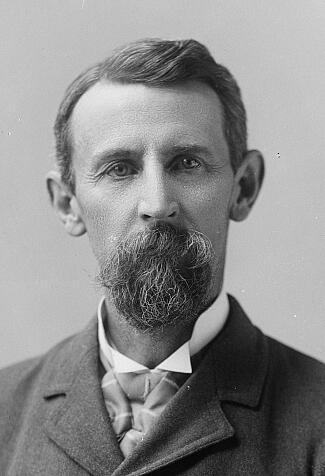
Here you will find contact information for Representative Thomas Elisha Winn, including email address, phone number, and mailing address.
| Name | Thomas Elisha Winn |
| Position | Representative |
| State | Georgia |
| District | 9 |
| Party | Democratic |
| Status | Former Representative |
| Term Start | December 7, 1891 |
| Term End | March 3, 1893 |
| Terms Served | 1 |
| Born | May 21, 1839 |
| Gender | Male |
| Bioguide ID | W000638 |
About Representative Thomas Elisha Winn
Thomas Elisha Winn (May 21, 1839 – June 5, 1925) was an American attorney and Democratic politician who served as a member of the United States House of Representatives for Georgia’s 9th congressional district from 1891 to 1893. Over the course of a single term in Congress, he represented the interests of his north Georgia constituents and contributed to the legislative process during a significant period in American history.
Winn was born on May 21, 1839, in Georgia, where he spent his early years in the antebellum South. Growing up in a region shaped by agriculture, local commerce, and the emerging political tensions of the mid-nineteenth century, he came of age in the years immediately preceding the Civil War. His early life in Georgia helped form the regional and political perspectives that later informed his legal and public service career.
Educated in the schools of his native state, Winn pursued the study of law as a young man. After completing his legal training and gaining admission to the bar, he established himself as an attorney in Georgia. His work as a lawyer placed him in close contact with the legal and economic issues facing his community, and he developed a reputation as a capable practitioner. This legal background provided the foundation for his later entry into elective office and his understanding of the statutory and constitutional questions that came before Congress.
Winn’s professional standing and involvement in public affairs led him into politics as a member of the Democratic Party, which dominated Georgia’s political landscape in the post–Civil War and Reconstruction eras. Identified with the interests and priorities of his district, he became a recognized figure in local and regional Democratic circles. His legal experience and party activity positioned him as a viable candidate for national office at a time when Georgia was reasserting its influence in federal policymaking.
In 1890, Winn was elected as a Democrat to the Fifty-second Congress to represent Georgia’s 9th congressional district, and he served from March 4, 1891, to March 3, 1893. During his one term in the House of Representatives, he participated in the democratic process at the federal level and took part in deliberations on issues confronting the nation in the early 1890s, including economic policy, regional development, and the evolving relationship between federal and state authority. As a Representative from Georgia, he was responsible for voicing the concerns of his constituents in a period marked by agricultural challenges, debates over currency and tariffs, and the continuing adjustment of the South to the post-Reconstruction order.
After the conclusion of his term in Congress in 1893, Winn returned to private life in Georgia. He resumed the practice of law and remained a respected figure in his community, drawing on his congressional experience and long legal career. His later years were spent in the state where he had been born, educated, and had built his professional and political life, maintaining his ties to the region and the Democratic Party that had shaped his public service.
Thomas Elisha Winn died on June 5, 1925. His life spanned from the antebellum era through the Civil War, Reconstruction, and the early decades of the twentieth century, and his career as an attorney and one-term Democratic Representative from Georgia’s 9th congressional district reflected the political and social transformations of his state and the nation during that time.