Senator Thruston Ballard Morton
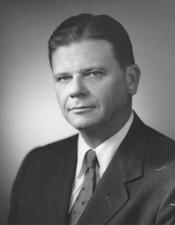
Here you will find contact information for Senator Thruston Ballard Morton, including email address, phone number, and mailing address.
| Name | Thruston Ballard Morton |
| Position | Senator |
| State | Kentucky |
| Party | Republican |
| Status | Former Representative |
| Term Start | January 3, 1947 |
| Term End | December 16, 1968 |
| Terms Served | 5 |
| Born | August 19, 1907 |
| Gender | Male |
| Bioguide ID | M001022 |
About Senator Thruston Ballard Morton
Thruston Ballard Morton (August 19, 1907 – August 14, 1982) was an American politician and businessman who served Kentucky in both houses of the United States Congress and held senior positions in the executive branch and the Republican Party. A Republican, Morton represented Kentucky’s 3rd congressional district in the U.S. House of Representatives from 1947 to 1953 and Kentucky in the U.S. Senate from 1957 to 1968. From 1953 to 1956, he was Assistant Secretary of State for Legislative Affairs under President Dwight D. Eisenhower, and he later served as chair of the Republican National Committee from 1959 to 1961.
Morton was born on August 19, 1907, in Louisville, Jefferson County, Kentucky, to Dave Morton and Mary Ballard Morton, a family descended from pioneer settlers of the region. He attended local public schools in Louisville and then the Woodberry Forest School in Virginia. He went on to Yale University, where he received a Bachelor of Arts degree in 1929. A lifelong Episcopalian, he maintained strong ties to his native Louisville throughout his life. Morton’s family included a younger brother, Rogers Clark Ballard Morton, who would also become a prominent Republican officeholder, and a sister, Jane, who survived him.
After graduating from Yale, Morton entered the family business, Ballard & Ballard Flour Milling Company, a major Louisville-based milling concern. He rose through the firm’s leadership and eventually became chairman of the board. Under his tenure, Ballard & Ballard was sold to the Pillsbury Company, marking his transition from private business into a more public role. His business experience and civic involvement in Louisville helped establish his reputation as a capable administrator and provided a foundation for his later political career.
During World War II, Morton served in the United States Navy, an experience that enhanced his public standing in the postwar years. In 1946, he ran as a Republican for the U.S. House of Representatives from Kentucky’s 3rd congressional district, centered on his native Louisville. He defeated the twelve-year Democratic incumbent, Representative Emmet O’Neal, by a vote of 61,899 to 44,599. Morton was re-elected in 1948 and 1950, serving three consecutive terms in the House from January 3, 1947, to January 3, 1953. His service in Congress during this period occurred at the outset of the Cold War and the early years of the postwar economic expansion, and he contributed to the legislative process as a member of the Republican minority. He did not seek re-election in 1952.
After leaving the House, Morton was appointed U.S. Assistant Secretary of State for Congressional Relations—formally Assistant Secretary of State for Legislative Affairs—in the administration of President Dwight D. Eisenhower, serving from 1953 to 1956. In this capacity he worked to garner congressional support for Eisenhower’s foreign policy initiatives, acting as a key liaison between the State Department and Capitol Hill during a formative period of Cold War diplomacy. His performance in this role enhanced his national profile within the Republican Party and positioned him for a return to elective office.
In 1956, Morton sought a seat in the U.S. Senate from Kentucky. In a closely contested race, he narrowly defeated the Democratic incumbent, Senator Earle Clements, a former governor of Kentucky and then the Senate majority whip, by a vote of 506,903 to 499,922. Morton took office on January 3, 1957. He was re-elected to a second term in 1962, defeating Democratic Lieutenant Governor and former Louisville mayor Wilson W. Wyatt. Morton served in the Senate from January 3, 1957, until his resignation on December 16, 1968, a move that allowed his Republican successor, Marlow Cook, to assume office two weeks early and gain seniority. Over the course of his combined House and Senate career, Morton thus contributed to the legislative process during five terms in Congress, representing the interests of his Kentucky constituents during a significant period in American history.
In the Senate, Morton was generally regarded as a moderate Republican. He played a notable role in civil rights legislation, voting in favor of the Senate amendment to the Civil Rights Act of 1957 on August 7, 1957, and later supporting the Civil Rights Acts of 1960, 1964, and 1968. He also voted for the 24th Amendment to the U.S. Constitution, which abolished the poll tax in federal elections, the Voting Rights Act of 1965, and the confirmation of Thurgood Marshall to the U.S. Supreme Court. A compromise he proposed to guarantee jury trials in all criminal contempt cases except those involving voting rights, crafted with the assistance of Senators Everett Dirksen of Illinois and Bourke Hickenlooper of Iowa, proved crucial in securing passage of the 1957 civil rights measure. Morton’s Senate career unfolded amid the Cold War, the civil rights movement, and the early stages of U.S. involvement in Vietnam, and he increasingly emerged as a voice of moderation within his party.
Parallel to his legislative work, Morton held important positions in the Republican Party. He served as chair of the Republican National Committee from 1959 to 1961, helping to guide party strategy during the 1960 presidential election. He also chaired the Republican National Convention in 1964. Morton was among the last two candidates considered by Richard Nixon as a vice-presidential running mate in 1960; as a Midwesterner, however, he was judged to have regional appeal in areas where Nixon was already strong, and Nixon instead selected Henry Cabot Lodge Jr. of Massachusetts. From 1963 to 1968, Morton served in Congress at the same time as his brother, Rogers Clark Ballard Morton, who represented Maryland in the U.S. House of Representatives. The Morton brothers thus served together in the U.S. Congress—Thruston as a senator from Kentucky and Rogers as a representative from Maryland—and both would, at different times, serve as chairs of the Republican National Committee. Rogers Morton later became U.S. Secretary of the Interior under Presidents Richard Nixon and Gerald Ford, U.S. Secretary of Commerce under Ford, and chair of Ford’s 1976 re-election campaign.
Morton’s decision to retire from the Senate in 1968 surprised many observers, who believed he was at the height of his political influence. He had grown increasingly critical of the Vietnam War, a stance that drew criticism from some Republicans, including Representative William Cowger of Kentucky. Morton was also deeply troubled by the urban unrest and violence that followed the assassination of Martin Luther King Jr. in April 1968 and the subsequent assassination of Senator Robert F. Kennedy. Disappointed by what he perceived as his party’s failure to address broader social and racial issues, he ultimately counseled President Lyndon B. Johnson to decline to seek re-election in 1968 and supported the unsuccessful presidential candidacy of New York Governor Nelson Rockefeller. His reflections on the political climate of the era were captured in interviews, including an appearance in the 1968 documentary film “In the Year of the Pig” and an interview preserved at the Lyndon Baines Johnson Presidential Library.
After leaving the Senate, Morton returned to the private sector and to civic leadership in Kentucky. He served as vice chairman of Liberty National Bank in Louisville, president of the American Horse Council, and chairman of the board of Churchill Downs, reflecting his longstanding interest in Kentucky’s equine industry and business community. He also held directorships with the University of Louisville, the Pillsbury Company, the Pittston Company, the Louisville Board of Trade, Texas Gas Company, R.J. Reynolds Company, and the Ohio Valley Assembly. These roles extended his influence into banking, higher education, energy, manufacturing, and regional economic development.
Morton married Belle Clay Lyons, and the couple had two sons, Clay Lyons Morton and Thruston Ballard Morton Jr., and five grandchildren. A committed Episcopalian and Louisville civic leader, he remained closely tied to his home state even as his career took on national dimensions. Morton experienced many years of declining health before his death on August 14, 1982, in Louisville, just five days short of his seventy-fifth birthday. His brother Rogers had died three years earlier, while his wife Belle survived him by more than a decade. Thruston Ballard Morton was interred at Cave Hill Cemetery in Louisville. His papers are preserved by Louisville’s Filson Historical Society, which his grandfather had helped to revitalize, and the Kentucky Digital Library maintains a collection of his speeches, documenting his role in mid-twentieth-century American politics and public life.