Representative Tillie Fowler
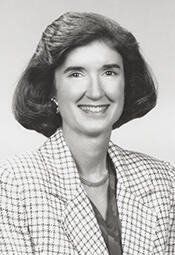
Here you will find contact information for Representative Tillie Fowler, including email address, phone number, and mailing address.
| Name | Tillie Fowler |
| Position | Representative |
| State | Florida |
| District | 4 |
| Party | Republican |
| Status | Former Representative |
| Term Start | January 5, 1993 |
| Term End | January 3, 2001 |
| Terms Served | 4 |
| Born | December 23, 1942 |
| Gender | Female |
| Bioguide ID | F000328 |
About Representative Tillie Fowler
Tillie Kidd Fowler (December 23, 1942 – March 2, 2005) was an American lawyer and Republican politician who served four terms in the United States House of Representatives from Florida’s 4th congressional district from January 3, 1993, to January 3, 2001. A moderate Republican and strong advocate for defense spending, she was the first Florida Republican woman elected to the House in her own right and played a significant role in the legislative process during a pivotal period in American politics.
Fowler was born Tillie Kidd in Milledgeville, Georgia, on December 23, 1942, into a politically active family. Her father, Culver Kidd Jr., served in the Georgia General Assembly for 46 years, including 16 years in the state house and 30 years in the state senate, and her brother, Rusty Kidd, later served in the Georgia House of Representatives from 2009 to 2017. Encouraged by her father, who believed her outspokenness suited her for the law, she pursued higher education at Salem Academy in Winston-Salem, North Carolina, graduating in 1960. She then attended Emory University in Atlanta, earning her undergraduate degree in 1964 and participating in the Kappa Alpha Theta sorority. She continued at Emory University School of Law, receiving her Juris Doctor in 1967 and gaining admission to the bar soon thereafter.
Despite her credentials, Fowler encountered gender-based barriers in the legal profession, as no Atlanta-area law firm would hire a woman at the time. She instead began her career in public service as a legislative assistant to U.S. Representative Robert G. Stephens Jr. of Georgia, serving in that role for three years. She subsequently worked as general counsel in the White House Office of Consumer Affairs, a position she held until 1971. These early roles in Washington provided her with substantial experience in federal policymaking and legislative affairs.
In 1968, she married L. Buck Fowler, and the couple moved to Jacksonville, Florida, where they raised two daughters, Tillie Anne and Elizabeth. Around this time she changed her party affiliation from Democrat to Republican, a decision that displeased her Democratic father but aligned her with the emerging Republican strength in the South. In Jacksonville she became deeply involved in civic and volunteer activities, particularly through the Junior League. She served as president of the Junior League of Jacksonville from 1982 to 1983, building a local profile that helped launch her political career. In 1985, she was elected to the Jacksonville City Council, and in 1989 she became council president, gaining executive and legislative leadership experience at the municipal level.
In 1992, Fowler sought federal office and won the Republican nomination for Florida’s 4th congressional district, based in Jacksonville. The district, previously numbered the 3rd and long represented by Democrat Charles E. “Charlie” Bennett, had been renumbered following the 1990 United States census, when Florida gained four additional congressional seats. Bennett, a 22-term incumbent and the longest-serving member of Congress in Florida history, had appeared politically unassailable, and Fowler was the seventh Republican to challenge him. Running on a platform that emphasized term limits, she criticized Bennett’s lengthy tenure—he had first been elected just days before her sixth birthday—and pledged to serve no more than four terms, adopting the slogan “eight (years) is enough.” Shortly after the campaign began, Bennett’s wife fell ill and he abruptly announced his retirement. Democrats recruited state senator Mattox Hair as a replacement nominee, but he entered the race late and faced a significant financial disadvantage. Fowler defeated Hair by nearly 13 percentage points, becoming only the third person to represent the district since its creation in 1943 (it had been designated the 2nd District until 1967 and then the 3rd) and the first Republican to hold the seat. She was reelected three times, each time without opposition, aided in part by post-1990 redistricting that placed most of Jacksonville’s Black voters into the majority-Black 3rd District.
During her congressional service from 1993 to 2001, Fowler developed a reputation as a relatively moderate Republican by Southern standards. She was moderately pro-choice on abortion and declined to accept contributions from the National Rifle Association. Her principal legislative focus was on defense and national security, a natural priority given the concentration of naval installations in and around Jacksonville. As the only Republican woman on the House Armed Services Committee, she became a prominent critic of the Clinton administration’s reductions in defense spending and its increased funding for peacekeeping operations. She worked to prevent the closure of the naval firing range at Vieques, Puerto Rico, though that effort ultimately did not succeed. Her firm yet understated style, combined with her advocacy on military issues, earned her the nickname “Steel Magnolia.”
Fowler’s approach in Congress was marked by bipartisan collegiality and active engagement with women’s issues. She maintained notably good relations with Democratic colleagues and was one of the few Republicans to participate actively in the Congressional Women’s Caucus. She refused to campaign against incumbent members with whom she had cordial working relationships and was regarded as an ardent feminist. She publicly protested a Roll Call article that depicted Republican congresswomen at a press conference only from the knees down, focusing on their legs and black pumps rather than their policy positions. She also cultivated and mentored staff, hiring Stephanie Kopelousos as an intern in 1993; by 1998, Kopelousos had risen to the position of senior legislative aide. Within the House Republican Conference, Fowler advanced to the leadership ranks, ultimately serving as vice-chairwoman of the conference, the fifth-highest position among House Republicans, behind the Speaker, Majority Leader, Majority Whip, and Conference Chair.
As the end of her fourth term approached, Fowler’s leadership role prompted discussion of a possible bid for a fifth term in 2000, which would have required her to break her self-imposed term-limit pledge. This prospect drew sharp criticism from term-limits advocates; one group ran advertisements in Jacksonville labeling her “Slick Tillie,” a play on President Bill Clinton’s nickname “Slick Willie.” After public debate and political pressure, she chose to honor her original commitment and did not seek reelection in 2000, concluding her House service on January 3, 2001.
Following her departure from Congress, Fowler remained active in public affairs and national security policy. She joined the Washington, D.C., law firm Holland & Knight as a partner, where she engaged in government relations and continued to advocate for Jacksonville’s interests, particularly in the context of military base realignment and closure deliberations. She served as an advisor to Secretary of Defense Donald Rumsfeld on operational issues and chaired the Department of Defense panel that investigated the 2003 United States Air Force Academy sexual assault scandal, underscoring her continued commitment to military oversight and the welfare of service members. In 2001, Congress appointed her to the Commission on the Future of the United States Aerospace Industry, where she contributed to strategic assessments of the nation’s long-term aerospace needs and capabilities.
Tillie K. Fowler died on March 2, 2005, at a hospital in Jacksonville, Florida, from a brain hemorrhage. Her career, spanning local government, four terms in the U.S. House of Representatives, and influential roles in defense and aerospace policy after leaving office, reflected both her family’s long tradition of public service and her own distinctive impact as a moderate Republican, defense advocate, and prominent woman in American politics.