Representative Tim Lee Carter
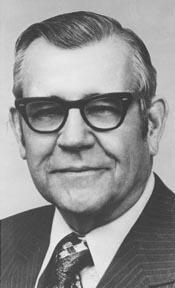
Here you will find contact information for Representative Tim Lee Carter, including email address, phone number, and mailing address.
| Name | Tim Lee Carter |
| Position | Representative |
| State | Kentucky |
| District | 5 |
| Party | Republican |
| Status | Former Representative |
| Term Start | January 4, 1965 |
| Term End | January 3, 1981 |
| Terms Served | 8 |
| Born | September 2, 1910 |
| Gender | Male |
| Bioguide ID | C000201 |
About Representative Tim Lee Carter
Tim Lee Carter (September 2, 1910 – March 27, 1987) was an American physician and politician who served as a Republican member of the United States House of Representatives from Kentucky from January 3, 1965, to January 3, 1981. Over eight consecutive terms in Congress, he represented one of the few historically Republican districts south of the Ohio River and contributed actively to the legislative process during a period of significant social and political change in the United States.
Carter was born in Tompkinsville, Monroe County, Kentucky, where he was raised in a family deeply involved in public service and the law. His father, James C. Carter Sr., served for 48 years as circuit judge in four counties of south-central Kentucky, and his brother, James C. Carter Jr., followed him on the bench, serving for 46 years as judge. His sister, Pearl Carter Pace, became the first elected woman sheriff in Kentucky, and other members of the extended Carter family held a wide range of elective and appointive offices at the state and local levels. Pearl’s son, Stanley Carter Pace, served in the United States Army during World War II, was captured as a prisoner of war by the German Army, and later rose to become chairman of TRW and, after coming out of retirement, played a key role in returning the major defense contractor General Dynamics to viability. The Carter family remained influential in Monroe County and Kentucky politics for decades.
Carter attended Western Kentucky State College (now Western Kentucky University) in Bowling Green, where he pursued a pre‑medical curriculum. He then enrolled at the University of Tennessee, earning his medical degree in 1937. After completing his medical training, he returned to his hometown of Tompkinsville to practice medicine. With the outbreak of World War II, Carter entered the United States Army Medical Corps, serving for more than three and a half years. He was assigned to the 38th Infantry and traveled with the unit in overseas service, rising to the rank of captain. Following his military service, he again returned to Tompkinsville, where he resumed his medical practice and became a well-known local physician before entering electoral politics.
Carter’s congressional career began with the 1964 election, when he sought the Republican nomination for the U.S. House of Representatives from Kentucky after the retirement of Representative Eugene Siler. In a year that was otherwise disastrous for the Republican Party nationally, he won the general election over Democrat Frances Jones Mills. His victory reflected the longstanding Republican orientation of his district, whose voters had identified with the GOP since the Civil War and had remained loyal through periods of both party strength and weakness. Carter took office on January 3, 1965, and was reelected seven times, serving eight terms in total and facing no substantive opposition in most of his subsequent campaigns. He remained in the House until January 3, 1981, choosing not to seek re‑election in 1980.
During his years in Congress, Carter developed a reputation as a moderate‑progressive Republican. He participated fully in the legislative process and represented the interests of his Kentucky constituents while taking positions that sometimes set him apart from more conservative members of his party. He voted in favor of the Voting Rights Act of 1965 and the Civil Rights Act of 1968, aligning himself with key civil rights legislation of the era. In 1971, he was the only Republican in Kentucky’s congressional delegation to vote for the Equal Employment Opportunity Act, which strengthened federal enforcement of anti‑discrimination laws in the workplace. Reflecting his background as a physician, Carter was also active in health policy; as reported in a 1977 issue of Time magazine, he introduced what was described as the first Republican plan for national health insurance, signaling his interest in expanding access to medical care through federal policy.
Carter’s congressional service coincided with the Vietnam War, and he became particularly noted for his evolving stance on U.S. involvement in Southeast Asia. In 1966, President Lyndon B. Johnson sent Carter and ten other war‑veteran members of Congress to Vietnam as part of a “Speaker’s Committee” to assess the situation on the ground. Upon their return, Johnson asked each delegate for an assessment of the war. Carter broke with the majority of the group, telling the president, “No, Mr. President, you are not winning the war.” On August 28, 1967, he rose on the floor of the House of Representatives and called for an end to American involvement, declaring, “Let us now, while we are yet strong, bring our men home, every man jack of them. The Vietcong fight fiercely and tenaciously because it is their land and we are foreigners intervening in their civil war. If we must fight, let us fight in defense of our homeland and our own hemisphere.” He came to be regarded as the first Republican congressman to publicly call for ending the Vietnam War.
Carter also played a role in the national debate over drug policy. President Richard M. Nixon appointed him to the National Commission on Marihuana and Drug Abuse, commonly known as the Shafer Commission after its chair, former Pennsylvania Governor Raymond P. Shafer. The commission was charged with making policy recommendations concerning drug abuse in the United States. Its report recommended, among other things, the decriminalization of simple possession of marijuana, a recommendation that President Nixon rejected. Carter’s participation on the commission reflected his broader interest in public health and criminal justice issues, informed by both his medical training and his legislative experience.
After deciding not to run for another term in 1980, Carter retired from Congress at the conclusion of his eighth term in January 1981 and returned to Tompkinsville. In retirement he remained engaged in local, state, and national politics, maintaining his connections to public life while residing in his hometown. Tim Lee Carter died on March 27, 1987, in Kentucky. His career combined military service, medical practice, and sixteen years in the U.S. House of Representatives, and he was remembered both for his independent positions on issues such as Vietnam and civil rights and for his role in a long‑standing Kentucky family tradition of public service.