Representative Timothy H. Bishop
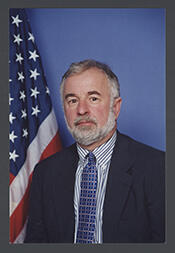
Here you will find contact information for Representative Timothy H. Bishop, including email address, phone number, and mailing address.
| Name | Timothy H. Bishop |
| Position | Representative |
| State | New York |
| District | 1 |
| Party | Democratic |
| Status | Former Representative |
| Term Start | January 7, 2003 |
| Term End | January 3, 2015 |
| Terms Served | 6 |
| Born | June 1, 1950 |
| Gender | Male |
| Bioguide ID | B001242 |
About Representative Timothy H. Bishop
Timothy Howard Bishop (born June 1, 1950) is an American politician and academic administrator who served as a U.S. Representative from New York from 2003 to 2015. A member of the Democratic Party, he represented New York’s 1st congressional district for six consecutive terms, participating actively in the legislative process and representing the interests of a geographically and socioeconomically diverse constituency in central and eastern Suffolk County. The district includes most of Smithtown and the entirety of the towns of Brookhaven, Riverhead, Southold, Southampton, East Hampton, and Shelter Island, encompassing wealthy enclaves such as the Hamptons, middle-class suburban communities such as Selden, Centereach, and Lake Grove, working-class neighborhoods such as Mastic and Riverhead, and rural farming areas such as Mattituck and Jamesport on the North Fork.
Bishop is a twelfth-generation resident of Southampton, New York, where he was born on June 1, 1950. He is the son of Catherine (Roesel) and Howard Cortland Bishop and the great-grandson of Benjamin H. Bishop, a mayor of Southampton. Of English, Irish, and German ancestry, he was raised in a family with longstanding civic roots in the community he would later represent in Congress. He attended the College of the Holy Cross, where he received a bachelor’s degree in 1972, and later earned a master’s degree from Long Island University in 1981, preparing for a career in higher education administration.
Bishop began working at Southampton College of Long Island University in 1973 as an admissions counselor and went on to build a long career at the institution. Over the years he held a series of increasingly senior positions, including director of financial aid, assistant director of admissions, registrar, director of institutional research and planning, dean for enrollment services, and dean for administrative and student services. He ultimately served as provost of Southampton College for 16 years. During his tenure, Southampton College produced 36 Fulbright Scholars, reflecting a strong emphasis on academic excellence and international scholarship. Working with Chancellor Robert F. X. Sillerman, Bishop helped develop the “All for the Sea” rock concerts, which became the most successful single fundraising event in the college’s history and grossed as much as $1 million annually to support the institution.
Bishop entered electoral politics in 2002, running as a Democrat in his first political race against Republican incumbent Felix J. Grucci, Jr. in New York’s 1st congressional district. The campaign drew attention when Grucci ran radio advertisements accusing Bishop of falsifying rape statistics at Southampton College, relying on college newspaper articles that were later shown to contain numerous inaccuracies. Grucci refused to repudiate the ads, and Bishop defeated him in the general election. He was subsequently reelected in 2004, 2006, 2008, 2010, and 2012. In 2004 he defeated Republican William M. Manger, Jr. by a margin of 56.2 percent to 43.8 percent. In 2006 he prevailed over Republican Italo Zanzi, 62.2 percent to 37.8 percent. In 2008 he defeated Republican State Senator Lee Zeldin by a 58 percent to 42 percent margin. In 2010 he narrowly defeated Republican businessman Randy Altschuler, 50.2 percent to 49.8 percent, with Altschuler conceding when trailing by 263 votes. In 2012 Bishop again faced Altschuler and won by 52.2 percent to 47.8 percent; in that race, the Independence Party, which had endorsed Bishop in most of his previous elections, instead endorsed his opponent.
During his six terms in the U.S. House of Representatives, from January 3, 2003, to January 3, 2015, Bishop served on committees central to education, labor, and infrastructure policy. He was a member of the Committee on Education and the Workforce, where he served on the Subcommittee on Workforce Protections and the Subcommittee on Higher Education and Workforce Training, reflecting his professional background in higher education and his interest in student aid and labor standards. He also served on the Committee on Transportation and Infrastructure, including the Subcommittee on Coast Guard and Maritime Transportation, the Subcommittee on Railroads, Pipelines, and Hazardous Materials, the Subcommittee on Highways and Transit, and the Subcommittee on Water Resources and the Environment, on which he served as Ranking Member. His committee assignments positioned him to address issues of particular importance to his coastal and suburban district, including transportation, environmental protection, and maritime safety.
Bishop’s legislative record included support for major national policy initiatives as well as district-focused measures. He voted for the Affordable Care Act and the Health Care and Education Reconciliation Act of 2010, aligning with his party’s efforts to expand health insurance coverage and reform the student loan system. He supported key economic measures during and after the 2008 financial crisis, including the Housing and Economic Recovery Act of 2008, the Emergency Economic Stabilization Act (TARP), and the American Recovery and Reinvestment Act of 2009, as well as further economic measures in 2009 and 2010 aimed at stabilizing financial markets and stimulating the economy. He also voted for the Budget Control Act of 2011, which provided for gradual increases in the federal debt limit coupled with spending restraints. In January 2007, he voted to reduce interest rates on future federal student loans, consistent with his long-standing focus on college affordability.
In addition to national legislation, Bishop was active on matters directly affecting Long Island. He participated in a bipartisan coalition of elected officials and community advocates that successfully opposed the closure of the 106th Air Rescue Wing at Gabreski Airport under the Pentagon’s base realignment and closure process, helping to preserve a key military and emergency-response presence in his district. He sponsored legislation to block a plan that would have allowed the dumping of more than twenty million cubic yards of contaminated dredge waste in Long Island Sound, reflecting his engagement with environmental and water-quality issues. Bishop also strongly supported the Shinnecock Indian Nation’s efforts to gain formal federal recognition, backing their successful bid and supporting a $160,000 line item for the Shinnecock Nation in President Barack Obama’s 2013 budget proposal.
Bishop’s later congressional tenure was marked by an ethics inquiry arising from his district-level activities. In September 2013, the Office of Congressional Ethics recommended further review of an August 2012 incident in which Bishop was accused of soliciting a campaign contribution from hedge fund manager Eric Semler in exchange for acting in an official capacity to help obtain a fireworks permit for Semler’s son’s bar mitzvah on Long Island. Bishop denied the allegations as “outrageous, unfounded attacks on my character and my family,” and Semler later characterized the matter as a “nonstory” after it received media attention. The Federal Bureau of Investigation opened an investigation, but in September 2014 the U.S. Department of Justice closed the case without filing charges. The ethics probe remained open until Bishop left office in January 2015.
In the 2014 election cycle, Bishop ran unopposed for the Democratic, Working Families, and Independence Party nominations and was designated a member of the Democratic Congressional Campaign Committee’s Frontline Program, which is designed to assist vulnerable Democratic incumbents. He again faced Republican Lee Zeldin, whom he had defeated in 2008, in the general election. On November 4, 2014, Bishop lost his bid for a seventh term, with Zeldin receiving 55 percent of the vote to Bishop’s 45 percent. Bishop’s departure from Congress in January 2015 concluded twelve years of service in the U.S. House of Representatives, during which he combined his background in higher education administration with a legislative focus on health care, economic recovery, infrastructure, environmental protection, and the needs of his Long Island constituency.