Representative Timothy John Campbell
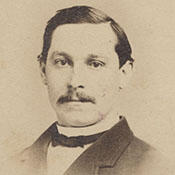
Here you will find contact information for Representative Timothy John Campbell, including email address, phone number, and mailing address.
| Name | Timothy John Campbell |
| Position | Representative |
| State | New York |
| District | 9 |
| Party | Democratic |
| Status | Former Representative |
| Term Start | December 7, 1885 |
| Term End | March 3, 1895 |
| Terms Served | 4 |
| Born | January 8, 1840 |
| Gender | Male |
| Bioguide ID | C000103 |
About Representative Timothy John Campbell
Timothy John Campbell (January 8, 1840 – April 7, 1904) was an American lawyer and Democratic politician from New York who served four terms in the United States House of Representatives during the late nineteenth century. Born in County Cavan, Ireland, then part of the United Kingdom, he emigrated to the United States and settled in New York City, where he would spend his adult life and build a lengthy career in public office representing urban constituencies.
Details of Campbell’s early education are not extensively documented, but after his arrival in New York City he pursued the study of law and entered the legal profession. His training as a lawyer provided the foundation for his subsequent political career and informed his work as a legislator at both the state and federal levels. As an Irish immigrant in a rapidly growing metropolis, he became part of the political life of New York City at a time when immigrant communities were increasingly influential in local and state politics.
Campbell’s public career began in the New York State Assembly, where he represented New York County’s 6th District. He served multiple, nonconsecutive terms in the Assembly in 1868, 1869, 1870, 1871, 1872, 1873, 1875, and 1883. During these years he participated in the legislative process in Albany at a time of post–Civil War reconstruction, industrial expansion, and significant demographic change in New York City. His repeated elections reflected sustained support from his constituents and established him as a durable figure in Democratic politics.
Advancing to the upper house of the state legislature, Campbell served as a member of the New York State Senate for the 6th District in 1884 and 1885. His tenure in the Senate coincided with growing debates over urban governance, public works, and regulation in an era of rapid economic development. By the mid-1880s he had become a well-known Democratic officeholder, positioned to move from state to national politics.
Campbell entered the United States Congress as a Democrat representing New York during a significant period in American history. He was first elected to the Forty-ninth Congress to fill the vacancy caused by the resignation of Representative Samuel S. Cox, taking office on November 3, 1885. He was re-elected to the Fiftieth Congress, serving continuously until March 3, 1889. After a brief interval out of office, he returned to the House as a Representative in the Fifty-second and Fifty-third Congresses, serving from March 4, 1891, to March 3, 1895. In total, he served four terms in the U.S. House of Representatives, contributing to the legislative process during a decade marked by debates over tariffs, monetary policy, and federal regulation of commerce.
As a member of the House of Representatives, Campbell participated in the democratic process and represented the interests of his New York constituents, many of whom were urban working-class and immigrant voters. His service in Congress from 1885 to 1895 placed him in the midst of the Gilded Age’s political conflicts, including disputes over patronage, civil service reform, and the appropriate reach of federal power. Although the detailed record of his committee assignments and specific legislative initiatives is limited in surviving summaries, his repeated elections indicate that he was regarded as an effective advocate for his district within the Democratic Party.
Campbell also acquired a measure of lasting notoriety through a remark widely attributed to him in political lore. According to Bartlett’s Familiar Quotations, when President Grover Cleveland declined to support a bill on the grounds that it was unconstitutional, Campbell is reported to have replied, “What’s the Constitution between friends?” Whether apocryphal or not, the quip has been frequently cited as emblematic of a certain pragmatic, machine-era approach to politics associated with late nineteenth-century urban Democrats.
Timothy John Campbell died in New York City on April 7, 1904. His career, spanning decades in the New York State Assembly, the New York State Senate, and the United States House of Representatives, reflected the rise of immigrant influence in American politics and the central role of New York City in the nation’s political life during the Gilded Age.