Senator Timothy Otis Howe
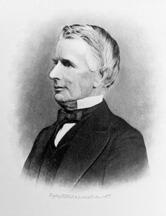
Here you will find contact information for Senator Timothy Otis Howe, including email address, phone number, and mailing address.
| Name | Timothy Otis Howe |
| Position | Senator |
| State | Wisconsin |
| Party | Republican |
| Status | Former Representative |
| Term Start | July 4, 1861 |
| Term End | March 3, 1879 |
| Terms Served | 3 |
| Born | February 24, 1816 |
| Gender | Male |
| Bioguide ID | H000856 |
About Senator Timothy Otis Howe
Timothy Otis Howe (February 24, 1816 – March 25, 1883) was an American lawyer, jurist, Republican politician, and Wisconsin pioneer who became a prominent United States senator and later served as Postmaster General. He was born in Livermore, Maine (then part of the Commonwealth of Massachusetts), to Timothy Howe and Betsey Howard. Raised in rural New England, he attended Readfield Seminary, now Kents Hill School, in Readfield, Maine, and pursued legal studies under local judges rather than through a formal law school. Howe was admitted to the Maine bar in 1839 and began practicing law in Readfield, establishing himself as a capable attorney in the state.
Howe’s early public career began in Maine, where he entered politics as a member of the Whig Party. In 1845, he was elected to the Maine House of Representatives, marking his first legislative experience. Shortly thereafter, seeking broader opportunities on the American frontier, he moved west to Green Bay, in what was then the developing state of Wisconsin, and opened a law office. An ardent Whig, he ran unsuccessfully for the U.S. House of Representatives in 1848. During this period he married Linda Ann Haines; the couple had two children, Mary E. Howe and Frank K. Howe. His relocation to Wisconsin placed him among the early professional class in the state and laid the groundwork for his later prominence in Republican politics.
In Wisconsin, Howe’s legal and judicial career advanced rapidly. He was elected circuit judge in 1851 and served in that position until 1855. At that time, the Wisconsin Supreme Court was organized as a panel composed of the state’s circuit judges, and by virtue of his circuit judgeship Howe also served as a justice of the Wisconsin Supreme Court until a separate, independent Supreme Court was organized in 1853. His judicial service enhanced his reputation for legal acumen and integrity. In 1857, he sought higher office and ran unsuccessfully for the United States Senate, an early indication of his ambition for national political influence.
Howe’s national career began in earnest with the rise of the Republican Party. A committed Republican by the late 1850s, he was elected to the United States Senate from Wisconsin in 1861 after his earlier defeat, and he served three consecutive terms from March 4, 1861, to March 3, 1879. His tenure in Congress coincided with the American Civil War and the Reconstruction era, one of the most significant periods in American history. As a senator, he participated actively in the legislative process and represented the interests of his Wisconsin constituents while helping to shape national policy in wartime and its aftermath. He was regarded as one of the “Radical Republicans” for his strong support of racial equality and his opposition to discrimination.
During his years in the Senate, Howe emerged as a firm abolitionist and an advocate of civil rights for African Americans. He supported the Fifteenth Amendment to the Constitution, which sought to secure voting rights regardless of race, color, or previous condition of servitude. In debates with contemporary Democrats who claimed that Black Americans were inherently racially inferior and warned that abolition would lead to a war of racial extermination, Howe rejected such arguments as morally and intellectually bankrupt, characterizing them as “a libel upon humanity, black or white.” His stance placed him among the more advanced voices in the Republican Party on questions of race and citizenship during Reconstruction.
Howe’s prominence in the Senate brought him to the attention of national leaders. While he was serving as a U.S. senator, President Ulysses S. Grant offered to appoint him Chief Justice of the United States following the death of Chief Justice Salmon P. Chase. Howe declined the offer, believing that accepting the position would result in his U.S. Senate seat being claimed by a Democrat, a prospect he considered detrimental to the Republican cause. He continued to serve in the Senate until 1879, when he lost his seat to fellow Republican Matthew H. Carpenter. His long senatorial career thus spanned the critical years from secession and civil war through the complex politics of Reconstruction.
After leaving the Senate, Howe remained a respected figure in national Republican circles. In 1881, President Chester A. Arthur appointed him the 30th United States Postmaster General. In that capacity, Howe oversaw the operations of the Post Office Department during a period of expanding national communications and transportation networks. He served as Postmaster General from 1881 until his death in 1883, continuing his long record of federal service. Howe died in office on March 25, 1883, in Kenosha, Wisconsin. His family’s public service legacy extended beyond his own career; his nephew, James Henry Howe, became a United States district judge in Wisconsin, reflecting the broader judicial and political influence of the Howe family in the state.