Representative Timothy Jenkins
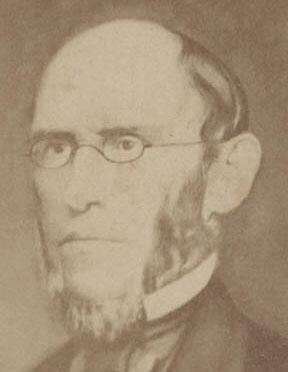
Here you will find contact information for Representative Timothy Jenkins, including email address, phone number, and mailing address.
| Name | Timothy Jenkins |
| Position | Representative |
| State | New York |
| District | 20 |
| Party | Democratic |
| Status | Former Representative |
| Term Start | December 1, 1845 |
| Term End | March 3, 1853 |
| Terms Served | 3 |
| Born | January 29, 1799 |
| Gender | Male |
| Bioguide ID | J000089 |
About Representative Timothy Jenkins
Timothy Jenkins (January 29, 1799 – December 24, 1859) was an American lawyer and politician who served as a U.S. Representative from New York, serving three terms during the mid-19th century. A member of the Democratic Party during his years in Congress, he represented his New York constituents in the United States House of Representatives from 1845 to 1853, contributing to the legislative process during a significant period in American history. Over the course of his public life he became known as a prominent opponent of slavery and later aligned himself with the emerging Republican Party.
Jenkins was born in Barre, Massachusetts, on January 29, 1799. His father died when he was sixteen, and in 1817 he moved to Washington County, New York. He attended academies in Salem and White Creek, New York, where he received his early education. To support himself and advance his studies, he taught school while reading law, laying the foundation for a professional career in the legal field.
While preparing for the bar, Jenkins studied law with several prominent attorneys in central New York. He read law in Utica under Samuel Beardsley and William H. Maynard, and in Herkimer under Lauren Ford. After several years of study, he was admitted to the bar in 1824. Jenkins then established himself as a practicing attorney in Oneida County, New York, where he would build both a substantial legal practice and a growing reputation in public affairs.
Jenkins resided in Vernon and later in Oneida Castle, New York, where he continued to practice law. Among the attorneys who studied under him was Breese J. Stevens, who went on to a notable legal and civic career of his own. Jenkins also held a variety of local offices. In Vernon he served as clerk of the village board of trustees, and in Oneida Castle he served as postmaster and fire warden. From 1838 to 1845 he was attorney for the Oneida Indians, representing them in negotiations with the State of New York over land claims and the establishment of reservations. In addition, he served as district attorney for Oneida County from 1840 to 1845, further solidifying his standing in the legal and political community.
Jenkins was elected as a Democrat to the Twenty-ninth and Thirtieth Congresses, serving from March 4, 1845, to March 3, 1849. He was an unsuccessful candidate for reelection in 1848 to the Thirty-first Congress. He returned to the House of Representatives when he was elected to the Thirty-second Congress, serving from March 4, 1851, to March 3, 1853, thus completing three terms in Congress. During this final term he served as chairman of the Committee on Private Land Claims. His service in Congress coincided with a turbulent era in national politics, and he participated actively in debates over the expansion of slavery and the organization of western territories. Jenkins was identified as a prominent opponent of slavery, notably supporting the Wilmot Proviso, which sought to prohibit slavery in territory acquired from Mexico, and opposing the Kansas–Nebraska Act. According to some accounts, he was in fact the actual author of the Wilmot Proviso, reflecting the depth of his antislavery convictions.
As national politics realigned in the 1850s, Jenkins’s antislavery views led him to join the newly formed Republican Party. In 1856 he served as a delegate to the first Republican National Convention, participating in the organization of the party at the national level. In 1857 he was the unsuccessful Republican nominee for a seat on the New York Court of Appeals, losing to Hiram Denio. The following year, in 1858, he sought the Republican nomination for Governor of New York but was defeated at the convention by Edwin D. Morgan, who subsequently won the general election. Despite these electoral setbacks, Jenkins remained an influential figure in New York legal and political circles.
In his personal life, Jenkins married Florilla Tuttle of Vernon in 1822. She died soon afterward, and in 1829 he married her sister, Harriet Tuttle. With his second wife he had four children: Charles M. Jenkins (1830–1856), an attorney; Hiram T. Jenkins (1833–1868), also an attorney; Florilla Jenkins (1838–1919), who married W. Jerome Hickox; and Albert Jenkins, who died in infancy. Outside of his professional and political work, Jenkins accumulated a large collection of books and papers, including legal and historical works, speeches, and government publications. In the 1910s his daughter donated this collection to Hamilton College, and a collection of his letters—many relating to his antislavery efforts—was donated to the New York State Library, preserving his contributions to public life and political thought.
Timothy Jenkins died on December 24, 1859, while attending a session of the New York Supreme Court in Martinsburg, New York. He was interred in City Cemetery in Oneida Castle. His career as a lawyer, local official, congressional representative, and antislavery advocate left a record that reflected both the legal culture of upstate New York and the broader national conflicts of the mid-nineteenth century.