Representative Timothy Pickering
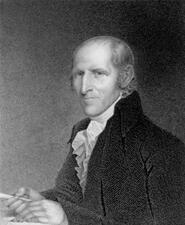
Here you will find contact information for Representative Timothy Pickering, including email address, phone number, and mailing address.
| Name | Timothy Pickering |
| Position | Representative |
| State | Massachusetts |
| District | 2 |
| Party | Federalist |
| Status | Former Representative |
| Term Start | October 17, 1803 |
| Term End | March 3, 1817 |
| Terms Served | 4 |
| Born | July 17, 1745 |
| Gender | Male |
| Bioguide ID | P000324 |
About Representative Timothy Pickering
Timothy Pickering (July 17, 1745 – January 29, 1829) was an American lawyer, soldier, and statesman who served as the third United States Secretary of State under Presidents George Washington and John Adams and later represented Massachusetts in both houses of Congress as a member of the Federalist Party. A prominent Federalist leader, he was an influential voice in national politics from the Revolutionary era through the War of 1812 and was elected a member of the American Philosophical Society in 1795.
Pickering was born in Salem in the Province of Massachusetts Bay (now Salem, Massachusetts), the son of Deacon Timothy Pickering and Mary Wingate Pickering. One of nine children, he was the younger brother of John Pickering, who would later serve as Speaker of the Massachusetts House of Representatives. He attended local grammar school in Salem and entered Harvard College, from which he graduated in 1763. Contemporary observers described him as strong-willed and assertive; Salem minister William Bentley later wrote that “from his youth his townsmen proclaim him assuming, turbulent, & headstrong.” On April 8, 1766, he married Rebecca White of Salem, establishing a family base in the town that would remain central to his life.
After graduating from Harvard, Pickering returned to Salem and began his legal and administrative career in the office of John Higginson, the town clerk and Essex County register of deeds. He was admitted to the Massachusetts bar in 1768 and, in 1774, succeeded Higginson as register of deeds for Essex County. Around the same time, he entered public life as an elected representative of Salem in the Massachusetts General Court and served as a justice in the Essex County Court of Common Pleas. His early public service combined legal, legislative, and judicial responsibilities, reflecting his growing stature in provincial affairs on the eve of the American Revolution.
Pickering also developed a parallel career in the colonial militia. Commissioned a lieutenant in the Essex County militia in January 1766, he was promoted to captain three years later. He took a particular interest in military discipline and training, publishing his ideas on drilling soldiers in the Essex Gazette in 1769. These writings were expanded and issued in 1775 as “An Easy Plan for a Militia,” a drill manual that was adopted as the Continental Army’s principal drill book until it was superseded by Baron von Steuben’s “Regulations for the Order and Discipline of the Troops of the United States.” During the early stages of the American Revolutionary War, Pickering served as an officer in the colonial militia and took part in the siege of Boston. As the war progressed, he rose to higher responsibility, serving as Adjutant General and later Quartermaster General of the Continental Army, positions in which he played a key role in the organization, supply, and administration of American forces.
Following the Revolutionary War, Pickering moved to the Wyoming Valley in what is now northeastern Pennsylvania, where he became involved in land and jurisdictional disputes and in the political life of the region. He participated in Pennsylvania’s 1787 ratifying convention for the United States Constitution, supporting the new federal framework. His administrative abilities and Federalist sympathies brought him to the attention of national leaders. In 1791, President George Washington appointed him Postmaster General of the United States, a post in which he helped shape the early federal postal system. He briefly served as Secretary of War before being appointed Secretary of State in 1795, succeeding Edmund Randolph. Pickering continued as Secretary of State after John Adams assumed the presidency in 1797, making him one of the few cabinet officers to bridge the Washington and Adams administrations.
As Secretary of State, Pickering was a staunch Federalist who favored close relations with Great Britain, particularly in the context of the European conflicts following the French Revolution. During the Quasi-War with France, he strongly opposed efforts to reach an accommodation with the French Republic and resisted President Adams’s moves toward negotiation and peace. His intransigence on this issue led to a sharp quarrel with Adams, who dismissed him from the cabinet in May 1800. Pickering’s departure from the State Department marked the end of his executive service, but he remained a central figure in Federalist politics.
After an unsuccessful run for Congress in 1802, Pickering returned to national office when he was chosen to represent Massachusetts in the United States Senate in 1803. As a Federalist senator, he became an ardent opponent of President Thomas Jefferson’s policies, most notably the Embargo Act of 1807, which he condemned as economically ruinous to New England’s maritime interests. He continued to support Britain during the Napoleonic Wars, famously describing it as “The World’s last hope – Britain’s Fast-anchored Isle.” In foreign policy debates, he opposed the American seizure and annexation of Spanish West Florida in 1810, arguing that it was unconstitutional and an act of aggression against a friendly power. His Senate service, which lasted until 1811, coincided with growing sectional tensions and the decline of the Federalist Party.
Timothy Pickering also served as a Representative from Massachusetts in the United States Congress during the later phase of his political career. He left the Senate in 1811 and subsequently won election to the United States House of Representatives, serving from 1813 to 1817. Over the course of these years, he completed four terms in Congress, representing Massachusetts as a member of the Federalist Party and contributing to the legislative process during a significant period in American history. His House service overlapped with the War of 1812, during which he emerged as a leading critic of the Madison administration and a prominent figure in New England opposition to the war. He became a leader of the New England secession movement and helped organize the Hartford Convention of 1814–1815, where Federalist delegates from several New England states met to discuss constitutional amendments and regional grievances. The widespread public backlash against the Hartford Convention and the perception of disloyalty in wartime effectively ended Pickering’s national political career.
In his later years, Pickering withdrew from active politics and returned to Salem, where he lived as a farmer and local notable. His long public career was recognized in several contemporary honors: in 1798, the USS Pickering, the first brig built for the United States Revenue Cutter Service at Newburyport, Massachusetts, was named in his honor, and in 1799 Fort Pickering in Salem, Massachusetts, also bore his name. His legacy continued into the twentieth century; in 1942, the Liberty ship SS Timothy Pickering was launched and later lost off Sicily in 1943. Until the 1990s, his ancestral home, the circa 1651 Pickering House in Salem, was believed to be the oldest house in the United States continuously owned by the same family. Timothy Pickering died in Salem on January 29, 1829, closing a life that spanned from the colonial era through the formative decades of the American republic.