Representative Tim Roemer
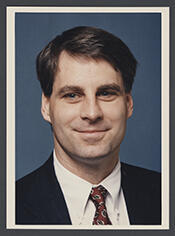
Here you will find contact information for Representative Tim Roemer, including email address, phone number, and mailing address.
| Name | Tim Roemer |
| Position | Representative |
| State | Indiana |
| District | 3 |
| Party | Democratic |
| Status | Former Representative |
| Term Start | January 3, 1991 |
| Term End | January 3, 2003 |
| Terms Served | 6 |
| Born | October 30, 1956 |
| Gender | Male |
| Bioguide ID | R000385 |
About Representative Tim Roemer
Timothy John Roemer (born October 30, 1956) is an American diplomat, educator, and politician from Indiana who, as a member of the Democratic Party, represented Indiana’s 3rd congressional district in the United States House of Representatives from January 3, 1991, to January 3, 2003. Over six terms in Congress, he contributed to major legislative initiatives in education, national service, trade, and national security during a significant period in recent American history. He later served as president of the Center for National Policy, a Washington, D.C.–based national security think tank, and as United States Ambassador to India from 2009 to 2011. Roemer has also been active in public policy and media organizations, including service on the advisory board of the Washington, D.C.–based non-profit America Abroad Media.
Roemer was born in 1956 in South Bend, Indiana, into a family closely associated with higher education and public service. His grandfather, William F. Roemer, was a philosophy professor at the University of Notre Dame, and his grandmother was an elementary school teacher. His parents, James and Mary Ann Roemer, both worked at Notre Dame, his father as dean of students and his mother as coordinator of volunteer activities. His uncle, William F. Roemer Jr., was a Federal Bureau of Investigation agent noted for his work combating organized crime. Roemer graduated from Penn High School in Mishawaka, Indiana, in 1975. From the age of fourteen he worked at various jobs to help pay for his education, reflecting an early commitment to self-reliance and public engagement.
Roemer earned a Bachelor of Arts degree from the University of California, San Diego, in 1979. He then pursued graduate study at the University of Notre Dame, where he received a Master of Arts and a Doctor of Philosophy in government and international studies. His 1985 doctoral dissertation, titled “The Senior Executive Service: Retirement and Public Personnel Policy,” examined federal personnel systems and public administration, foreshadowing his later interest in governmental reform and management. His academic training in public policy and administration informed his subsequent work on Capitol Hill and in Congress.
Roemer entered national politics while still a student, serving on the staff of Representative John Brademas of Indiana from 1978 to 1979, working in the same 3rd District he would later represent. After completing his doctorate, he joined the staff of Senator Dennis DeConcini of Arizona, serving from 1985 to 1989 and gaining experience in legislative process, national security, and domestic policy. These early staff positions provided him with a detailed understanding of congressional operations and laid the groundwork for his own candidacy for federal office.
In 1990, Roemer ran as a Democrat for the U.S. House of Representatives from Indiana’s 3rd congressional district, the former district of his onetime employer John Brademas. He won election and took office on January 3, 1991, serving six consecutive terms until January 3, 2003. During his tenure in the House of Representatives, he served on the House Permanent Select Committee on Intelligence, the Committee on Education and the Workforce, and the Committee on Science, Space, and Technology. He did not seek reelection in 2002. His congressional service coincided with the end of the Cold War, the economic debates of the 1990s, and the immediate aftermath of the September 11, 2001, terrorist attacks, and he participated actively in the legislative response to these developments while representing the interests of his Indiana constituents.
Much of Roemer’s legislative work focused on education policy and national service. He was the principal author of the Education Flexibility Partnership Act (“Ed-Flex”), which encouraged states to pursue innovative approaches to improving schools by granting waivers from certain federal requirements. He was the chief sponsor of the “Transition to Teaching” program, designed to address teacher shortages by recruiting and training mid-career professionals to enter the classroom. Roemer was also the lead sponsor of the five-year reauthorization of the Higher Education Act of 1965, which reduced interest rates on student loans, increased Pell Grants, expanded funding for teacher training, and broadened aid to families. He was a principal sponsor of the AmeriCorps national service program and co-authored legislation expanding Head Start services to provide child care coverage for women moving from welfare to work. In addition, he co-wrote legislation reauthorizing the Individuals with Disabilities Education Act, authored an amendment to tax relief legislation to facilitate teacher certification for professionals from other fields, and co-authored “School-to-Work” legislation to help non-college-bound high school students acquire skills for the workforce. In his final term, he played an instrumental role in the passage of the No Child Left Behind Act and advocated for full funding of its provisions.
Roemer also took notable positions on trade and national security. On trade policy, he supported the General Agreement on Tariffs and Trade (GATT), the African Growth and Opportunity Act, and the Caribbean Basin Initiative, but opposed the North American Free Trade Agreement (NAFTA), arguing that it created incentives for businesses to relocate outside the United States, a concern of particular relevance to his industrial district. He voted against presidential fast-track trade promotion authority, contending that the United States should more rigorously enforce existing trade agreements. In the realm of national security, Roemer was among the first members of Congress to call for a Cabinet-level federal department to coordinate homeland security and was an original sponsor of legislation to create the Department of Homeland Security. However, he ultimately voted against the department’s creation after opposing revisions proposed by the Bush administration, citing concerns about bureaucratic inefficiencies. He advocated the creation of a “civilian reserve corps” to train more fluent foreign-language speakers for the U.S. intelligence community, was an original sponsor of bioterrorism legislation, and co-sponsored legislation to establish the National Commission on Terrorist Attacks Upon the United States (the 9/11 Commission), on which he later served.
Following his departure from Congress in 2003, Roemer remained active in national security and public policy. He was appointed a member of the 9/11 Commission, which investigated the circumstances surrounding the September 11 attacks and recommended reforms to U.S. intelligence and homeland security structures. In the mid-2000s he was a candidate for chair of the Democratic National Committee, receiving the backing of Democratic leaders including House Minority Leader Nancy Pelosi and Senate Minority Leader Harry Reid, though he lost the race to former Vermont governor and 2004 presidential candidate Howard Dean. His candidacy drew criticism from some party activists who viewed him as too conservative for the role, citing his opposition to abortion and his 1993 vote against President Bill Clinton’s economic plan. Roemer has often been described as a moderate Democrat, combining relatively liberal positions on some foreign policy and national security issues with more conservative stances on certain social questions.
In addition to his political activities, Roemer held several academic and policy-related positions. He served as a distinguished scholar at the Mercatus Center at George Mason University and became a partner at Johnston and Associates, a public and legislative affairs consultancy. He was later selected as president of the Center for National Policy, a Washington-based think tank focused on national security and foreign policy. He served on the Commission on the Prevention of Weapons of Mass Destruction Proliferation and Terrorism, a bipartisan body created by Congress in 2007 to examine how the United States could best address the threat of weapons of mass destruction, one of the reforms recommended by the 9/11 Commission. Roemer also served on the Washington Institute for Near East Policy’s Presidential Task Force on Combating the Ideology of Radical Extremism and on the National Parks Second Century Commission. He endorsed Barack Obama in the 2008 Democratic presidential primaries and campaigned actively for him, particularly in Indiana, where he joined former Representative Lee Hamilton in supporting Obama. His moderate, bipartisan reputation and national security experience led some commentators to speculate that he was under consideration as a possible vice-presidential running mate for Obama.
Roemer was nominated by President Barack Obama on May 27, 2009, to serve as the 21st United States Ambassador to the Republic of India. The Senate confirmed his nomination on July 10, 2009, and he was sworn in on July 23, 2009, in the State Department’s Benjamin Franklin Treaty Room. He presented his credentials to President of India Pratibha Patil on August 11, 2009. During his tenure in New Delhi, he oversaw a period of expanding U.S.–India strategic and economic ties. In November 2010, during President Obama’s visit to India, the United States announced its support for India as a permanent member of a reformed United Nations Security Council. The U.S. government removed several Indian defense and space-related entities from its “Entity List,” facilitating increased cooperation, technology transfer, and commercial sales in those sectors. Under his watch, the United States agreed to help establish a Global Disease Detection Center in India and to cooperate with India’s Global Center for Nuclear Energy Partnership, and the two countries expanded collaboration on food security in Africa and reconstruction efforts in Afghanistan.
As ambassador, Roemer signed the Counterterrorism Cooperation Initiative with Indian Home Affairs Secretary G. K. Pillai on July 23, 2010, broadening cooperation in transportation and border security, anti–money laundering and terrorist financing, and megacity policing. The U.S. government also agreed to provide India access to David Headley, one of the planners of the November 2008 Mumbai terrorist attacks. Roemer presided over several high-level U.S. cabinet visits to India, including those of Treasury Secretary Timothy Geithner, Commerce Secretary Gary Locke, and Homeland Security Secretary Janet Napolitano. The first annual U.S.–India Strategic Dialogue was held in Washington, D.C., in June 2010, with the second scheduled for July 2011 in New Delhi. During his two-year tenure, India rose to become the 12th-largest trading partner of the United States; in 2010, U.S. exports of goods to India increased by 17 percent, and two-way trade in goods grew by 30 percent. During Obama’s 2010 visit, the United States announced twenty commercial deals totaling $10 billion in U.S. exports, which were projected to support more than 50,000 American jobs. The United States also supported elevating the G-20 as the premier international economic forum and backed International Monetary Fund reforms to give India greater representation. Roemer traveled extensively in India, visiting seventeen states and becoming the first U.S. ambassador in more than a decade to visit Jammu and Kashmir, including a September 20, 2010, trip to Leh to deliver relief supplies to rural families affected by flash flooding.
Roemer announced his resignation as ambassador on April 26, 2011, with a U.S. embassy press release in New Delhi stating that he would depart by June for family reasons. Some observers in India, including politician Shashi Tharoor, suggested that his resignation followed India’s decision to reject two American aircraft manufacturing bids worth approximately $10 billion in the Indian Medium Multi-Role Combat Aircraft competition, though the official explanation emphasized personal considerations. After leaving his post in India in 2011, Roemer returned to the United States and became a senior executive at APCO Worldwide, a public affairs firm based in Washington, D.C. He later joined the advisory board of America Abroad Media, a non-profit organization focused on international affairs programming and public diplomacy.
In his personal life, Roemer married Sally Johnston of Louisiana in 1989. They have four children: Patrick Hunter Roemer, Matthew Bennett Roemer, Sarah Kathryn Roemer, and Grace Elizabeth Roemer. He is the son-in-law of J. Bennett Johnston Jr. and Mary (Gunn) Johnston; his father-in-law served as a Democratic United States Senator from Louisiana from 1972 to 1997. The Roemer family is Roman Catholic, and when in the Washington area they attend St. Thomas à Becket Catholic Church in Reston, Virginia.