Representative Timothy Daniel Sullivan
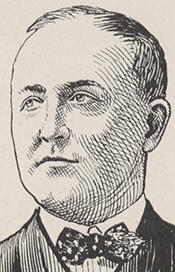
Here you will find contact information for Representative Timothy Daniel Sullivan, including email address, phone number, and mailing address.
| Name | Timothy Daniel Sullivan |
| Position | Representative |
| State | New York |
| District | 13 |
| Party | Democratic |
| Status | Former Representative |
| Term Start | November 9, 1903 |
| Term End | March 3, 1915 |
| Terms Served | 3 |
| Born | July 23, 1862 |
| Gender | Male |
| Bioguide ID | S001061 |
About Representative Timothy Daniel Sullivan
Timothy Daniel Sullivan was born on 29 May 1827 in Bantry, County Cork, Ireland, and emerged as one of the notable Irish nationalist figures of the late nineteenth century. Raised in a period of intense political agitation over Ireland’s constitutional status within the United Kingdom, he became convinced early in life that self-government was essential for Ireland’s peace and prosperity. Although detailed records of his formal education are limited, his later work as a journalist, editor, poet, and political leader reflects a strong literary education and a deep engagement with Irish history, culture, and nationalist thought. His family connections also placed him within a network of prominent Irish political and cultural figures; his brother, Alexander Martin Sullivan, was a noted constitutional and cultural nationalist and an influential editor and author.
Sullivan’s early career was rooted in journalism and publishing, which he used as instruments of political advocacy. He owned and edited several important nationalist periodicals, including The Nation, the Dublin Weekly News, and Young Ireland, all published in Dublin. Through these outlets he promoted Irish self-government and cultural revival, and he became widely known for his literary output. In 1867 he wrote the patriotic song “God Save Ireland,” which quickly became the Irish national hymn and a rallying anthem for the nationalist cause. He later composed “All for Ireland! One for all!,” which was adopted as the anthem of the All-for-Ireland League, as well as other popular pieces such as “Dear Old Ireland,” “Song from the Backwoods,” and “Michael Dwyer.” His editorial work and poetry reinforced his public reputation as both a political advocate and a cultural nationalist.
Sullivan’s political career developed in tandem with the rise of the Home Rule movement. A committed supporter of Charles Stewart Parnell, he joined the Home Rule League and actively supported Parnell in the 1880 general election, publicly asserting that without self-government there could never be peace, prosperity, or contentment in Ireland. In 1880 he was elected as a Member of Parliament (MP) for Westmeath in the House of Commons of the United Kingdom of Great Britain and Ireland, a seat he held until 1885. When the Irish Parliamentary Party was established in 1882, he joined it and became one of its prominent nationalist voices at Westminster. In the 1885 general election he was returned for the newly created constituency of Dublin College Green, representing a key urban district at the heart of Irish political life.
In addition to his parliamentary work, Sullivan played a leading role in Dublin’s municipal government. He served as Lord Mayor of Dublin from 1886 to 1888, having been elected to that office in 1886 and re-elected in 1887. His tenure as Lord Mayor coincided with an era of intense agitation over land reform, coercion laws, and the broader Home Rule question. As a public figure, he frequently appeared at nationalist meetings and used his mayoralty to advance the cause of Irish self-government. His journalistic activities brought him into direct conflict with British authorities: in December 1887 he published reports of meetings of the Irish National League in his newspapers, and under the provisions of the Crimes Act he was convicted and imprisoned for two months, a punishment that further enhanced his standing among Irish nationalists.
The internal divisions of Irish nationalism in the 1890s also shaped Sullivan’s later parliamentary career. When the Irish Parliamentary Party split in 1891 over the leadership of Parnell, Sullivan sided with the Anti-Parnellite faction and joined the Irish National Federation. In the 1892 general election he was defeated in Dublin College Green by a Parnellite opponent, but only four days later he was returned unopposed for West Donegal. He represented West Donegal in the House of Commons from 1892 until his retirement from parliamentary politics in 1900, the year in which the various Nationalist factions were reunited. Throughout this period he remained a consistent advocate of Home Rule and constitutional nationalism, contributing to debates recorded in Hansard and later reflecting on his experiences in his memoir, “Recollections of Troubled Times in Irish Politics,” published in Dublin in 1905.
Although Timothy Daniel Sullivan’s own legislative service took place in the British Parliament rather than the United States Congress, his extended family would later include figures active in other political systems, including American institutions. Separate from his own career, a later namesake, Timothy Daniel Sullivan, served as a Representative from New York in the United States Congress from 1903 to 1915. That Timothy Daniel Sullivan, a member of the Democratic Party, represented his constituents in the U.S. House of Representatives over three terms, participating in the legislative process during a significant period in American history. While distinct individuals, both men named Timothy Daniel Sullivan were engaged in representative government and legislative work within their respective national contexts.
Sullivan’s personal life further linked him to the upper ranks of Irish political and legal life. He married Catherine (Kate) Healy, sister of Tim Healy, who would become the first Governor-General of the Irish Free State in 1922. Their descendants included several figures of outstanding distinction. His son Timothy Sullivan served as Chief Justice of Ireland from 1936 to 1946. His daughter Frances was an Irish-language activist in Craobh an Chéitinnigh, the Keating branch of the Gaelic League (Conradh na Gaeilge), and a lecturer in Irish. Another daughter, Anne, who had sixteen children, was the mother of Kevin O’Higgins, one of the dominant political figures of the Irish Free State in the 1920s. Sullivan’s great-grandson Tom O’Higgins would later serve as Chief Justice of Ireland from 1974 to 1985, extending the family’s influence well into the twentieth century.
In his later years, Sullivan remained a respected elder statesman of Irish nationalism and a symbol of the constitutional and cultural movements that had shaped nineteenth-century Ireland. His writings, including “Dunboy, and Other Poems” (Fowler, Dublin, 1861) and “Irish National Poems” (as editor, Gill & Sons, Dublin, 1911), as well as works preserved at Project Gutenberg and the Internet Archive, continued to circulate among readers interested in Irish history and literature. Census records, parliamentary debates, and biographical reference works such as “Who’s Who of British Members of Parliament: Vol. II 1886–1918” and “Parliamentary Election Results in Ireland, 1801–1922” document his long public career. Timothy Daniel Sullivan died on 31 March 1914, leaving a legacy as a journalist, poet, Lord Mayor of Dublin, and long-serving nationalist MP whose life bridged the worlds of political agitation, cultural revival, and constitutional reform.