Senator Timothy Wirth
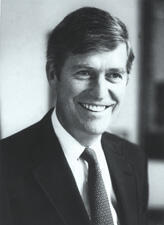
Here you will find contact information for Senator Timothy Wirth, including email address, phone number, and mailing address.
| Name | Timothy Wirth |
| Position | Senator |
| State | Colorado |
| Party | Democratic |
| Status | Former Representative |
| Term Start | January 14, 1975 |
| Term End | January 3, 1993 |
| Terms Served | 9 |
| Born | September 22, 1939 |
| Gender | Male |
| Bioguide ID | W000647 |
About Senator Timothy Wirth
Timothy Endicott Wirth (born September 22, 1939) is an American politician and public servant from Colorado who served as a Democrat in both the United States House of Representatives and the United States Senate between 1975 and 1993. Over seven consecutive terms in Congress, he contributed to the legislative process during a significant period in American history, first as a Representative from Colorado’s 2nd District (1975–1987) and then as a United States Senator from Colorado (1987–1993). In addition to his elected service, he held several appointed positions in the federal government, including Deputy Assistant Secretary for Education during the Nixon Administration and Under Secretary of State for Global Affairs in the Clinton Administration. From 1998 to 2013, he served as president of the United Nations Foundation and subsequently joined its board of directors.
Wirth was raised in Denver, Colorado, and graduated from Graland Country Day School in 1954 and from Phillips Exeter Academy in Exeter, New Hampshire. He went on to Harvard University, where he earned both his Bachelor of Arts degree and a graduate degree, and later completed his academic training at Stanford University, receiving a Ph.D. in 1973. He subsequently served as a member of the Harvard Board of Overseers, maintaining a close relationship with his alma mater. His family has long been engaged in public and academic life; his brother, the late John Wirth, was the Gildred Professor of Latin American Studies at Stanford University.
Wirth began his public career as a White House Fellow under President Lyndon B. Johnson, an experience that introduced him to federal policymaking at the highest levels. He later served in the Department of Health, Education, and Welfare as Deputy Assistant Secretary for Education during the Nixon Administration, focusing on national education policy. In the private sector, he worked as a vice president of Great Western Cities Company, part of Great Western United, from 1970 to 1971. During this period, he and company CEO William M. White Jr. were noted for their interest in contemporary futurist ideas, including Alvin Toffler’s “Future Shock,” which they circulated among the firm’s older directors as they considered long-term development strategies.
In 1970 Wirth returned to Colorado and entered electoral politics. He ran for the U.S. House of Representatives in 1974 and, in the post-Watergate election, unseated incumbent Republican Donald G. Brotzman by a 52 percent to 48 percent margin. Taking office on January 3, 1975, he represented a district centered on Boulder and the suburbs of Denver until January 3, 1987. As a first-term Congressman, he helped organize the so‑called “Freshman Revolt” of 1975, which challenged entrenched senior committee chairmen (“old bulls”) and pressed for more open and inclusive House procedures. Over his twelve years in the House, Wirth faced several difficult reelection campaigns and became known for his ability to raise substantial campaign funds to remain competitive. On the House Budget Committee, he joined Norman Mineta, Leon Panetta, and Dick Gephardt in an informal group dubbed “The Gang of Four,” which advanced bipartisan budget concepts and, in 1982, developed a high‑technology and alternative budget proposal. As chair of the House Telecommunications Subcommittee, he played a leading legislative role in opening the video and telephone industries to greater competition. He also authored the Indian Peaks Wilderness Act of 1978, protecting a significant area of Colorado’s high country.
In 1986 Wirth sought statewide office, running for the U.S. Senate seat being vacated by Senator Gary Hart. He won the Democratic nomination unopposed and went on to defeat Republican U.S. Representative Ken Kramer in a closely contested general election. Serving in the Senate from January 3, 1987, to January 3, 1993, Wirth focused heavily on environmental and population issues, with particular emphasis on global climate change. In 1988 he organized the landmark Senate hearings at which NASA scientist James Hansen testified that the Earth was warmer than at any other time in recent history and that human activity was, with 99 percent certainty, the primary cause. These hearings are widely credited with bringing climate change into mainstream public and political discourse. With his close friend, Senator John Heinz of Pennsylvania, Wirth co‑authored “Project 88,” a policy blueprint that advanced the concept of market‑based “cap and trade” mechanisms, elements of which were incorporated into the Clean Air Act Amendments of 1990. He authored the Colorado Wilderness Bill, a far‑reaching public lands measure that became law in 1993, and, working with Senator Alan Simpson of Wyoming, promoted major legislation aimed at population stabilization. Wirth also organized the Senate Task Force on the Expansion of Major League Baseball, which played a significant role in securing an expansion franchise for Denver. Disillusioned by what he viewed as the escalating and distorting role of money in American politics, he chose not to seek reelection in 1992, explaining his decision in a widely noted cover story in The New York Times Magazine on August 9, 1992.
After leaving the Senate, Wirth remained active in national politics and foreign policy. He served as national co‑chair of the Clinton–Gore presidential campaign and, following their victory, joined the U.S. Department of State as the first Under Secretary of State for Global Affairs, serving from 1993 to 1997. In that role he oversaw U.S. foreign policy on refugees, population, environment, science, human rights, and narcotics. He chaired the United States delegation to the 1994 International Conference on Population and Development in Cairo and served as the lead U.S. negotiator in the run‑up to the Kyoto Climate Conference. In late 1997 he resigned from the State Department to accept media entrepreneur Ted Turner’s invitation to become the founding president of the newly created United Nations Foundation.
From 1998 to 2013, Wirth led the United Nations Foundation, shaping its mission and program priorities in areas such as the environment, women and population, children’s health, peace and security, and human rights. Under his leadership, the Foundation became a major public–private partner of the United Nations, engaging in advocacy, fundraising, and institutional support. Among its notable initiatives during his tenure were efforts to mobilize resources for polio eradication in partnership with Rotary International, the Bill & Melinda Gates Foundation, and the World Bank; a global measles reduction campaign with the American Red Cross, the Centers for Disease Control and Prevention, and UN agencies; and the “Nothing But Nets” campaign, a nationwide grassroots effort to purchase anti‑malaria bed nets in cooperation with organizations including the World Health Organization and the National Basketball Association. The Foundation also supported the United Nations Population Fund and worked with the U.S. Congress to increase American funding and attention to AIDS prevention; developed standards to manage tourism’s environmental impact in partnership with UNESCO, Expedia, and other industry leaders; contributed to the UN framework for post‑Kyoto climate negotiations through collaboration with the Club of Madrid; advanced public‑private efforts on bioenergy with agricultural stakeholders and UN agencies; and promoted aggressive energy‑efficiency standards in the United States and abroad through the Energy Future Coalition. After stepping down as president in 2013, Wirth continued to serve on the Foundation’s board.
In recognition of his environmental and community development work, the University of Colorado Denver established the Tim Wirth Chair in Environmental and Community Development Policy; the chair is held by former Senator Gary Hart, whom Wirth succeeded in the U.S. Senate. Wirth is also a member of the ReFormers Caucus of Issue One, a bipartisan group of former elected officials advocating for campaign finance and political reform. In retirement he has been an active supporter of the youth climate justice movement and has worked to persuade Harvard University to divest its endowment from fossil fuels. In March 2021 he joined Harvard students, faculty, and alumni in filing a formal legal complaint asserting that the university’s fossil fuel investments were unlawful under Massachusetts law; later that year, Harvard announced its commitment to divest from fossil fuels.
Wirth is married to Wren Winslow Wirth, president of the Winslow Foundation. They have two children: Chris Wirth, founder of Liberty Puzzles, a Boulder‑based company that has become the largest American producer of laser‑cut jigsaw puzzles, and Kelsey Wirth, co‑founder of Align Technology, the orthodontic device company best known for Invisalign. His extended family has also been active in public life; his nephew Peter Wirth was elected to the New Mexico Legislature in 2004.