Representative Toby Roth
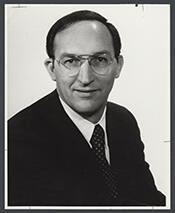
Here you will find contact information for Representative Toby Roth, including email address, phone number, and mailing address.
| Name | Toby Roth |
| Position | Representative |
| State | Wisconsin |
| District | 8 |
| Party | Republican |
| Status | Former Representative |
| Term Start | January 15, 1979 |
| Term End | January 3, 1997 |
| Terms Served | 9 |
| Born | October 10, 1938 |
| Gender | Male |
| Bioguide ID | R000459 |
About Representative Toby Roth
Tobias Anton Roth Sr. (born October 10, 1938) is a retired American businessman, lobbyist, and Republican politician who represented Wisconsin’s 8th congressional district in the United States House of Representatives from January 3, 1979, to January 3, 1997. Commonly known as Toby A. Roth, he served nine consecutive terms in Congress during a significant period in late 20th-century American political history and was previously a member of the Wisconsin State Assembly from 1973 to 1979. Over the course of his public career, he became known for his work on foreign affairs, international trade, and regulatory and fiscal policy, and later established a lobbying practice in Washington, D.C.
Roth was born in Strasburg, Emmons County, North Dakota, on October 10, 1938, one of five sons of Kasper Roth and his wife Julia (née Roehrich). During his childhood, the family moved to Menasha, Wisconsin, where his father operated a successful construction contracting business for more than two decades. The Roth family were members of the Catholic Church, and this religious and cultural background remained an important part of his upbringing. Roth attended St. Mary Catholic High School in nearby Menasha, graduating in 1957. A family tragedy occurred in 1975 when his elder brother, Joseph Roth, was struck and killed by a car while jogging, an event that coincided with Roth’s early years in elective office.
After completing high school, Roth enrolled at Marquette University in Milwaukee, Wisconsin. He studied political science and received his bachelor’s degree in 1961. Following his graduation, he settled in Appleton, Wisconsin, where he began work as a realtor, entering the local business community and eventually partnering in real estate with his younger brother, Roger. Roth also enlisted in the United States Army Reserve and was assigned to the 44th General Hospital. He rose to the rank of first lieutenant before his discharge in 1967. During these years he became active in several civic organizations in the Appleton area and became increasingly involved in the local Republican Party, laying the groundwork for his subsequent political career.
Roth’s first bid for public office came in 1968, when he challenged incumbent Republican state representative Ervin Conradt in the primary for Outagamie County’s 3rd Assembly district, which then covered roughly the western half of the county and parts of the city of Appleton. Running as a younger alternative who promised new energy and a different approach to local issues such as municipal annexations by the city of Appleton, he narrowly lost the primary by 841 votes, carrying the Appleton precincts but losing much of the rest of the district. A major redistricting law enacted by the Wisconsin Legislature in the early 1970s abolished the old county-based Assembly districts and, under the new plan, placed Roth in the 42nd Assembly district, comprising nearly all of the city of Appleton. When the incumbent, Harold V. Froehlich, announced in 1972 that he would not seek election in the new Assembly district and would instead run for the U.S. House of Representatives, Roth declared his candidacy. In a four-way Republican primary that included future Wisconsin Supreme Court justice David Prosser Jr., county supervisor Norman Austin, and Neal Wellman, Roth was widely viewed as the front-runner because of his deep local roots and prior campaign experience. He prevailed over Prosser by 1,127 votes and then easily defeated Democrat Thomas Lonsway in the general election. Roth was re-elected to the Assembly in 1974 and 1976, serving three terms from 1973 to 1979. Although Republicans were in the minority throughout his tenure, he served on the Judiciary Committee in 1975 and 1977, participating in the passage of pivotal judicial reform amendments.
On February 18, 1978, Roth announced that he would seek election to the U.S. House of Representatives from Wisconsin’s 8th congressional district, challenging first-term Democratic incumbent Robert John Cornell. In his campaign, he criticized the Democratic-controlled Congress and the administration of President Jimmy Carter for what he characterized as wasteful federal spending and excessive regulation, and he attacked Cornell’s votes for an increase in Social Security payroll taxes, a congressional pay raise, and the maintenance of a separate retirement system for members of Congress. After easily dispatching former American Party candidate Donald Hoeft in the Republican primary—following the brief, aborted candidacy of attorney John W. Byrnes Jr.—Roth defeated Cornell in the November 1978 general election with 58 percent of the vote, beginning his 18-year tenure in Congress. His first term in the 96th Congress was relatively uneventful legislatively, though personally difficult, as both of his parents died during his first year in office. He aligned himself with supply-side economic proposals by signing onto Representative Jack Kemp’s tax-cut plan, voted against expanding oil drilling in Alaska, and opposed tax increases on oil producers. A Milwaukee Journal Sentinel story quoting unnamed staffers who expressed concern about the amount of time devoted to political activity and constituent outreach—such as combing Wisconsin newspapers for local stories and sending personalized notes—briefly made him the subject of statewide criticism and became an issue in the 1980 election, though he was re-elected comfortably, winning 68 percent of the vote against former Green Bay mayor Michael Monfils after Cornell withdrew from the race at the direction of Pope John Paul II.
During the early 1980s, Roth became closely associated with the policy agenda of the Reagan administration. The 1980 election brought Ronald Reagan to the presidency, and Roth, an opponent of extensive federal regulation, was tapped to assist Vice President George H. W. Bush in a study of the impact of federal regulations on local communities; Appleton was used as a prototype city for the task force’s work. In the 97th Congress he was one of two members of the House invited to discuss the American economy with the European Parliament in Brussels. Roth generally supported Reagan’s program of tax cuts, regulatory rollbacks, and reductions in domestic spending, though he broke with the administration over proposed cuts to a milk subsidy program important to Wisconsin dairy farmers. In the 1982 election, amid a national recession and a Democratic wave, he faced Ruth Clusen, a former Carter administration official in the Department of Energy and past national president of the League of Women Voters, who criticized “Reaganomics” and linked Roth to rising unemployment and budget deficits. Roth defended the administration’s policies and called for deeper spending cuts; he was re-elected with 57 percent of the vote.
As his seniority increased, Roth became more active in foreign policy and international economic issues. During the 98th Congress he joined the House Foreign Affairs Committee and emerged as an early critic of U.S. military involvement in the Lebanese Civil War. A month before the October 1983 Beirut barracks bombing, he described the deployment of U.S. Marines in Beirut as a “tragedy waiting to happen,” and after the attack he reiterated his opposition, arguing that the Marines had been placed in an untenable position. In the 1984 election he defeated Democrat Paul F. Willems, a Vietnam veteran and former campaign manager for Clusen, with 67 percent of the vote. In the 99th Congress he opposed legislative efforts to impose broad economic sanctions on apartheid-era South Africa, advocating instead for incentives to encourage reform. He supported nuclear arms negotiations with the Soviet Union and welcomed the progress of the Geneva talks and the 1986 visit of Soviet leader Mikhail Gorbachev to the United States. Roth also made expansion of American exports a central priority; he authored the successful renewal of the Export Administration Act of 1979, which had lapsed in the previous Congress. Following the 1986 West Berlin discotheque bombing and the Reagan administration’s retaliatory air strikes against Libya, he criticized the military response and urged de-escalation. He was re-elected in 1986 by a margin nearly identical to his 1984 victory, again defeating Willems.
In the late 1980s, Roth continued to stake out positions that combined fiscal conservatism with skepticism about certain forms of U.S. overseas intervention. After the Iran–Contra scandal, he opposed amnesty for Lieutenant Colonel Oliver North and National Security Advisor John Poindexter. He maintained his opposition to sanctions on South Africa and, after visiting the country in 1987, described the sanctions as ineffective. He also criticized U.S. involvement in the Iran–Iraq War and expressed reservations about Reagan administration plans to provide U.S. naval protection for Kuwaiti oil tankers in the Persian Gulf. During the 100th Congress, when Wisconsin Senator William Proxmire announced his retirement, Roth was frequently mentioned as a potential candidate for the Senate seat but chose to remain in the House. He won a sixth term in 1988, defeating retired mine worker Robert Baron. In the 101st Congress, his use of congressional staff again drew scrutiny when a former aide alleged that official resources were being used to bolster his re-election campaigns and claimed that, at Roth’s urging, he had used a personal connection to alter Roth’s entry in the 1986 edition of The Almanac of American Politics to describe him as “an expert in international trade.” Roth denied any impropriety, and no formal complaint was filed. In 1990 he easily defeated a primary challenge from police officer David Hermes but faced his closest general-election contest against Democratic state senator Jerome Van Sistine, who criticized Roth’s opposition to Operation Desert Shield, his vote for a 1979 banking deregulation bill linked by critics to the savings and loan crisis, and his receipt of campaign contributions while serving on the House Banking Committee. Roth was re-elected with 53 percent of the vote.
Roth secured two additional terms in 1992 and 1994, winning by large margins. The Republican takeover of the House in the 1994 elections gave him his only term in the majority during the 104th Congress. In that Congress he served as chairman of the House Foreign Affairs Committee’s Subcommittee on International Economic Policy and Trade, a position that allowed him to influence legislation on trade promotion, export controls, and international economic relations, and that reflected his long-standing interest in expanding U.S. exports and shaping the country’s role in the global economy. His 18 years in the House encompassed debates over Cold War policy, the transition to a post–Cold War international order, and domestic controversies over taxation, regulation, and federal spending, and he consistently aligned with the Republican Party’s conservative wing on economic matters while at times diverging from party and administration positions on specific foreign policy and agricultural issues.
In March 1996, Roth announced that he would not seek a tenth term in Congress. Before leaving office, he endorsed Wisconsin Assembly Speaker David Prosser Jr., his former primary rival from 1972, as his preferred successor and campaigned vigorously on Prosser’s behalf. Prosser won the Republican primary but lost the general election to Democrat Jay Johnson by approximately 10,000 votes. Roth’s service in Congress concluded on January 3, 1997. Soon after leaving office, he established a lobbying and consulting firm in Washington, D.C., known as the Roth Group Inc., through which he represented corporate and other clients on federal policy matters. During this period he made his home in Great Falls, Virginia, and also became an owner of racing horses, pursuing interests in the thoroughbred industry alongside his professional work as a lobbyist and consultant.
Roth married Barbara M. Fischer in 1964, and the couple have three adult children. Over the years, the family maintained close ties to Wisconsin while also spending significant time in other parts of the country. In retirement, Roth and his wife have spent much of their time in Naples, Florida. His extended family has remained active in Wisconsin public life: his younger brother Roger worked with him in the real estate business, and Roger’s son, Roger J. Roth Jr., served as president of the Wisconsin Senate from 2017 to 2021 and later ran unsuccessfully for Congress in Wisconsin’s 8th congressional district in 2024. Through his long tenure in the Wisconsin Legislature and the U.S. House of Representatives, followed by his subsequent business and lobbying career, Toby A. Roth has remained a notable figure in the political and civic history of northeastern Wisconsin.