Representative Todd Tiahrt
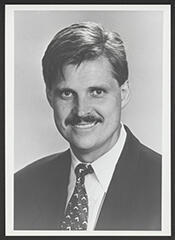
Here you will find contact information for Representative Todd Tiahrt, including email address, phone number, and mailing address.
| Name | Todd Tiahrt |
| Position | Representative |
| State | Kansas |
| District | 4 |
| Party | Republican |
| Status | Former Representative |
| Term Start | January 4, 1995 |
| Term End | January 3, 2011 |
| Terms Served | 8 |
| Born | June 15, 1951 |
| Gender | Male |
| Bioguide ID | T000260 |
About Representative Todd Tiahrt
William Todd Tiahrt (TEE-hart; born June 15, 1951) is an American politician and businessman who represented Kansas’s 4th congressional district in the U.S. House of Representatives from January 3, 1995, to January 3, 2011. A member of the Republican Party, he was first elected as part of the Republican Revolution of 1994, unseating 18-year Democratic incumbent Dan Glickman in a major upset. Over eight consecutive terms in Congress, he became known for his work on appropriations, his advocacy on behalf of the aerospace industry and south central Kansas, and his sponsorship of several high-profile amendments related to firearms policy and international family planning.
Tiahrt was born in Vermillion, South Dakota, the son of Marcine (née Steele) and Wilbur E. Tiahrt. He grew up in the Great Plains and attended the South Dakota School of Mines and Technology, where he played football as a running back. He later enrolled at Evangel College (now Evangel University), a private Christian institution in Springfield, Missouri, earning a bachelor’s degree in 1975. Pursuing further education while working, he received a Master of Business Administration from Southwest Missouri State University (now Missouri State University) in 1989. Before entering full-time politics, he taught at Kansas Newman College (now Newman University) in Wichita and at Evangel College, and he worked in the private sector for Boeing, serving as a proposal manager, a role that connected him closely with the aviation and defense industries that are central to the economy of Wichita and south central Kansas.
Tiahrt’s political career began in state government. In 1992 he was elected to the Kansas State Senate, where he served one term. After only two years in the legislature, he sought higher office and in 1994 ran for the U.S. House of Representatives from Kansas’s 4th congressional district. In a campaign that reflected the national Republican wave of that year, more than 1,800 volunteers worked on his behalf, and his campaign spent about $200,000—less than a quarter of Glickman’s expenditures. His victory was aided in part by 1990s congressional reapportionment, which had moved Hutchinson and Reno County out of the 4th District and replaced them with more reliably Republican Montgomery County. Tiahrt’s upset win over Glickman in November 1994 sent him to Washington as part of the new Republican majority.
In Congress, Tiahrt represented a district centered on Wichita and south central Kansas from 1995 to 2011. After a difficult reelection campaign in 1996, he was reelected six more times with comparatively little opposition, serving a total of eight terms. He was active on the House Committee on Appropriations, where he served on several key subcommittees, including the Subcommittee on Defense; the Subcommittee on Labor, Health and Human Services, Education, and Related Agencies (on which he served as ranking member); the Subcommittee on Interior, Environment, and Related Agencies (also as ranking member); the Subcommittee on Transportation, Treasury, and General Government; the Subcommittee on the District of Columbia; the Subcommittee on Military Construction; and the Subcommittee on the Legislative Branch. He also served on the House Permanent Select Committee on Intelligence. Within the House Republican Conference, he was founder and chairman of the House Economic Competitiveness Caucus and served in the leadership as a Deputy Majority Whip, roles that placed him at the intersection of policy development and party strategy.
Tiahrt’s congressional career was marked by his involvement in several major legislative and political controversies. In November 1997 he was one of eighteen House Republicans to co-sponsor a resolution by Representative Bob Barr calling for an impeachment inquiry into President Bill Clinton, a measure that did not specify charges and predated the Clinton–Lewinsky scandal. After that scandal emerged, Tiahrt supported the formal impeachment process: on October 8, 1998, he voted in favor of opening an impeachment inquiry, and on December 19, 1998, he voted in favor of all four proposed articles of impeachment against Clinton, two of which were adopted by the House. He also became widely associated with the “Tiahrt Amendment” relating to firearms trace data, which restricts the Bureau of Alcohol, Tobacco, Firearms and Explosives’ National Tracing Center from releasing firearms trace information to anyone other than law enforcement agencies or prosecutors in connection with criminal investigations. The amendment prevents such data from being used in academic research on gun crime and from being admitted as evidence in civil lawsuits against gun dealers or manufacturers. It has been strongly supported by the National Rifle Association of America and the Fraternal Order of Police, and opposed by organizations such as the Mayors Against Illegal Guns Coalition, the Major Cities Chiefs Association, and the International Association of Chiefs of Police, which argue that broader access would help combat illegal gun trafficking.
Tiahrt’s record on firearms and related issues earned him consistent support from gun-rights advocates. In 2010, the NRA Political Victory Fund and its 50,000 members in Kansas honored him with an A+ rating for the fourth consecutive congressional race, citing his votes for “every pro-gun bill.” These included support for the 2005 Protection of Lawful Commerce in Arms Act, legislation to expand right-to-carry provisions to national parks and wildlife refuges, his own Tiahrt Amendment affecting ATF operations, and legislation to restore Second Amendment rights in the District of Columbia. His A+ rating also reflected his participation as a signatory on “friend of the court” briefs in the landmark Supreme Court cases District of Columbia v. Heller (2008) and McDonald v. Chicago (2010), which affirmed and incorporated the individual right to keep and bear arms. Beyond firearms policy, he co-introduced with Representative Brian Bilbray of California the Fairness for American Students Act, designed to close a loophole that allowed certain states, including Kansas and Nebraska, to offer in-state tuition rates to undocumented immigrants while charging higher rates to U.S. citizens from neighboring states.
Tiahrt was also active on social and health policy issues. He opposed government-funded abortions and, while serving in Congress, spoke at the annual March for Life in Washington, D.C. He authored another measure commonly referred to as the Tiahrt Amendment in the foreign assistance context, first enacted in 1998 and most recently included in the FY2020 State–Foreign Operations Appropriations Act. This amendment was prompted by concern that the U.S. Agency for International Development might be indirectly supporting forced sterilization campaigns in Peru. It stipulates that no U.S. government funds may be used in connection with forcible sterilizations in foreign countries and that women participating in U.S.-funded voluntary family planning programs abroad may not be denied access to general welfare programs or health care. It further requires that experimental contraceptive drugs, devices, and medical procedures be provided only within scientific studies in which participants are fully informed of potential risks and benefits. Domestically, Tiahrt was cited as responsible for preventing the District of Columbia from using either federal or local funds for needle-exchange programs for drug users from 1998 through 2007. He also took an interest in aviation security and regulation: in 2009, along with Kansas’s U.S. senators, he co-authored a letter to the Secretary of Homeland Security expressing concern that new rules for privately owned aircraft over 12,500 pounds would unduly burden the private aviation industry and harm local manufacturing communities in Kansas, and on November 23, 2010, he spoke in Wichita against Transportation Security Administration security measures that he argued infringed on citizens’ privacy.
In 2010, rather than seek another House term, Tiahrt ran for the U.S. Senate seat being vacated by Senator Sam Brownback. He narrowly lost the Republican primary to fellow Kansas Representative Jerry Moran, ending his continuous congressional service in January 2011. After leaving office, he remained active in Republican politics and public affairs and twice attempted to return to the House. In 2014 he challenged incumbent Republican Representative Mike Pompeo in the primary for his former 4th District seat but was defeated. In 2017, after Pompeo resigned to become Director of the Central Intelligence Agency, Tiahrt sought the Republican nomination in the special election to fill the vacancy; he finished third, losing to Kansas State Treasurer Ron Estes, who went on to win the seat.
Over the course of his career, Tiahrt mentored a number of staff members who later assumed prominent roles in conservative politics and congressional offices. Matt Schlapp, who began as a campaign volunteer for Tiahrt in 1994 and then moved to Washington to serve as his communications director and later chief of staff for five years, went on to become White House Political Director for President George W. Bush and chairman of the American Conservative Union, as well as a Fox News political commentator. Matthew Stroia, who served as legislative counsel to Tiahrt from 2008 to 2011, later became chief of staff to Representative Mike Kelly of Pennsylvania. Joel Katz, a legislative correspondent for Tiahrt from 2009 to 2011, later served as a legislative assistant to House Majority Leader Eric Cantor, chief of staff to Representative Doug Collins of Georgia, and district director for Representative Andrew Clyde of Georgia. Jeff Kahrs, who began as an intern for Tiahrt in the Kansas State Senate from 1993 to 1994 and later served as his legislative director and chief of staff from 1995 to 2010, went on to serve as senior advisor to Representative Jake LaTurner of Kansas. Josh Bell, a legislative correspondent and aide to Tiahrt from 2002 to 2011, later became chief of staff to Representative Ron Estes of Kansas. Robert Noland, the only paid employee of Tiahrt’s 1994 congressional campaign and later his long-serving district director in Wichita, subsequently served as executive director of the Kansas Family Policy Council. Through these relationships, as well as his long tenure in Congress, Tiahrt exerted an enduring influence on conservative politics in Kansas and beyond.